
 Plan Your Trip
Enter the Dragon – 7 Days
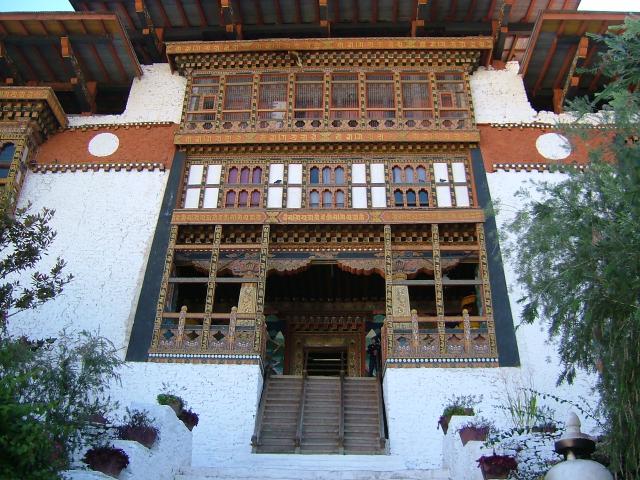

Trip Overview

Trek Region
Bhutan

Difficulty Level
Easy

Transport
Private vehicle and licensed driver throughout Bhutan

Total Trip Duration
7 Days

Max Elevation
3,120m / 10,236ft (Taktsang / Tiger's Nest)

Meals
All meals included throughout
Trip Highlights
- Hike to Taktsang Palphug Monastery – the Tiger’s Nest – Bhutan’s most photographed image, clinging to a sheer cliff face 900m above the floor of the Paro valley
- Cross Dochula Pass (3,088m), its 108 memorial chortens strung out against the skyline, with – on a clear day – an unbroken view of Bhutan’s eastern Himalaya including Gangkar Puensum (7,570m), the highest unclimbed mountain on earth
- Explore Punakha Dzong at the confluence of the Pho Chhu and Mo Chhu rivers – widely regarded as the most beautiful fortress-monastery in the kingdom and the winter seat of the Je Khenpo, Bhutan’s Chief Abbot
- Walk to Chimi Lhakhang, the fertility temple of the “Divine Madman” Lama Drukpa Kunley, through the rice terraces and farmhouses of the Punakha valley
- Explore Thimphu, Bhutan’s compact and unusual capital – the National Memorial Chorten, Tashichho Dzong, the Buddha Dordenma statue, and the weekend Centenary Farmers’ Market
- Visit Rinpung Dzong and the National Museum in Paro, and take in the ruined fortress of Drukgyel Dzong with its views toward Mount Jomolhari (7,326m)
- Spend a full day at Wangdue Phodrang and the Punakha suspension bridge – one of the longest in the kingdom – away from the busier Paro-Thimphu corridor
- Visit Kyichu Lhakhang, one of the oldest and most sacred temples in Bhutan, said to date to the 7th century reign of the Tibetan king Songtsen Gampo
- Experience an authentic Bhutanese farmhouse visit in the Paro valley, sharing a home-cooked meal and, where offered, the local rice wine ara with a farming family
- Travel the classic western Bhutan circuit at an unhurried seven-day pace, with none of the single-night rushes that compress most short Bhutan itineraries
Trip Summary
Enter the Dragon is the itinerary most travelers picture when they imagine a first trip to Bhutan: the plane threading between Himalayan ridgelines into Paro, the fortress-monasteries of Thimphu and Punakha, and the climb to the cliffside Tiger’s Nest that has become the single defining image of the kingdom. Bhutan itself is often called Druk Yul – the Land of the Thunder Dragon – and this itinerary takes its name from that idea: a journey into the dragon’s own country, through its guardian mountains and into the heart of its living Buddhist culture.
This seven-day version extends the classic four-day western circuit with the time it genuinely needs – a full second day in Paro, a full day around Wangdue Phodrang and the Punakha suspension bridge away from the standard tourist flow, and a properly unhurried schedule throughout rather than a itinerary that treats each dzong as a box to tick before the next long drive. It remains, by design, an easy and accessible trip: private vehicle transport on paved roads throughout, short guided walks rather than trekking, and a single genuinely active day – the Tiger’s Nest hike – positioned near the end of the trip once travelers are acclimatized and settled into Bhutan’s rhythm. This is the itinerary for travelers who want the complete, essential Bhutan experience, done properly rather than rushed.
When To Visit
Bhutan’s classic western circuit is a year-round destination, but conditions do vary meaningfully by season.
Spring (March to May) brings rhododendrons into bloom across the hillsides between Thimphu and Punakha, jacaranda flowers in the Punakha Dzong courtyard, and clear pre-monsoon skies for the Dochula Pass panorama and the Tiger’s Nest hike. This is one of the two strongly recommended seasons for this itinerary.
Autumn (late September to November) is the single best season for the classic circuit. Skies are at their clearest following the summer monsoon, the rice harvest is underway in the Punakha and Paro valleys, and several of Bhutan’s most important tshechu festivals – vivid, masked religious dance festivals held in dzong courtyards – fall within this window.
Winter (December to February) is cold, particularly at Dochula Pass and in the early mornings in Thimphu and Punakha, with occasional light snow at higher elevations, but days are typically clear and dry, and this is an excellent season for photography and for travellers who prefer fewer crowds at the major sites.
Monsoon (June to August) brings heavy rain to Paro, Thimphu, and Punakha and can occasionally affect road conditions on the Dochula Pass crossing, though delays are generally short-lived. The valleys are at their greenest during this period, and it remains a viable, quieter season for travellers with flexible schedules.
Itinerary
The flight into Paro is one of the most celebrated scheduled approaches in commercial aviation – the aircraft banking between forested ridgelines with farmhouses and terraced fields visible just below the wingtips before touching down in the narrow Paro valley, with clear-day views of Himalayan giants including Jomolhari along the way. Our guide and driver meet you at the airport with the traditional welcome scarf and transfer you to your hotel.
The afternoon is used for a gentle first orientation – a walk through Paro town, a visit to Kyichu Lhakhang, one of the oldest and most sacred temples in Bhutan, said to have been built in the 7th century by the Tibetan king Songtsen Gampo, or simply rest after the flight. Your guide walks through the complete seven-day itinerary this evening, including the Tiger’s Nest hike planned toward the end of the trip and the general rhythm of daily life you will encounter in Bhutan. Overnight in Paro.
A full day exploring the Paro valley, known locally as the rice bowl of Bhutan for the fertile red rice terraces that cover its floor. Rinpung Dzong (“fortress of the heap of jewels”), built in 1646 by Zhabdrung Ngawang Namgyal, is one of the finest examples of Bhutanese dzong architecture and today serves as the administrative seat of Paro district and a monastic school. The National Museum (Ta Dzong), housed in a converted watchtower directly above the dzong, holds an excellent collection of thangka paintings, textiles, arms, and natural history exhibits that give useful context for the rest of the trip.
The afternoon includes a drive to Drukgyel Dzong, the ruined fortress at the head of the valley that once guarded the trade and invasion route from Tibet, with views of Mount Jomolhari (7,326m) from the approach road on clear days, followed by a visit to a working Paro farmhouse. Here you join a local family in their daily rituals, see how millet, wheat, apples, and red rice are grown and processed, and share an authentic home-cooked Bhutanese dinner, often accompanied by the local rice wine ara. Overnight in Paro.
A short, easy drive along the Paro Chhu and Wang Chhu river valleys brings you to Thimphu, the world’s only capital city without a single traffic light – intersections are instead managed by white-gloved traffic police from ornate wooden booths, a detail most visitors find themselves photographing within minutes of arrival.
The afternoon covers Thimphu’s principal sights: the National Memorial Chorten, built in 1974 in memory of the Third King and in constant use by local residents circling it in prayer throughout the day; Tashichho Dzong, the beautifully restored fortress that houses the throne room of the King and the offices of the central monastic body; and the Buddha Dordenma statue on Kuensel Phodrang ridge, one of the largest sitting Buddha statues in the world, with sweeping views over the entire Thimphu valley. Overnight in Thimphu.
A second day in the capital covers what a single afternoon cannot, and gives a proper sense of daily Bhutanese urban life. The Folk Heritage Museum recreates a traditional three-story rural farmhouse in complete authentic detail. The Institute for Zorig Chusum (the “Painting School”) trains young Bhutanese in the country’s thirteen traditional arts and crafts. The Centenary Farmers’ Market, busiest on weekends, is where farmers from across western Bhutan sell chilies, cheese, incense, and forest produce, and offers one of the most genuine cultural encounters in the capital.
For those interested, a short visit to the Takin Preserve introduces Bhutan’s unusual national animal – a strange, stocky beast some compare to a bee-stung moose – and an archery ground, if a match happens to be underway, offers a look at Bhutan’s national sport, played with a level of noise, color, and ceremony unlike almost any other archery tradition in the world. Overnight in Thimphu.
The road east from Thimphu climbs steadily through blue pine forest to Dochula Pass (3,088m) – the finest roadside viewpoint in western Bhutan. The 108 memorial chortens (Druk Wangyal Chortens), built in 2005, stand in tiers against the mountain backdrop, and on a clear morning the pass delivers an uninterrupted panorama of the high peaks of the eastern Himalaya, including Masagang (7,158m), Tsendagang (6,960m), Terigang (7,060m), and Gangkar Puensum (7,570m), the highest unclimbed mountain in the world.
From Dochula the road descends over 1,500m into the warmer Punakha valley, the vegetation changing dramatically along the way from temperate conifer to banana, orange, and cactus. En route, a short walk through rice paddies and farmhouses leads to Chimi Lhakhang, the fertility temple built by Lama Drukpa Kunley – the “Divine Madman” – a 15th-century saint revered across Bhutan for his unconventional teaching methods and his use of humor, including phallic imagery, to cut through religious pretension. Overnight in Punakha.
Punakha Dzong, built in 1637-38 at the confluence of the Pho Chhu (“father river”) and Mo Chhu (“mother river”), is widely considered the most beautiful dzong in Bhutan and served as the capital of the country until 1955. It remains the winter residence of the Je Khenpo and the central monastic body, and its jacaranda-lined courtyard is spectacular when the trees bloom in spring. The dzong is reached across one of Bhutan’s longest traditional cantilever bridges, and its interior halls hold some of the finest religious murals and statuary in the kingdom.
The rest of the day is spent away from the busier Paro-Thimphu corridor: a walk across the Punakha suspension bridge, connecting the dzong to the villages of Shengana, Samdingkha, and Wangkha on the far bank of the Pho Chhu, followed by a visit to the town of Wangdue Phodrang, whose ridgetop dzong overlooks the confluence of the Tsang Chhu and Dang Chhu rivers. This is the one day of the trip built around a slower pace and a smaller crowd of visitors than the standard circuit typically allows. Overnight in Punakha.
An early departure retraces the road back over Dochula Pass to Paro, arriving in time for the hike most visitors remember longest. Taktsang Palphug Monastery – the Tiger’s Nest – clings to a sheer granite cliff face roughly 900m above the floor of the Paro valley, built at the site where Guru Rinpoche is said to have flown on the back of a tigress in the 8th century to subdue a local demon and meditate in a cave.
The hike ascends gradually through blue pine forest, gaining altitude steadily rather than steeply, and reaches a cafeteria at the roughly halfway point with the monastery’s first full close-range view – an excellent rest stop and, for those who prefer a shorter outing, a satisfying turnaround point in itself. The final approach descends into a gorge and climbs back up a stone stairway to the monastery’s entrance, where cameras and bags must be left at the guard post before entering the temple halls. The full return hike takes most visitors 4 to 5 hours at an easy pace; horses are available for the ascent as far as the cafeteria viewpoint for those who prefer not to walk the full distance.A farewell dinner with your guide and driver closes the trip in Paro. Overnight in Paro
Note: with an early Day 7 return from Punakha, most travelers complete the Tiger’s Nest hike and departure within the seven-day window by flying out on the evening of Day 7 or the morning of Day 8, depending on flight schedules. Transfer to Paro International Airport for your onward flight, closing out a journey that has carried you from the guardian mountains of Paro through the fortress-monasteries of Thimphu and Punakha and up to the cliffside sanctuary of the Tiger’s Nest – the complete, essential first journey into the Land of the Thunder Dragon.
Trek Difficulty & Physical Demands
The Enter the Dragon – 7 Days of Bhutan itinerary is rated Easy / Leisurely, suitable for nearly all travelers regardless of prior trekking experience.
No technical terrain. The entire trip is conducted by private vehicle on paved roads, with short walks and one full day’s hike. No trekking, camping, or high-altitude travel is involved anywhere in the itinerary.
Tiger’s Nest hike (Day 7). The one genuinely active day of the trip – a gradual uphill hike gaining approximately 900m in elevation over roughly 5km each way, typically taking 4 to 5 hours round trip at an easy pace with a rest stop at the halfway cafeteria. Horses are available for the ascent as far as the cafeteria viewpoint for travelers who prefer not to walk the full distance. No technical skill or prior trekking experience is required.
Altitude. The highest point reached on the trip is the Tiger’s Nest at 3,120m, briefly crossed at Dochula Pass (3,088m) by vehicle. These elevations are generally well tolerated without acclimatization concerns, though travelers with pre-existing respiratory or cardiac conditions should consult a doctor before travel.
No prior experience required. This itinerary is designed for first-time visitors to the Himalaya, families, and travelers who want the essential Bhutan experience without technical trekking or a demanding walking schedule.
Best Time to Trek: Seasonal Comparison
| Season | Months | Festivals | Road & Weather | Views | Recommended |
| Spring | Mar–May | Paro Tshechu (Apr) | Good, occasional rain | Excellent | Best |
| Monsoon | Jun–Aug | Limited | Rain, occasional delays | Variable, lush green | Fair |
| Autumn | Sep–Nov | Thimphu & Punakha Tshechus | Excellent | Outstanding | Best |
| Winter | Dec–Feb | Punakha Tshechu (Feb) | Cold, dry, occasional light snow | Excellent, clear light | Very good |
Pro tip: If your travel dates are flexible, plan your trip between late September and November for the best combination of crystal-clear Himalayan views from Dochula Pass, pleasant daytime temperatures, and the opportunity to experience Bhutan’s renowned Thimphu or Punakha Tshechu festivals.
Booking Your Enter the Dragon – 7 Days
Step 1 – Contact us. Reach out via our website, email, or WhatsApp with your target dates and group size. We respond within 24 hours with an initial itinerary and quote.
Step 2 – Confirm your dates. Bhutan requires advance visa processing, so we recommend booking at least 6-8 weeks ahead of travel, and earlier still for the autumn festival season.
Step 3 – Deposit and visa processing. A deposit secures your booking and allows us to begin sustainable development fee and visa clearance processing with the Tourism Council of Bhutan and Department of Immigration. Your visa clearance letter is typically issued within 5-7 working days of full documentation and payment.
Step 4 – Pre-departure preparation. We send a complete pre-departure guide covering packing recommendations, cultural etiquette for dzong and monastery visits, flight booking guidance for Drukair or Bhutan Airlines, and a full day-by-day itinerary confirmation.
Step 5 – Arrive in Paro. Your guide and driver meet you at the airport and the seven-day journey begins.
Step 6 – Balance payment. Remaining balance is due according to the payment schedule confirmed at booking, generally prior to arrival in Bhutan.
Cancellation Policy:
- 45 or more days before departure: No cancellation charge on the tour package
- 30-44 days before departure: 20% of tour payment charged
- 21-29 days before departure: 30% of tour payment charged
- 14-20 days before departure: 50% of tour payment charged
- Less than 14 days before departure: Full tour payment forfeited
Note: The Sustainable Development Fee is refundable for unused nights through the official Department of Immigration process if your trip is shortened or cancelled; the one-time visa fee is non-refundable
Trip Gallery
Trek Essentials
- Layered clothing for variable daily temperatures – warm mid-layer for Dochula Pass and early mornings, lighter layers for Paro and Punakha afternoons
- Waterproof, windproof outer jacket
- Comfortable trousers suitable for temple visits (modest dress is required inside dzongs and monasteries – shoulders and knees covered)
- Warm hat and gloves, particularly November through February
- Comfortable walking shoes or light hiking boots for the Tiger’s Nest hike
- Sun hat and sunglasses
- Comfortable, broken-in walking shoes or light hiking boots
- Warm socks for Dochula Pass and evening temperatures
- Sandals or comfortable shoes for hotel and town use
- Daypack for daily excursions
- Reusable water bottle
- Camera (note: cameras and bags must be left at the entrance checkpoint before entering the inner temple of Taktsang / Tiger’s Nest)
- Trekking pole (optional, useful for the Tiger’s Nest hike)
- Sunscreen and lip balm – UV exposure is stronger at altitude
- Personal medications plus a basic first aid kit
- Travel insurance covering trip cancellation and medical treatment in Bhutan is strongly recommended
- No specific altitude medication is generally required for this itinerary’s elevations, though travelers with respiratory or cardiac conditions should consult a doctor before travel
- Bhutan has excellent basic medical facilities in Thimphu; more serious cases are typically evacuated to India or Bangkok, making travel insurance particularly important
Final Thoughts:
Bhutan calls itself Druk Yul, the Land of the Thunder Dragon, and for most travelers this seven-day circuit is the journey that earns that name. It is not a trip built around a single spectacular feat, the way a high pass or a technical trek might be. It is built instead around a steady accumulation of encounters – a fortress at a river confluence, a temple built by a saint who used humor as scripture, a farmhouse dinner shared with a family who has worked the same terraces for generations, and finally a monastery that seems, quite literally, to have been placed on its cliff by something other than human hands.
What distinguishes this seven-day version from the standard four-day rush is simply room to breathe – a second day in Paro, a full day around Wangdue Phodrang away from the busier circuit, and a Tiger’s Nest hike positioned at the end of the trip, once you have settled into Bhutan’s own unhurried pace rather than fighting against it. Enter the Dragon Kingdom properly, and it tends to leave a longer impression than the short version of the same trip ever could.
Your Adventure to Enter the Dragon – 7 Days Starts Here
Start your journey with trusted local experts and discover the beauty, culture, and adventure waiting in the Himalayas and beyond.
Frequently Asked Questions
Everything you need to know about the AASRA ECO TREK
Bhutan’s own name for itself, Druk Yul, translates as the Land of the Thunder Dragon, and the country’s national symbol is the druk, the thunder dragon depicted on its flag. “Enter the Dragon” is a long-standing name used across the Bhutanese tourism industry for the classic western circuit – Paro, Thimphu, Punakha, and the Tiger’s Nest – that most first-time visitors use as their introduction to the kingdom.
The Sustainable Development Fee (SDF) is a mandatory government levy of USD 100 per person per night (reduced from USD 200 through August 31, 2027), charged directly by the Royal Government of Bhutan to every international tourist as a condition of entry. It is separate from the cost of your tour package and is paid to the government, not to us, though we process it on your behalf as part of your visa application. Children aged 6-12 receive a 50% discount and children under 6 are exempt. A one-time, non-refundable visa fee of USD 40 per person applies in addition.
Tsho Rolpa Lake (4,580 m) is the largest glacial lake in Nepal, a body of glacial meltwater formed at the terminus of the Trakarding Glacier in the upper Rolwaling Valley. It has grown dramatically since Eric Shipton’s 1951 visit, as the Trakarding and Rolwaling Glaciers have retreated under the effects of climate change, the lake volume increasing from a relatively small glacial pond to a large and potentially dangerous glacial lake. The Nepal government, with international assistance, installed a drainage tunnel and monitoring equipment to reduce the risk of a Glacial Lake Outburst Flood (GLOF) that could have catastrophic consequences for the Tama Koshi valley communities downstream. The lake is now one of the most closely monitored glacial systems in Nepal and a powerful visible indicator of glacial retreat in the Himalaya.
The hike to Taktsang gains approximately 900m over roughly 5km each way, typically taking 4-5 hours round trip at an easy, steady pace with a rest stop at the halfway cafeteria. Travelers who prefer a shorter outing can turn back at the cafeteria viewpoint, which already offers an excellent close-range view of the monastery. It is included in the standard itinerary but can be adjusted on request.
Yes. This is rated an easy, leisurely cultural itinerary conducted almost entirely by private vehicle with short walks, and it is well suited to families and older travelers. The one full day of walking—the Tiger’s Nest hike—ascends gradually and can be shortened to the halfway cafeteria viewpoint, with horses available for that portion of the ascent for those who prefer not to walk the full distance.
All international tourists must book their trip through a Bhutanese tour operator licensed by the Tourism Council of Bhutan, which handles visa processing and SDF payment on the traveler’s behalf. A licensed guide accompanies you for the full itinerary throughout the country.
Built in 1637-38 at the confluence of the Pho Chhu and Mo Chhu rivers, Punakha Dzong served as the capital of Bhutan until 1955 and remains the winter residence of the Je Khenpo, Bhutan’s Chief Abbot, and the central monastic body. It is widely considered the most architecturally beautiful dzong in the country and hosts the Punakha Tshechu and the Punakha Drubchen, two of Bhutan’s most important religious festivals.
The Bhutanese Ngultrum (Nu) is pegged at parity with the Indian Rupee, and Indian Rupees are widely accepted alongside Ngultrum. Credit cards are accepted at larger hotels and some shops in Thimphu and Paro, but cash is strongly recommended for smaller purchases, rural areas, and tipping.
With the exception of nationals of India, Bangladesh, and the Maldives, all international visitors require pre-approved visa clearance before boarding their flight to Bhutan – there is no visa on arrival for most nationalities. We process this on your behalf once your booking is confirmed, typically issued within 5-7 working days .
Yes. This seven-day circuit can be extended to include the Gangtey (Phobjikha) Valley, home of the black-necked crane, or the Bumthang valley further east, Bhutan’s spiritual heartland. It can also be shortened toward the original four-day version for travelers with tighter schedules. Contact us with your available dates and interests and we will tailor the itinerary accordingly.

Still have questions?
Can’t find the answer you’re looking for? Please chat to our friendly team.
Get In TouchSimilar Packages
Classic Laya Trek – 22 Days
5,005m
Max. Elevation
Hard Level
Unbeatable Snowman Trek – 30 Days
5,350m
Max. Elevation
30 Days
Duration
Hard Level
Eastern Bhutan Tour – 15 Days
4,000m
Max. Elevation
15 Days
Duration
Moderate Level
We are associate with
