
 Plan Your Trip
Tsum Valley Trek – 16 Days

Trip Overview

Trek Region
Manaslu

Difficulty Level
Easy

Transport
Kathmandu–Machha Khola by road (both ways)

Total Trip Duration
16 Days

Max Elevation
3,700m

Meals
Breakfast, Lunch & Dinner included
Trip Highlights
- Enter the Valley of Happiness (Kyimolung) — a beyul (sacred hidden sanctuary) sealed by the mountains and opened to trekkers only in 2008, inhabited by the Tsumpa people whose Tibetan Buddhist culture has been preserved in near-perfect isolation for centuries
- Visit Mu Gompa (3,700m) — the largest and most sacred monastery in the Tsum Valley, home to over 100 monks practicing the Gelugpa school of Tibetan Buddhism, sitting just kilometers from the Tibetan border with extraordinary views of Ganesh Himal, Baudha Himal, and the high glacier world above
- Explore the Dhephu Doma Gompa (4,060m) — a 600-year-old monastery on a dramatic clifftop above Mu Gompa with some of the finest high-altitude panoramic views in the entire Tsum Valley
- Stand at the Milarepa Piren Phu Cave — a sacred meditation cave near Nile village where the great Tibetan yogi and poet Milarepa is believed to have spent years in retreat, decorated with ancient Buddhist murals, prayer flags, and carved mantras in a setting of haunting, windswept beauty
- Visit Rachen Gompa (3,240m) — the largest nunnery in Nepal, home to over 100 Gelugpa nuns practicing an ancient and continuous tradition, with extraordinary wall paintings and ritual architecture that make it one of the finest examples of Tibetan Buddhist sacred art in the Manaslu region
- Walk through the extraordinary mani wall corridor at Chhokangparo — one of the longest and most elaborately carved mani walls in Nepal, stretching for hundreds of meters through the village with every stone individually carved with Buddhist prayers and iconography
- Visit the Geshe Lama Konchog Retreat Cave — the hermitage of the revered master featured in the documentary film Unmistaken Child, located between Chhokangparo and Nile village
- Optional hike to Ganesh Himal Base Camp (3,870m) — one of the least-visited 7,000m peak base camps in Nepal, accessible from Gumba Lungdang on the descent route
- Trek through the Shiar Khola gorge — a dramatically narrow and forested river gorge connecting the Budhi Gandaki with the interior of the Tsum Valley, with cliffside trails, suspension bridges, and waterfalls that make the approach section one of the finest gorge walks in the Manaslu region
- Walk a Restricted Area route where government regulations keep trekker numbers very low — genuine solitude and genuinely authentic village encounters in a valley that sees only a small fraction of the visitors that reach the Manaslu Circuit
- Observe the unique social and agricultural traditions of the Tsumpa people — including the practice of fraternal polyandry (where a woman marries two or more brothers simultaneously), traditional barley, buckwheat, and potato farming at altitude, and the extraordinary cultural tradition of sending the eldest child to a monastery and the youngest to a nunnery
Trip Summary
Nepal has many valleys. But it has only one Tsum Valley.
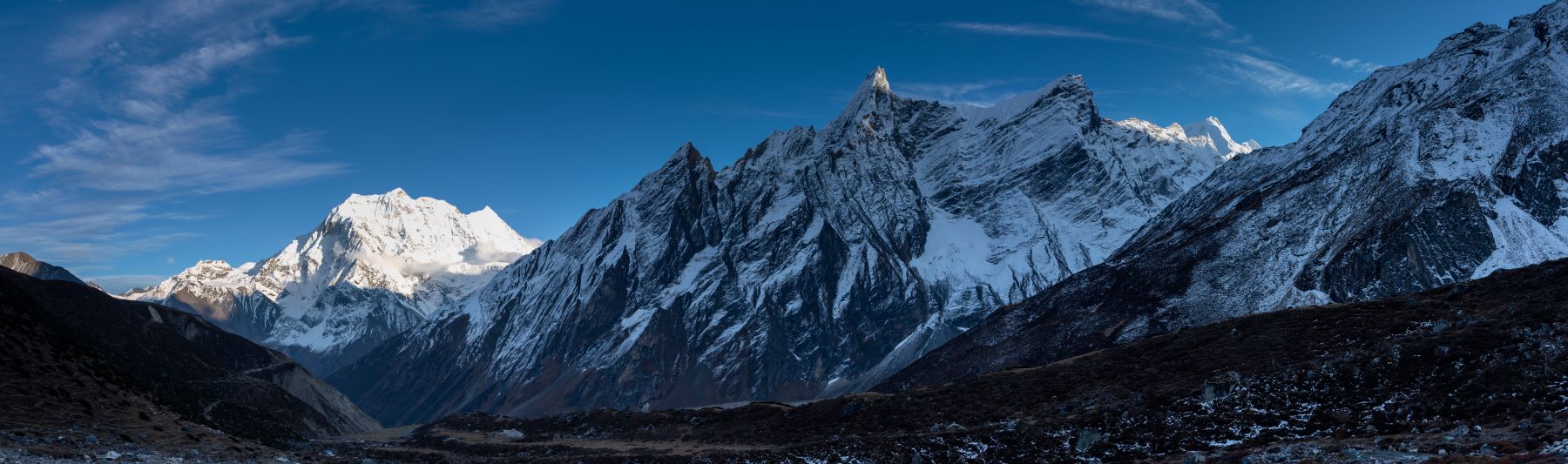
Hidden behind the great wall of the Manaslu and Ganesh Himal ranges in the northern Gorkha district, the Tsum Valley known in the ancient Tibetan dialect spoken by its people as “Kyimolung”, meaning the Valley of Happiness, was opened to foreign trekkers only in 2008. Before that, it had been sealed from the outside world for decades, allowing its culture, monasteries, language, and way of life to remain intact in a way that is almost impossible to find anywhere else in the Himalayan world.
The Tsumpa people the indigenous community of this valley, are a Tibetan Buddhist group with a distinct language, distinct religious traditions, and a deeply held belief that their valley is a beyul a sacred hidden sanctuary blessed by Guru Padmasambhava (Milarepa) and protected by the surrounding mountains as a place of spiritual refuge. This belief is not merely historical mythology it is the living, daily spiritual framework that shapes everything the Tsumpa people do, from their farming practices to their architectural choices to the extraordinary number and quality of ancient monasteries, nunneries, and meditation caves that line the valley walls.
The 16-day itinerary is the most complete and most deeply immersive version of the Tsum Valley Trek available. Starting with the drive from Kathmandu to Machha Khola and following the Budhi Gandaki River northward through the Manaslu approach gorge, the route branches into the Shiar Khola valley at Lokpa the gateway to Tsum and climbs through the lower and upper valley past mani walls, prayer wheel corridors, ancient gompas, buckwheat and potato fields, and the warm hospitality of Tsumpa households all the way to Mu Gompa (3,700m) the largest and most sacred monastery in the valley, sitting just hours from the Tibetan border. The return journey adds the extraordinary Ganesh Himal Base Camp approach, a full exploration of Rachen Gompa nunnery, and the sacred Milarepa Piren Phu Cave before retracing to the main Budhi Gandaki trail and driving back to Kathmandu.
This is not the trek for people who want to reach the highest point or cross the most dramatic pass. This is the trek for people who want to encounter a living Himalayan civilization — one that has preserved its Buddhist heritage, its language, its art, and its relationship with the mountains with a completeness that is genuinely rare in the modern Himalayan world.
When To Visit
The Tsum Valley sits in a partial rain shadow behind the main Himalayan range a geographical feature that makes it more accessible in a wider seasonal window than most Nepal treks at similar latitudes. That said, the standard two-peak-season framework holds for the best overall experience.
Spring (March to May) is one of the finest seasons for the full Tsum Valley Trek. The lower gorge sections and the rhododendron forest corridors between Lokpa and Chumling are spectacular in bloom from late March through April the entire gorge painted in red and pink flowering trees in a display that rivals the Langtang and Everest region rhododendron seasons. The upper valley sections above Chhokangparo are warm and clear in April and May, and the Mu Gompa approach offers excellent mountain views. March can be cold in the upper valley but is perfectly comfortable with proper layering. Late May warms up and the lower gorge becomes quite humid.
Autumn (September to November) is the peak season and the most recommended window for the complete cultural and mountain experience. After the monsoon, the air clears completely and the mountain views from Chhokangparo, Nile, and Mu Gompa are at their finest Ganesh Himal, Baudha Himal, Himal Chuli, Manaslu, and the Tibet border peaks all sharp and white against deep blue sky. October in the Tsum Valley has the added cultural significance of the Ngyungne ceremony at Mu Gompa a fasting ceremony for world peace observed by the monks in October that is one of the most extraordinary and least-known monastic ritual events in Nepal.
Winter (December to February) is cold but possible for the lower valley sections. The upper valley above Chhokangparo becomes very cold and some teahouses close for winter. Trekkers who specifically want the snow-dusted, completely solitary experience of the Tsum Valley in winter and who have appropriate cold-weather gear find this a uniquely beautiful season. The cultural experience of the villages in winter, with the communities more inward-looking and the pace of life even slower than usual, is deeply evocative.
Monsoon (June to August) is largely manageable in the Tsum Valley due to the rain shadow effect the interior valley receives significantly less monsoon rainfall than the lower gorge approach sections. The lower gorge between Machha Khola and Lokpa becomes slippery, leech-infested, and potentially affected by landslides in heavy monsoon periods. The upper valley is often relatively clear, particularly from late July onward. Not the recommended season for the full trek but the most adventurous season for experienced trekkers who want complete solitude.
Itinerary
Welcome to Nepal. Our team meets you at Tribhuvan International Airport and transfers you to your hotel in Kathmandu. In the evening, your trekking guide joins you for a thorough pre-trek briefing covering the complete 16-day route, the cultural and spiritual significance of the Tsum Valley and its Tsumpa people, the Restricted Area Permit system and checkpoint protocols along the route, altitude awareness for the upper valley sections, gear checks, and the logistics of tomorrow’s long road drive to Machha Khola.
The Tsum Valley briefing has a particular cultural dimension that standard trek briefings do not. Your guide covers the etiquette for visiting monasteries and nunneries how to dress, how to behave, when to ask permission before photographing, and how to engage with monks and nuns in a way that is genuinely respectful of the religious life of the communities you will be visiting. The Tsum Valley is a sacred space to its people and understanding that before you arrive makes the entire experience richer and more meaningful.
If energy allows, a short walk to the nearby Boudhanath Stupa the great white dome that is the spiritual center of Kathmandu’s Tibetan Buddhist community gives you a beautiful first taste of the culture and practice you are heading toward. The evening circumambulation of the stupa with monks, nuns, and lay practitioners moving clockwise in prayer is one of the finest cultural introductions to any Nepal trek. Overnight in Kathmandu.
An early morning departure from Kathmandu for the long but rewarding road journey west through the Gorkha district. The route follows the Prithvi Highway before branching north through Arughat and the hill country of the upper Gorkha district toward Machha Khola (930m) on the Budhi Gandaki River.
The drive through the Gorkha hills is genuinely scenic terraced farmland, forested ridgelines, small market towns, and the first views of the higher Himalayan peaks appearing above the northern horizon as the road gains elevation through the middle hills. The road becomes rougher after Arughat as it enters the river valley country, and the final section to Machha Khola follows the Budhi Gandaki northward through a narrowing gorge.
Machha Khola (930m) is a small riverbank settlement at the edge of the Manaslu Conservation Area where a handful of teahouses and guesthouses serve trekkers heading either into the Manaslu Circuit or the Tsum Valley. Check in, eat a proper meal, and rest from the road. The first walking day begins tomorrow. Drive time: 7–8 hours.
The first walking day follows the Budhi Gandaki River northward through the lower gorge the same section used by Manaslu Circuit trekkers in the early days of the route. The trail follows the river bank, crossing and recrossing on suspension bridges, passing through the small settlements of Khorlabesi, Tatopani, and the larger village of Dobhan before continuing upstream to Jagat.
The lower Budhi Gandaki gorge is immediately dramatic vertical rock walls closing in on both sides of the river, the trail crossing and recrossing on swinging suspension bridges, and the subtropical forest of the lower valley providing a rich, green, birdsong-filled environment that feels entirely alive. This section contains several narrow ledge paths cut directly into cliff faces above the river not technical but requiring confident, sure footing. The drama of the gorge is one of the memorable surprises of the Tsum Valley approach, arriving before the valley itself and setting the tone for the wild, beautiful landscape ahead.
Jagat (1,340m) is the first major permit checkpoint on the route both the Restricted Area Permit and the Manaslu Conservation Area Permit are checked and stamped here. Your guide manages all permit documentation at this and subsequent checkpoints. Jagat has a good selection of teahouses and a welcoming, established trekking infrastructure. Walking time: 5–6 hours.
The day the Tsum Valley adventure begins in earnest. From Jagat the trail continues north along the main Budhi Gandaki River through the large Gurung and Magar village of Philim (1,570m) a prosperous, well-ordered settlement surrounded by terraced millet fields and bamboo, before reaching the critical junction at Lokpa (2,240m) where the trail branches east into the Shiar Khola valley and the Tsum Valley begins.
The section from Jagat to Philim is flat and pleasant river walking. Beyond Philim, the trail crosses the Budhi Gandaki for the last time and climbs into the narrowing mouth of the Shiar Khola gorge. The character of the landscape changes immediately and unmistakably the Shiar Khola gorge is narrower, wilder, and more forested than the main Budhi Gandaki corridor, with a sense of entering an enclosed and hidden world that the Tsumpa have always associated with their valley’s sacred character.
Lokpa (2,240m) sits at the confluence of the Shiar Khola and the Budhi Gandaki the gateway village of the Tsum Valley and the last significant settlement before the trail enters the valley proper. There is a permit checkpoint here specific to the Tsum Valley Restricted Area. Spend the evening in Lokpa and look up the Shiar Khola gorge northward somewhere in that forest-filled gorge, the hidden valley of the Tsumpa is waiting. Walking time: 6–7 hours.
The trail into the Tsum Valley from Lokpa is one of the finest gorge walks in the Manaslu region a spectacular, forest-filled, cliffside traverse through the Shiar Khola gorge that gains altitude steadily through stands of mixed oak, rhododendron, fir, and bamboo, with the river rushing far below through a canyon whose walls in places narrow to a hundred meters across.
The trail crosses the Shiar Khola multiple times on suspension bridges each one a dramatic swing above the white water below and passes through a sequence of small stone settlements and seasonal herder shelters before the valley begins to open and the first distinctly Tibetan cultural markers appear: a string of mani walls beside the trail, a lone chortle on a ridge above the river, prayer flags strung between the cliff faces.
Chumling (2,386m) is the first proper village of Lower Tsum and the introduction to the Tsumpa world that will define the rest of the trek. The change from the Gurung and Magar cultural atmosphere of the lower Budhi Gandaki to the Tibetan Buddhist world of Chumling is immediate and total. Traditional stone houses with flat earthen roofs and carved wooden window frames line the village lanes. Mani walls stretch through the settlement. The women wear traditional Tibetan-influenced dress and coral and turquoise jewelry. The gompa above the village — Panago Gompa and Gurwa Gompa, both approximately 500 years old — are active and decorated with ancient thangka paintings and butter lamp altars. Sit in the village in the evening, listen to the prayer chants drifting from the gompa, and let the Tsum Valley settle around you. Walking time: 5–6 hours.
The transition from Lower Tsum to Upper Tsum is the most culturally and scenically complete walking day of the entire trek’s approach. From Chumling the trail climbs through increasingly open and dramatic landscape, gaining nearly 650m of altitude through barley and buckwheat fields, past ancient chortens, and through a series of prayer flag-draped ridgelines with expanding views of the surrounding peaks.
The trail crosses a significant suspension bridge over the Shiar Khola and enters the wide, open landscape of the upper valley where the mountains close in from north and south Ganesh Himal (7,422m) rising directly to the south, Baudha Himal (6,672m) and Himal Chuli (7,893m) visible to the southwest, and the distant glacier-hung peaks of the Tibetan border forming the northern wall of the valley.
Chhokangparo (3,031m) pronounced roughly as “Chekam Paro” is the largest and most significant village in the upper Tsum Valley, a settlement divided into two distinct parts (Chhekam and Paro) separated by open fields. The village is home to three functioning monasteries, a long sequence of chortens and prayer wheels at the village entrance, and one of the finest mani wall corridors in the entire Tsum Valley a sequence of hundreds of individually carved prayer stones stretching through the heart of the village that is a UNESCO-recognized example of living intangible cultural heritage. The social traditions of Chhokangparo are extraordinary the practice of fraternal polyandry (where multiple brothers share one wife, a tradition intended to keep family landholdings together) persists here as a genuine living practice, not a historical curiosity. Walking time: 5–6 hours.
The finest cultural walking day of the entire 16-day trek. From Chhokangparo the trail heads north along the valley, first passing through several small hamlets and then beginning the gradual approach to the remarkable Rachen Gompa (3,240m) the largest nunnery in Nepal.
Rachen Gompa was founded in 1905 and is home to over 100 nuns practicing the Gelugpa school of Tibetan Buddhism. The complex is architecturally stunning a cluster of whitewashed buildings set against a dramatic rock face, prayer halls decorated with extraordinary wall paintings of Buddhist deities and narrative scenes, and the visible, daily-life rhythms of over a hundred women who have chosen a life of religious practice in one of the most remote locations in Nepal. The morning or evening puja the prayer ceremony conducted in the main gompa hall — is one of the most moving religious experiences available on any Nepal trek, with chanting, hand drums, cymbals, and the flickering of hundreds of butter lamps in the incense-scented interior.
A short 20-minute walk above Rachen Gompa on the cliff face is the Milarepa Namkading Cave a sacred meditation site associated with the famous Tibetan Buddhist yogi and poet Milarepa, who is believed to have spent time in retreat here. The cave is decorated with carved stone mantras and prayer flags and carries a palpable spiritual atmosphere entirely consistent with the story of a great meditator who found this hidden valley worthy of his practice.
From Rachen the trail continues northward through open, increasingly high-altitude terrain to the small cluster of settlements collectively called Nile (3,361m) or sometimes Nile/Chhule the highest permanently inhabited group of settlements in the Tsum Valley, set in a wide, sunny plateau surrounded by the glacier-hung peaks of the upper valley. Walking time: 5–6 hours.
The day the Tsum Valley reveals its innermost heart. From Nile the trail climbs gradually northward into the highest and most remote section of the valley above the agricultural zone, into pure high-alpine terrain of grass, rock, glacier moraine, and the extraordinary stillness of altitude and remoteness combined.
Mu Gompa (3,700m) the largest, most sacred, and most remotely located monastery in the Tsum Valley, appears after approximately 3 hours of walking from Nile, sitting on a broad hillside plateau with the entire upper Tsum Valley visible below and the Ganesh Himal and Baudha Himal glacier walls rising directly to the south and east. The monastery was established in 1895 AD and is home to over 100 monks of the Gelugpa tradition. Its main prayer hall contains a life-size statue of Avalokiteshvara (the Buddha of Compassion), statues of Guru Padmasambhava and Tara, precious religious texts including the Kangyur (the collection of the Buddha’s words), and the remarkable statues of Buddha Amitabha that are Mu Gompa’s most celebrated artistic treasures. The monastery observes two major religious gatherings annually Ngyungne (a fasting ceremony for world peace in October) and Yaarney (sacred text readings and rituals).
In the afternoon, the excursion hike to Dhephu Doma Gompa (4,060m) also called Dhephyudonma Gompa, takes approximately 30–40 minutes from Mu Gompa on a steep uphill trail. This 600-year-old monastery perched on the clifftop above Mu Gompa is the highest religious site accessible on the standard Tsum Valley trek and the views from its compound of the entire upper valley, the Chhyosing Glacier, and the high peaks of the Tibet border range are among the finest on any trail in the Manaslu region. Overnight at Mu Gompa. Walking time to Mu Gompa: 3–4 hours. Excursion time: 1.5–2 hours return.
The most spiritually layered walking day of the return journey. From Mu Gompa the trail descends southward through the upper valley, passing by a sequence of ancient sacred sites on the descent to Chhokangparo that makes this day significantly more than a simple retracing of the approach route.
The Piren Phu Cave also called the Milarepa Pigeon Cave sits near the village of Burji between Nile and Chhokangparo, set into the base of a dramatic rugged cliff above the Shiar Khola. This cave is one of the most sacred sites in the entire Tsum Valley according to Tsumpa tradition and Tibetan Buddhist history, the great yogi and poet Milarepa meditated here for an extended period during his legendary wanderings through the high Himalayan valleys in the 12th century. Two small gompas have been built against the cave face, and the interior is decorated with extraordinary Buddhist murals painted directly onto the cave walls, stone-carved prayer inscriptions, and the particular atmosphere of a place where sacred practice has been conducted without interruption for centuries.
The Geshe Lama Konchog Retreat Cave the hermitage of the revered Tibetan Buddhist master whose story was told in the 2008 documentary film Unmistaken Child, is also passed on this section of the trail, between Chhokangparo and Nile. For anyone familiar with that remarkable film, visiting the retreat cave where Geshe Lama Konchog spent years in solitary meditation carries a weight of meaning that extends well beyond the physical site.
Return to Chhokangparo for the overnight, with the descent through the mani wall corridor of the village and the familiar panorama of Ganesh Himal to the south as the day’s closing images. Walking time: 6–7 hours.
The descent route takes a deliberate detour from the standard return path to include one of the most rewarding and least-visited sections of the Tsum Valley extension the Gumba Lungdang valley, a lateral valley branching southwest from Chhokangparo that leads toward the Ganesh Himal Base Camp approach.
From Chhokangparo the trail descends to the village of Dumje and then crosses the Shiar Khola to enter the Gumba Lungdang valley a beautifully isolated side valley with a small monastery, summer herder settlements, and the character of true Himalayan wilderness without the trail infrastructure of the main valley route. The forest in the Gumba Lungdang valley is notably richer and less traveled than the main Tsum approach stands of old-growth fir and rhododendron, abundant birdlife, and the occasional sight of blue sheep on the slopes above.
Gumba Lungdang (3,200m) the name means “monastery valley” and refers to the small, ancient gompa sitting at the head of this tributary valley is a summer settlement that sees very few trekkers even by the standards of the already-quiet Tsum Valley. Tonight’s camp here has the particular quality of genuine remoteness the kind of stillness and isolation that the Tsum Valley is famous for but that even most Tsum Valley trekkers never experience. Walking time: 5–6 hours.
A rest and exploration day at Gumba Lungdang with an optional hike to the Ganesh Himal Base Camp (3,870m) one of the most rarely visited 7,000m peak base camp areas in Nepal and a genuinely extraordinary high-altitude destination for those with the energy after a week of sustained valley trekking.
The hike from Gumba Lungdang to the Ganesh Himal Base Camp approach gains approximately 670m of altitude through open alpine terrain above the tree line and into the high moraine and glacier country below the southern face of the Ganesh Himal massif (7,422m). The Ganesh Himal range, visible throughout the Tsum Valley from below, is encountered here at its most immediate and personal scale the massive glaciated flanks of the mountain filling the entire northern horizon from the base camp approach.
The views from the high approach include the complete southern aspect of Ganesh Himal, Baudha Himal (6,672m), Kang Guru, and on clear days the distant profiles of Manaslu and Himalchuli to the east. This is one of those high-altitude viewpoint experiences that rewards the specific effort of reaching a place that no chairlift or jeep road will ever access.
Trekkers who prefer a gentler day can explore the Gumba Lungdang valley floor visiting the small monastery, walking the herder paths through the upper meadows, and simply absorbing the extraordinary peace of a place that even most Tsum Valley trekkers never reach. Optional hike time: 4–5 hours return.
The long descent back to the Shiar Khola valley entrance. From Gumba Lungdang the trail retraces to the main Tsum Valley route through Dumje and then follows the valley southward through Chhokangparo and Chumling, descending continuously through the gorge sections of the lower Shiar Khola to reach Lokpa (2,240m) at the valley entrance by late afternoon.
It is a long day by distance and altitude loss nearly 1,000m of descent from Gumba Lungdang back to Lokpa but the trail is familiar from the approach and the descent through the Tsum Valley, seen now with a week of cultural immersion behind you, carries a richness of recognition. The villages you walked through on the way up feel like places you know now not just places you passed through. The Tsum Valley has a way of doing that to trekkers. Walking time: 6–7 hours.
Leaving the Tsum Valley. The trail retraces from Lokpa back through the main Budhi Gandaki gorge downstream this time, the river on your left rather than your right, the suspended bridges familiar, the subtropical forest thickening as altitude drops.
The descent from Lokpa to Jagat is a physical and psychological transition — back through the gorge that leads from the hidden world of the Tsumpa to the main trekking corridor of the Manaslu region, the teahouses becoming gradually more established, the trail becoming gradually more traveled. By Jagat, you are back in the Manaslu Circuit world, though the Tsum Valley remains completely present in memory and feeling.
The evening in Jagat carries a particular reflective quality after a week in the valley. Talk to your guide about what you saw. Let the experience organize itself. Walking time: 6–7 hours.
The final trekking day a shorter morning walk from Jagat back downstream along the Budhi Gandaki to Machha Khola, where your private vehicle is waiting for the road journey back to Kathmandu.
The walk back through the lower gorge from Jagat to Machha Khola takes approximately 3 hours and retraces the dramatic first day’s gorge walking in reverse the suspension bridges, the ledge paths, the waterfalls, one final time before the road begins.
Depending on departure time and road conditions, the drive back to Kathmandu may arrive late in the evening or the following morning if an overnight stop is preferred along the route. We arrange the logistics to suit your schedule. Walking time: 3 hours. Drive time: 4–5 hours to overnight stop / 7–8 hours direct to Kathmandu.
Arrival back in Kathmandu either directly on the Day 14 evening drive or the morning of Day 15 depending on road conditions and departure time. A practical buffer day built into the itinerary for any road delays, landslide events, or weather disruptions affecting the return journey from the Gorkha district.
If your return went smoothly and you arrive with energy, Kathmandu is an extraordinary city for cultural exploration Pashupatinath Temple, Boudhanath Stupa, Swayambhunath, and the medieval Newari architecture of Patan and Bhaktapur all offer dimensions of Nepali culture and religious tradition that contextualise everything you experienced in the Tsum Valley in interesting ways.
Or simply rest, eat well, celebrate the trek with your guide, and let the Tsum Valley’s particular quality of spiritual stillness settle properly before you fly home. Overnight in Kathmandu.
Your 16-day Tsum Valley Trek comes to a close. Our team transfers you to Tribhuvan International Airport for your onward journey. You leave Nepal having walked one of the most genuinely sacred, culturally extraordinary, and spiritually significant valleys accessible to foreign trekkers anywhere in the Himalayan world a place that most of Nepal’s trekking visitors will never know exists, and that those who visit carry with them in a way that other treks rarely produce.
Trek Difficulty & Physical Demands
The Tsum Valley Trek is rated moderate, one of the most accessible Restricted Area treks in Nepal and a genuinely achievable experience for fit trekkers without prior high-altitude experience.
Altitude: The maximum elevation of 3,700m at Mu Gompa is within the range manageable by most healthy adults. The optional Ganesh Himal Base Camp hike reaches approximately 3,870m. Mild altitude symptoms are possible above 3,000m but are far less common here than on the Khumbu or Langtang routes. The gradual altitude gain over 6 days of ascent provides natural acclimatization that makes the upper valley comfortable for most trekkers.
Gorge sections: The Shiar Khola gorge between Lokpa and Chumling involves some narrow ledge paths and cliffside trail sections above the river. These require confident, sure footing but are not technical terrain. The Budhi Gandaki gorge on the approach from Machha Khola to Jagat has similar character.
Daily walking: Expect 5–7 hours of walking per day throughout most of the trek, with some variation. The approach days through the Budhi Gandaki gorge and the upper valley days involve sustained but moderate uphill walking. The long return days from Gumba Lungdang to Lokpa and Lokpa to Jagat are the most physically demanding by distance.
Physical fitness: Regular walking, hiking, or cardiovascular exercise for 6–8 weeks before departure is excellent preparation. The Tsum Valley Trek is one of Nepal’s finest first Restricted Area trekking experiences precisely because the altitude and terrain are manageable without the technical demands of passes like Larkya La or Ganja La. First-time Himalayan trekkers with good baseline fitness can complete this trek and find it deeply rewarding.
Cultural fitness: If there is a unique preparation requirement for the Tsum Valley Trek, it is cultural awareness rather than physical fitness. Reading about Tibetan Buddhism, learning something about Milarepa, understanding what a beyul means in the Tibetan Buddhist cosmology, and approaching the monasteries, nunneries, and sacred sites with genuine respect and curiosity this is the preparation that distinguishes a meaningful Tsum Valley experience from a surface-level tour.
Best Time to Trek: Seasonal Comparison
| Season | Months | Weather | Gorge Conditions | Views | Cultural Activity | Recommended |
| Spring | Mar–May | Warm & Stable | Excellent | Excellent | Active | Best |
| Monsoon | Jun–Aug | Rain Shadow / Partial | Slippery lower gorge | Good (upper) | Normal | Possible |
| Autumn | Sep–Nov | Cool & Clear | Excellent | Outstanding | Festival season | Best |
| Winter | Dec–Feb | Cold & Dry | Upper valley cold | Good (lower) | Inward / quiet | Experienced |
Pro tip: For the finest combination of mountain views in the upper valley, the Ngyungne ceremony at Mu Gompa, comfortable temperatures, and vibrant monastery and nunnery life, aim for the first three weeks of October. This period offers ideal conditions across every section of the Tsum Valley Trek. The October full moon also creates an especially atmospheric experience throughout the valley.
Booking Your Tsum Valley Trek – 16 Days
The Tsum Valley Restricted Area Permit requires advance processing and the government regulation requiring a minimum group of 2 trekkers means this trek cannot be done as a solo booking without joining an existing group departure.
Step 1 — Contact us. Reach out via our website, email, or WhatsApp with your preferred travel dates, group size, and prior trekking experience. We respond within 24 hours with the complete itinerary and full cost breakdown. For solo trekkers, we can arrange for you to join an existing group departure.
Step 2 — Confirm your booking. A 20% deposit secures your dates. We immediately begin the RAP permit application — which requires passport copies for all trekkers — and arrange vehicle logistics for the Machha Khola road transfer.
Step 3 — Prepare. We send a comprehensive pre-departure guide covering fitness recommendations, complete gear list, cultural etiquette for the Tsumpa communities, monastery and nunnery visit protocols, altitude awareness for the upper valley, suggested reading on Tibetan Buddhism and Milarepa before the trek, and day-by-day expectations for all 16 days.
Step 4 — Arrive in Kathmandu. We collect you from the airport, conduct a full pre-trek briefing with particular emphasis on the cultural etiquette of the Tsum Valley communities, assist with any gear needs in Thamel, and confirm permit documentation is complete. The private vehicle to Machha Khola departs early the following morning.
Step 5 — Trek. Your licensed guide — specifically chosen for their Tsum Valley cultural knowledge and regional expertise — leads you through every stage of the valley from Lokpa to Mu Gompa and back, managing all permit checkpoints and bringing the cultural depth that makes this restricted trek genuinely meaningful.
Step 6 — Pay the balance. The remaining 80% is due on arrival in Kathmandu before departing for Machha Khola.
Cancellation Policy:
- 30+ days before departure: Full deposit refunded minus bank transfer charges and non-refundable RAP permit fees
- 15–29 days before: 50% refund minus permit processing fees
- Less than 15 days: Deposit forfeited, no refund
Travel Insurance — Mandatory: Travel insurance with emergency helicopter evacuation coverage is mandatory. While the Tsum Valley Trek reaches only 3,700m at its highest point, the valley is remote and road-based emergency access is unavailable for most of the trek. A helicopter rescue from the upper Tsum Valley costs USD 3,000–6,000 or more.
Cost Details
Cost Includes
- Airport pick-up and drop-off in Kathmandu
- Kathmandu–Machha Khola–Kathmandu private jeep ground transportation (both ways)
- 1 night hotel accommodation in Kathmandu on arrival (bed & breakfast, 3-star)
- All teahouse, local lodge, and homestay accommodation during the trek (13 nights)
- All meals during the trek — breakfast, lunch, and dinner every day on trail
- Experienced, English-speaking, government-licensed trekking guide with Tsum Valley expertise (mandatory for Restricted Area)
- One porter for every two trekkers (maximum 15 kg per porter load)
- All required permits:
- Tsum Valley Restricted Area Permit (RAP) — mandatory, included
- Manaslu Conservation Area Permit (MCAP)
- TIMS Card (if currently required — as of 2025 TIMS requirements vary; we confirm at booking)
- Guide and porter wages, meals, accommodation, and full insurance
- All government taxes and local charges
- Sleeping bag rental (if needed)
- Duffel bag for porter
- First Aid Kit carried by guide throughout
- Emergency evacuation arrangement (cost covered by your travel insurance)
Cost Excludes
- Nepal entry visa fee (approx. USD 50 for 30 days — obtainable on arrival at Kathmandu airport)
- International flights to and from Kathmandu
- Travel insurance with emergency helicopter evacuation coverage (mandatory)
- Meals in Kathmandu beyond breakfast
- Hot showers, Wi-Fi, and device or battery charging along the trek (charged at teahouses — typically USD 2–5 per item where available)
- Personal snacks, bottled water, energy drinks, and alcoholic beverages
- Tips and gratuity for guide and porter (strongly recommended)
- Personal trekking gear and clothing
- Extra nights in Kathmandu beyond the planned itinerary
- Helicopter rescue costs (covered by personal travel insurance)
- Gompa and nunnery entry donations at Rachen Gompa, Mu Gompa, Dhephu Doma Gompa, and Milarepa Cave (typically NPR 200–500 per site)
- Personal expenses — laundry, souvenirs, phone calls, incidentals
Trip Gallery
Trek Essentials
- Thermal base layer top and bottom — 2 sets
- Mid-layer fleece or softshell jacket
- Light to medium down jacket or insulated layer — essential in the upper valley from Chhokangparo upward and at Mu Gompa where nights are genuinely cold
- Waterproof, windproof hardshell jacket and trousers — important for the gorge sections where waterfalls occasionally spray the trail, and for the upper valley where afternoon cloud and wind are common
- Trekking trousers — 2 to 3 pairs
- Lightweight shirts or base layers for the warm lower gorge sections
- Trekking socks, wool or synthetic — 4 to 5 pairs
- Light gloves for the upper valley above Chhokangparo
- Warm beanie or wool hat — worn in the mornings above 3,000m
- Sun hat or cap with brim for the open upper valley sections
- Neck gaiter or buff
- Waterproof, ankle-support trekking boots — broken in before the trek. The gorge ledge paths and cliffside trails require solid grip and ankle support.
- Lightweight sandals or flip-flops for teahouse evenings — particularly welcome in the warmer lower valley sections
- Gaiters (optional — useful in spring when light snow may be present above 3,000m)
- Trekking poles — strongly recommended for the long descent days from Gumba Lungdang to Lokpa and the gorge ledge paths where balance is important
- Daypack (20–25 liters) for daily trail essentials
- Duffel bag (60 liters) for porter
- Sleeping bag rated to -10°C — Mu Gompa and Nile nights are cold and teahouse insulation is minimal
- Headlamp with spare batteries
- Sunglasses with UV400 protection — important in the open upper valley
- Water bottle (2 liters) — the upper valley is dry and high-altitude dehydration is easy to underestimate
- Water purification tablets or personal filter — essential throughout the trek, particularly in the lower gorge where water sources vary in quality
- Lightweight travel towel — useful throughout the trek given the variable washing facilities in remote teahouses
- Personal first aid kit — blister pads, ibuprofen, bandages, antiseptic cream
- Oral rehydration salts — important for the lower gorge walking in warm conditions
- Sunscreen SPF 50+ and SPF lip balm — UV radiation at altitude and reflected from the open upper valley
- Insect repellent — genuinely needed in the warm lower gorge and approach sections below 2,000m
- Hand sanitizer and biodegradable wet wipes
- Diarrhea medication and oral rehydration salts
- Diamox (acetazolamide) — generally not required for this trek given the moderate maximum altitude, but worth consulting your doctor if you have any prior altitude sensitivity history
- All personal prescription medications for the full 16-day duration
- Valid passport with at least 6 months remaining validity
- Nepal visa (obtainable on arrival at Kathmandu airport)
- Printed Restricted Area Permit — your guide carries this and presents it at multiple checkpoints; keep a copy on your person
- Printed travel insurance policy with emergency evacuation details
- 2 passport-sized photos (required for RAP processing)
- Emergency contact card on your person throughout
Final Thoughts:
There is a specific quality of experience that the Tsum Valley delivers that is genuinely difficult to articulate and even more difficult to find elsewhere. It is not the altitude. It is not the mountain panorama, though the views of Ganesh Himal from Chhokangparo and the upper valley are extraordinary. It is not even the monasteries and nunneries, though Rachen Gompa and Mu Gompa are among the finest religious sites accessible on any Nepal trekking route.
It is the feeling unmistakable and immediate from the moment the trail branches into the Shiar Khola gorge at Lokpa of having entered a world that is genuinely, completely itself. The Tsum Valley has not been shaped by tourism. It has been shaped by eight centuries of Tibetan Buddhist practice, by the particular character of the mountains that enclose it on three sides, and by a community of people who believe and live as if they believe that their valley is sacred ground protected by the gods of the peaks above.
The mani wall at Chhokangparo was not carved for trekkers. The nuns at Rachen Gompa did not take their vows to provide a cultural experience for visitors. The monks at Mu Gompa are not performing their morning puja for an audience. All of this is simply happening as it has been happening for centuries and you are privileged to walk through the edges of it as a respectful guest.
That privilege is what the Tsum Valley Trek gives you. And it is rarer, in the global trekking landscape of 2025, than almost anything else Nepal offers.
Your Adventure to Tsum Valley Trek – 16 Days Starts Here
Start your journey with trusted local experts and discover the beauty, culture, and adventure waiting in the Himalayas and beyond.
Frequently Asked Questions
Everything you need to know about the AASRA ECO TREK
The Tsum Valley was officially opened to foreign trekkers by the Nepal government in 2008. Before that, it had been classified as a Restricted Area and completely closed to foreign visitors for decades — a status originally intended to protect the ecological and cultural integrity of one of Nepal’s most isolated and culturally distinct communities. The opening in 2008 came with the Restricted Area Permit requirement specifically designed to limit trekker numbers, ensure that visits are guided and respectful, and channel trekking income directly into local community development.
The Tsumpa are an ethnically Tibetan community who have lived in the Tsum Valley for at least 800 years. They speak a distinct dialect of Tibetan, practice the Gelugpa school of Tibetan Buddhism with extraordinary devotion, and maintain cultural traditions including fraternal polyandry, the tradition of sending the eldest child to a monastery, and specific agricultural practices adapted to the high-altitude environment, that have disappeared from most other Tibetan communities under the pressures of modernization. The Tsumpa believe their valley is a beyul a sacred hidden sanctuary blessed by Guru Padmasambhava and this spiritual framework pervades every aspect of their community life.
A beyul (sacred hidden valley) is a concept in Tibetan Buddhist cosmology referring to valleys that Guru Padmasambhava blessed and concealed within the Himalayan mountains as places of refuge during times of great difficulty or spiritual crisis. The Tsum Valley called Kyimolung (Valley of Happiness) in the ancient texts, is one of a small number of recognized beyuls in the Himalayas. The belief that the valley is sacred ground protected by the mountain deities influences everything the Tsumpa do from their prohibition on hunting and the killing of animals within the valley, to the extraordinary density of monasteries, nunneries, and meditation sites they have built and maintained, to the particular quality of peace and stillness that even non-religious visitors consistently report feeling in the upper valley.
You need the Tsum Valley Restricted Area Permit (RAP), the Manaslu Conservation Area Permit (MCAP), and a TIMS Card (if currently required TIMS requirements have changed in recent years and we confirm current status at booking). All permits are included in our package price and processed on your behalf in Kathmandu before departure. The RAP requires a minimum group size of 2 trekkers and a licensed guide accompaniment at all times in the restricted zone.
Yes the Tsum Valley and Manaslu Circuit are frequently combined for a comprehensive 20–25 day circuit of the entire Manaslu Conservation Area. The standard combination starts at Machha Khola, enters the Tsum Valley via Lokpa, completes the full Tsum valley including Mu Gompa, returns to the main Budhi Gandaki trail at Philim, continues north to Samagaon and Samdo on the Manaslu Circuit, crosses the Larkya La Pass (5,106m), and descends to Dharapani. This combined circuit is one of the finest long trekking circuits in Nepal. Contact us for the combined itinerary and pricing.
The Tsum Valley teahouses serve a combination of standard Nepali teahouse food and locally specific dishes. Dal bhat, noodle soups, eggs, porridge, chapati, and potato dishes are available throughout. In the upper valley from Chhokangparo upward, Tibetan-influenced food becomes more prevalent and more authentic tsampa (roasted barley flour mixed with butter tea), thukpa (Tibetan noodle soup), butter tea (po cha) made from yak butter and brick tea, and chang (fermented barley or millet beer) are all available and are genuinely wonderful high-altitude food and drink options. The local buckwheat pancakes (sometimes called phapar roti) are a regional specialty. Three full meals per day are included throughout the trek.
Yes. Travel insurance with emergency helicopter evacuation coverage is mandatory. The Tsum Valley’s remote location means that road-based emergency access is unavailable and helicopter evacuation is the only realistic option for serious medical emergencies. Ensure your policy covers helicopter evacuation above 4,000m and trekking activities in remote areas.
Photography of the monastery exteriors, the mani walls, the chortens, and the surrounding landscapes is generally welcome and appreciated. Photography inside the main prayer halls of the monasteries and nunneries requires specific permission — always ask your guide to inquire first and never photograph religious ceremonies, monks or nuns in prayer, or sacred objects without explicit permission. In the Tsum Valley, where the religious communities are particularly traditional and the sanctity of practice particularly important, respecting these guidelines is not simply good manners it is the ethical foundation of the entire trekking privilege that 2008’s opening created.
The Manaslu Conservation Area that encompasses the Tsum Valley is one of Nepal’s most biodiverse protected zones. Snow leopard inhabit the upper alpine areas of the valley and while sightings are extremely rare, they have been reported in the Tsum area. Blue sheep (bharal) are commonly seen on the open hillsides above Chhokangparo and near the Ganesh Himal Base Camp approach. Himalayan tahr, musk deer, red panda (in the lower forest sections of the approach gorge), and Himalayan black bear are all recorded in the conservation area. The forest sections of the Shiar Khola gorge between Lokpa and Chumling are particularly rich for birdwatching including the Himalayan monal (Nepal’s national bird), multiple pheasant species, and a diversity of forest birds that reflects the extraordinary altitudinal gradient of the valley ecosystem.
The most valuable preparation for the Tsum Valley is cultural and spiritual rather than physical. A few recommendations: The Life of Milarepa (translated by Lobsang Lhalungpa) reading the story of the great yogi who meditated in Piren Phu Cave makes the site itself deeply meaningful. Unmistaken Child (the 2008 documentary film directed by Nati Baratz) the story of Geshe Lama Konchog, whose retreat cave you pass in the Tsum Valley, is both a beautiful film and an extraordinary introduction to the tradition of Tibetan Buddhist reincarnation recognition. A basic introduction to Tibetan Buddhist iconography understanding who Padmasambhava, Avalokiteshvara, and Green Tara are before you see their images in the monastery prayer halls transforms those encounters. Your guide will add immeasurable depth to all of this on the trail itself.

Still have questions?
Can’t find the answer you’re looking for? Please chat to our friendly team.
Get In TouchSimilar Packages
Manaslu & Tsum Valley Trek – 22 Days
Approx. 210–230 km
Distance
5,106m
Max. Elevation
22 Days
Duration
2 to 12 people (minimum 2 required by government)
Group Size
Hard Level
Manaslu Circuit Trek – 16 Days
Approx. 170–180 km
Distance
16 Days
Duration
1 to 12 people
Group Size
Hard Level
We are associate with
