
 Plan Your Trip
Langtang Helambu Trek – 20 Days

Trip Overview

Trek Region
Langtang

Difficulty Level
Hard

Trek Starts at
Kathmandu

Transport
By Road

Trek Ends at
Kathmandu

Total Trip Duration
20 Days

Max Elevation
5,033m
Trip Highlights
- Begin with a full guided Kathmandu heritage sightseeing day — Pashupatinath Temple, Boudhanath Stupa, Swayambhunath, and Patan Durbar Square — the finest cultural introduction to Nepal before entering the mountains
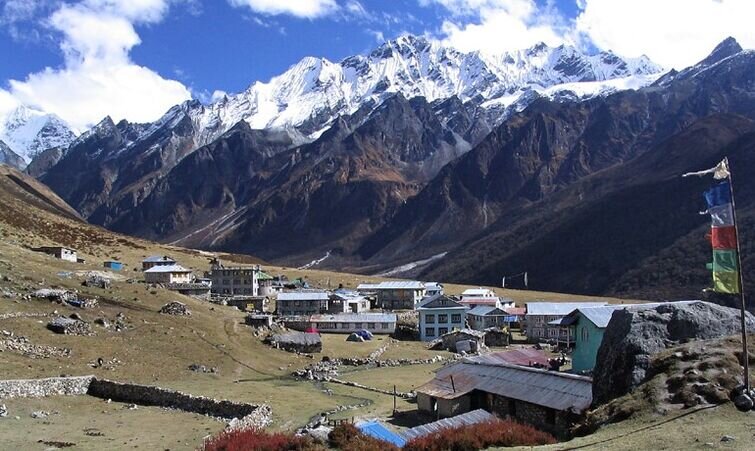
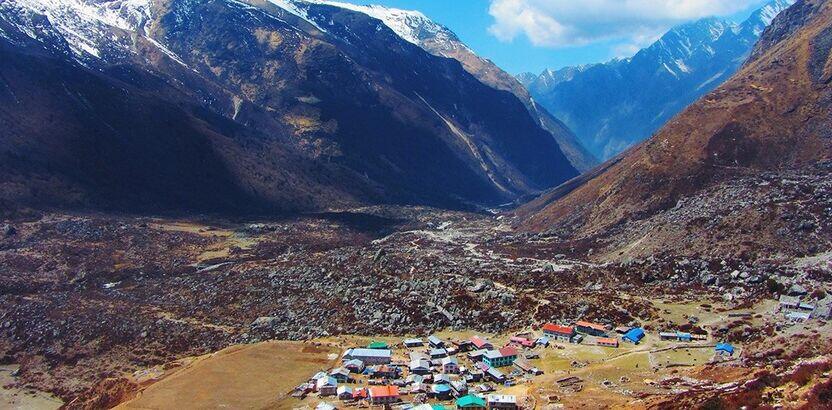
- Walk the full length of the Langtang Valley from the river gorge at Syabrubesi through rhododendron forest and Tamang villages all the way to Kyanjin Gompa (3,870m)
- Hike to Kyanjin Ri (4,773m) for an intimate face-to-face panorama of Langtang Lirung (7,227m) and the Kyanjin Glacier — one of the most powerful mountain viewpoints in Nepal
- Optional summit of Tserko Ri (5,033m) — the finest 360-degree panoramic viewpoint in the entire Langtang region, with over 20 peaks visible simultaneously
- Explore the ancient Kyanjin Gompa monastery and taste world-famous yak cheese from the legendary Kyanjin Cheese Factory
- Walk through the rebuilt Langtang Village — a profound and moving testament to Tamang resilience after the 2015 earthquake avalanche
- Descend through the beautifully positioned ridge village of Thulo Syabru with sweeping panoramas of Ganesh Himal and Langtang Lirung
- Climb through the remote forest monastery settlement of Sing Gompa (3,330m) — ancient gompa, working cheese factory, yak pastures, and the finest forest of the entire circuit
- Stand at the sacred Gosainkunda Lake (4,380m) — the holiest high-altitude pilgrimage site in Nepal for both Hindus and Buddhists — and visit the companion sacred lakes of Saraswatikunda and Bhairavkunda
- Cross the dramatic Lauribina La Pass (4,610m) with panoramic views of Langtang, Ganesh, Manaslu, and the distant Annapurna range
- Descend into the Helambu region — the ancestral homeland of the Hyolmo people — through the junction at Tharepati (3,690m) and the remote ridge at Ghopte
- Immerse deeply in Hyolmo culture in the beautifully preserved villages of Melamchi Ghyang (2,530m) and Tarkeghyang (2,740m) — visiting ancient monasteries dating back centuries
- Explore the legendary Tarkeghyang Monastery — founded in 1727, rebuilt in distinctive Bhutanese style in 1969, and one of the most significant religious buildings in the Helambu region
- Walk through the orchards and hilltop fields of Sermathang (2,610m) and taste the famous Helambu apples in season
- Complete the full circuit finishing at Melamchi Pul Bazaar — having walked every stage on entirely new, non-repeated trail from Syabrubesi to the southern Helambu valley
Trip Summary
Some treks in Nepal take you somewhere specific and extraordinary. The Langtang Helambu Trek takes you through an entire world. In 20 days, this grand circuit moves through four completely distinct experiences the cultural heritage of Kathmandu, the glacial forest gorge and high alpine meadows of the Langtang Valley, the sacred lake basin and mountain pass of the Gosainkunda section, and the ancient Hyolmo Sherpa villages and apple-orchard ridges of the Helambu valley weaving them into a single, continuous journey that begins with a road drive to Syabrubesi and ends with a descent to Melamchi Pul Bazaar.
This 20-day itinerary is the most complete and generously paced version of the Langtang Helambu circuit available. It includes a dedicated Kathmandu heritage sightseeing day at the start, a full dual acclimatization hike day at Kyanjin Gompa with both Kyanjin Ri (4,773m) and the option to summit Tserko Ri (5,033m), proper rest pacing throughout the Gosainkunda approach, a deep cultural immersion through the Helambu villages of Melamchi Ghyang, Tarkeghyang, and Sermathang, and two practical buffer days in Kathmandu at the end. No corners cut. No stages rushed. Every section given the time it deserves.
The circuit starts at Syabrubesi and ends at Melamchi Pul Bazaar a complete, point-to-point journey that never repeats a single kilometer of trail and traces the full geographic and cultural breadth of the Langtang region from its northern gateway to its southern cultural heartland.
When To Visit
The 20-day Langtang Helambu circuit covers four sections at different altitudes and the most altitude-sensitive sections Tserko Ri (5,033m), Gosainkunda (4,380m), and Lauribina La Pass (4,610m) determine the best and worst seasons with particular clarity.
- Spring (March to May) is outstanding for this complete circuit. The lower forest sections from Syabrubesi to Lama Hotel and from Thulo Syabru to Sing Gompa are spectacular in rhododendron bloom weeks of red, pink, and white filling the forest canopy. Gosainkunda Lake is thawing from winter ice by late March and fully open by April. Lauribina La is clear and safe from April onward. The Helambu apple orchards are in blossom in March and April, and the Tarkeghyang exploration day in this season is particularly beautiful. Early May is warmer and slightly hazier but the full circuit is still entirely enjoyable.
- Autumn (September to November) is the peak season and the window for the finest mountain visibility of the year. The monsoon clears the air completely and October delivers crystalline blue skies and the sharpest panoramas from Tserko Ri, Kyanjin Ri, Lauribina La, and the Chisapani ridge. The Helambu apples are at their peak harvest in October the Tarkeghyang exploration day in autumn is a genuine seasonal highlight. The entire circuit performs at its absolute best in the first three weeks of October.
- Monsoon (June to August) is not recommended for the full circuit. Lauribina La becomes dangerous in wet conditions, forest trails at lower elevations are leech-heavy and slippery, and mountain views are obscured for extended periods. The exception is the Janai Purnima pilgrimage at Gosainkunda in August an extraordinary religious gathering worth planning around if it is your primary interest.
- Winter (December to February) is possible only for the lower sections. Tserko Ri becomes icy and potentially dangerous, Gosainkunda Lake freezes completely, and Lauribina La can be impassable with deep snow. The full 20-day circuit in winter requires exceptional cold-weather preparation and a guide with specific high-altitude winter experience.
Itinerary
Welcome to Nepal. Our team meets you at Tribhuvan International Airport and transfers you to your hotel in the heart of Kathmandu. After settling in, your trekking guide joins you for a thorough pre-trek briefing covering the full 20-day route across all four sections, altitude profiles, cultural background on the Tamang and Hyolmo communities you will visit, permit requirements, gear checks, altitude awareness protocols, and the logistics of tomorrow’s heritage sightseeing day and the subsequent road journey to Syabrubesi.
The Langtang Helambu Trek is long enough and varied enough to benefit from a proper orientation before you set out. This evening’s briefing helps you understand not just where you are going day by day but how the three mountain sections of the circuit build on one another and what to look forward to in each.
If you arrive with energy to spare after your flight, a short walk to the great Boudhanath Stupa whose massive white dome and watchful painted eyes are one of the most recognizable religious images in the entire Himalayan world sets an immediate and powerful tone for the cultural journey ahead. Overnight in Kathmandu.
Before you head into the mountains, the Kathmandu Valley gives you a day to absorb the cultural and spiritual foundations that underpin everything you will see on the trek ahead — the Buddhist monasteries, the mani walls, the spinning prayer wheels, the butter lamp offerings, the chortens and gompas that line every mountain trail.
Your guide accompanies you on a full-day tour of the Kathmandu Valley’s greatest sites.
Pashupatinath Temple on the banks of the Bagmati River is one of the holiest Hindu shrines in Asia a complex of golden-roofed temples, active cremation ghats, wandering ash-covered sadhus, and deeply concentrated spiritual atmosphere. Watching the rituals unfold along the river here gives you an understanding of the living Hindu faith that no textbook can replicate.
Boudhanath Stupa the largest Buddhist stupa in Nepal and the spiritual center of the country’s Tibetan community is a place of constant circumambulation. Walk the kora path around the great white dome with monks, pilgrims, schoolchildren, and elderly devotees, all moving clockwise in the ancient tradition, prayer beads in hand and butter lamps flickering in every niche around the base. The monasteries surrounding the stupa are open and active.
Swayambhunath (Monkey Temple) sits on a forested hilltop above the western edge of the Kathmandu Valley a 2,500-year-old stupa complex reached by 365 stone steps, accompanied by the resident monkey population that has given it its popular name. The panoramic view of the Kathmandu Valley from the top is excellent.
Patan Durbar Square in Lalitpur showcases the finest surviving examples of Newari architecture and craftsmanship anywhere in Nepal a medieval royal courtyard surrounded by temples, palaces, stone sculptures, and carved wooden windows of extraordinary detail and artistry.
Return to your hotel in Kathmandu for a final good night’s sleep before the early morning road departure tomorrow. Overnight in Kathmandu.
An early departure northwest from Kathmandu toward the Langtang trailhead. The road climbs out of the Kathmandu Valley through Balaju and rises into the Nuwakot hills terraced farmland, small roadside shrines, pine-forested ridgelines, and the first views of the true hill country opening north of the capital. The route then joins the Trishuli River valley, following the wide, churning river northward through Dhunche the district headquarters of Rasuwa before descending steeply into the Bhote Koshi gorge to arrive at Syabrubesi (1,550m).
Syabrubesi sits at the confluence of the Trishuli and Langtang rivers a compact, lively border-region town with teahouses, basic gear shops, and a community shaped by generations of mountain trade and trekking activity. This is where the road ends and the mountains begin. Check into your teahouse, eat a proper meal, and prepare mentally for the first day on the trail tomorrow. The Langtang Valley is waiting. Drive time: 7–8 hours.
The first walking day of the entire 20-day circuit and one of the most immersive forest experiences on any Nepal trek. From Syabrubesi, the trail crosses the Bhote Koshi River on a suspension bridge and enters Langtang National Park within the first few minutes Nepal’s first Himalayan national park, established in 1976, and one of its most biodiverse protected areas.
The forest takes over immediately. Dense bamboo thickets, oak and rhododendron canopy, the roar of the Langtang Khola River in the gorge far below, the filtered green light of the forest corridor everything about this trail announces that you are now walking in a genuinely wild and protected place. The settlements of Bamboo (1,960m) and Rimche (2,400m) are the natural lunch stop small teahouse clusters where hot soup and sweet tea taste better than they have any right to at this altitude.
Yak trains pass with bells ringing. Gray langur monkeys move through the canopy overhead. The bamboo sections are primary red panda habitat walk slowly in the early morning and look carefully into the understory.
Lama Hotel (2,380m) is a well-established cluster of teahouses where the forest begins to thin and the first glimpses of high peaks appear above the ridge. A reliable and welcoming overnight. Walking time: 5–6 hours.
Today the Himalayas take possession of the horizon. From Lama Hotel the trail climbs continuously through thinning forest rhododendron giving way to fir and pine, pine giving way to open scrubland and the Langtang Himalayan range begins emerging above the northern ridge in stages, each stage more dramatic than the last.
At Ghoda Tabela (3,030m) the wide, grassy flat used historically as a grazing area for pack animals, the national park checkpoint marks the entrance to the upper valley. The landscape opens here into the broad, meadowed width of the upper Langtang Valley. Ancient mani walls begin lining both sides of the trail, carved with the Buddhist prayer Om Mani Padme Hum, and they continue without interruption all the way to Kyanjin. Always pass to the left.
Langtang Village (3,430m) stands today as a testament to extraordinary human resilience. On April 25, 2015, the earthquake that shook Nepal sent a catastrophic avalanche into this valley the debris flow buried the original village in seconds and killed over 350 people. The community rebuilt every building by hand and by choice, refusing to abandon the valley that has been their home for generations. Walking into Langtang Village with that knowledge makes it one of the most quietly moving arrivals of any trek in Nepal. Walking time: 6–7 hours.
A shorter, beautiful walking day through the widening upper valley perhaps the most aesthetically complete single day of the Langtang section. The trail continues east from the village through open alpine meadows where yak herds graze freely across the grassland and the peaks of the northern border ridge dominate the skyline with growing authority.
A magnificent water-powered prayer wheel spins ceaselessly beside the trail one of the most satisfying small details in the upper valley. The peaks ahead grow more immediate and more specific as you walk: Langtang Lirung (7,227m), Langtang II, Kimshung, Yansa Tsenji, Dorje Lakpa all visible and all impressive.
Kyanjin Gompa (3,870m) is the spiritual heart of the entire upper valley. An ancient monastery, a working yak cheese factory producing extraordinary cheese since the 1950s with Swiss technical assistance, and a small permanent community living at nearly 4,000m through every season of the year. Visit the monastery interior this afternoon the thangka paintings, the butter lamp altar, the smell of juniper incense, and taste the cheese. Rest well and sleep early. Tomorrow is the most demanding and most rewarding hiking day of the entire Langtang section. Walking time: 3–4 hours.
The finest day of the Langtang section and the acclimatization day that prepares you for the sustained altitude demands of the Gosainkunda section ahead. You have two excellent options from Kyanjin Gompa today and the fitter and more ambitious among your group may attempt both.
Kyanjin Ri (4,773m) is the classic acclimatization hike a steep, direct 2 to 2.5-hour climb above the village that delivers one of the most personally powerful mountain views in Nepal. At the top, you stand face to face with the southern wall of Langtang Lirung (7,227m) a wall of ice and rock so close and so immense it fills your entire northern field of vision. The Kyanjin Glacier pours from the mountain directly below you. This is not a distant panoramic view. This is a close, intimate, slightly overwhelming encounter with a 7,000m peak. Most trekkers on the Helambu circuit hike to Kyanjin Ri and find it fully sufficient for the acclimatization day.
Tserko Ri (5,033m) is the more ambitious option a full 4 to 5-hour summit hike from the village that gains an additional 1,163 meters of altitude beyond Kyanjin Gompa. The climb is steep, sustained, and aerobically demanding at this altitude, but the reward at the top is proportionally greater. Standing at just over 5,000m, the 360-degree panorama opens across more than 20 Himalayan peaks simultaneously Langtang Lirung, Ganesh Himal (7,429m), Dorje Lakpa (6,990m), Naya Kanga (5,844m), Langshisha Ri, Jugal Himal, Manaslu (8,163m), and on the clearest days even the distant outlines of the Annapurna range to the west and Shishapangma (8,027m) across the Tibetan border. The entire Langtang Valley stretches below like a relief model. Many experienced Himalayan trekkers consider Tserko Ri the finest high-altitude viewpoint accessible on a standard teahouse circuit in Nepal.
Those who feel strong and well-acclimatized from the first night at Kyanjin Gompa should attempt Tserko Ri. Those who feel any altitude sensitivity should stick to Kyanjin Ri and rest fully in the afternoon. Both options provide the essential altitude adaptation before the Gosainkunda section. Your guide will assess and advise individually.
Back at Kyanjin Gompa by late afternoon — eat generously, hydrate fully, and rest well. Hike time: 4–5 hours (Kyanjin Ri) or 7–8 hours (Tserko Ri).
The long pivot day the hinge between the Langtang Valley and the Gosainkunda section of the entire circuit. The trail retraces the route westward from Kyanjin Gompa through the upper valley mani walls, past the rebuilt Langtang Village, through Ghoda Tabela, and back down through the progressively thickening forest to Lama Hotel. Approximately 21 kilometers and nearly 1,500m of altitude loss.
An early start is essential. The trail is familiar in reverse, but reverse terrain is never quite the same you notice details you missed on the way up, see the valley from a new angle, and understand the scale of what you have walked through in a new way. The forest returning around you as you descend is immediately and physically welcome. By Lama Hotel your lungs are noticeably happier.
Eat a full dinner, go to bed early, and prepare mentally for the circuit to branch south tomorrow toward a completely different world. Walking time: 6–7 hours.
Today the Gosainkunda section begins. The trail leaves the main Langtang Valley floor at Rimche and branches south and upward through dense rhododendron and oak forest climbing a broad ridge toward Thulo Syabru (2,210m) rather than descending back to Syabrubesi. The forest on this section is quieter and less traveled than the main valley floor trail, and the climbing feels different more intimate, more enclosed, as you gain the ridge through the canopy.
Thulo Syabru “big Syabru” in the local language, is one of the finest villages in the Langtang region. Perched along a broad south-facing ridge, it opens onto an extraordinary panorama: Ganesh Himal (7,429m) and Langtang Lirung (7,227m) rise to the north, the forested hill ranges of Nuwakot district roll south toward Kathmandu, and the village itself traditional stone houses, carved wooden window frames, chortens at every trail junction, a small gompa sits in the middle of it all with complete natural confidence. Spend the evening watching the sun descend behind Ganesh Himal. This is one of those villages you are glad the trail passes through. Walking time: 5–6 hours.
One of the longest and most sustained forest climbing days of the entire circuit. From Thulo Syabru the trail heads east and upward through the heart of the Langtang National Park forest climbing through Dursagang (2,660m) and the high ridge at Foprang Danda (3,200m) before easing as it reaches the upper forest zone. The first two hours are steep and demand steady, unhurried effort.
The forest on this section is among the finest of the entire 20-day circuit. Tall fir and hemlock draped in silver-green old man’s beard lichen, patches of high-altitude bamboo, scattered juniper trees, and the constant sound of unseen birds in the canopy above. As the forest thins near the ridge, the views open northward Langtang Lirung emerging, Ganesh Himal to the northwest, the broad sweep of the Tibetan border peaks on the far horizon.
Sing Gompa (3,330m) also called Chandanbari, is a small, remote, and deeply atmospheric settlement arranged around an ancient working monastery and a yak cheese factory that is the primary cheese production operation for this entire section of the Langtang region. The cheese here is excellent and the monastery is worth a quiet, unhurried visit. The upper meadows surrounding the settlement and the mountain views to the north give Sing Gompa a peaceful, isolated character that is entirely its own. Walking time: 5–6 hours.
Above Sing Gompa the forest begins to release its hold on the landscape. The trail climbs through progressively more open terrain scattered fir and juniper, then low alpine scrub, then the wide open sky of the high pasture zone passing through Cholangpati (3,584m), a broad ridge with excellent teahouses and the finest panoramic mountain views of the entire Gosainkunda approach.
From Cholangpati the panorama is already extraordinary Langtang Lirung, Ganesh Himal, and Manaslu all visible, and on the clearest days even the faint blue outline of the Annapurna range to the southwest. The trail continues climbing to the high yak pastures of Lauribina Yak (3,920m) a handful of simple teahouses on a wide, wind-exposed ridge that has served as a grazing area for Tamang herding communities for generations.
At nearly 4,000m the air is noticeably thin and the temperature drops sharply after sunset. Layer up early, eat a filling dinner, and go to bed knowing that Gosainkunda Lake the spiritual centerpiece of the entire circuit is directly above you, just one more morning of climbing away. Walking time: 4–5 hours.
The most spiritually significant day of the entire 20-day circuit. From Lauribina Yak the trail climbs above the tree line completely into a raw, open, high-altitude landscape where the sky feels enormous and the sacred lakes draw closer with every step.
The trail passes the companion lakes in sequence Saraswatikunda first, then Bhairavkunda each one perfectly still in its rocky basin, the surface reflecting the surrounding peaks and the wide blue sky of altitude. These are venerated bodies of water in both Hindu and Buddhist tradition, and the quality of silence around them is unlike anything in the forested lower valley.
Gosainkunda Lake (4,380m) occupies a place in Nepal’s spiritual geography that few other natural sites can match. In Hindu mythology, Lord Shiva drove his trident into the Himalayan rock here to release a spring of sacred water the source that cooled the cosmic poison he had swallowed to save the world during the churning of the primordial ocean. Every year on the full moon of Janai Purnima (typically August), thousands of Hindu and Buddhist pilgrims make this demanding high-altitude journey to bathe in the sacred water. The scale of that annual gathering is one of the most extraordinary events in the entire Himalayan world.
Outside the festival, the lake belongs to the wind and the peaks and the occasional trekker who has earned the right to stand at its edge. The water is a deep, cold turquoise-blue. The mountains are streaked with snow. A small shrine sits at the water’s edge. Walk the shoreline slowly and stay until the afternoon light changes the color of the water. This is not a place to rush through. Walking time: 3–4 hours.
The most physically demanding day of the entire 20-day circuit and the one every trekker remembers most vividly. Rise before dawn, eat a full breakfast, and begin the climb to Lauribina La Pass (4,610m) in the still, cold air of the early morning when visibility is sharpest and the trail surface is most stable.
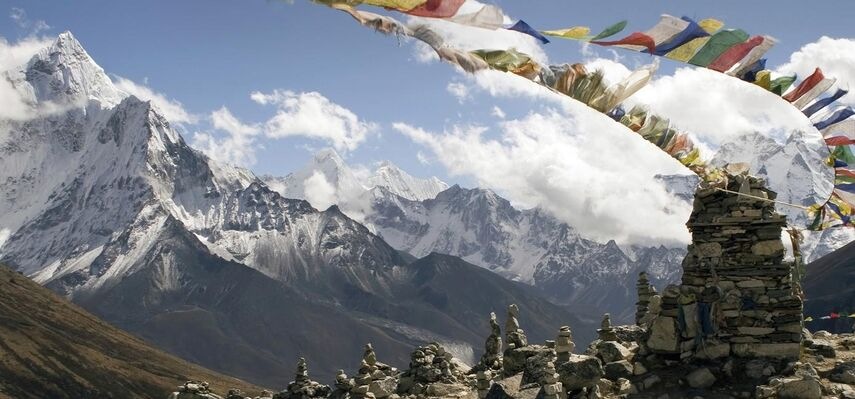
From Gosainkunda the trail climbs steeply along the northern lakeshore and then up across open rock and scree to the pass. There is no shelter from the wind on the upper approach the gradient is steep and the altitude makes every breath deliberate and conscious. Slow down if needed. Stop and look around. At the top, a cluster of prayer flags snaps and streams in the cold mountain air.
The panorama from Lauribina La (4,610m) is one of the finest high-altitude views of the entire circuit Langtang Lirung, Ganesh Himal (7,429m), Dorje Lakpa (6,990m), Jugal Himal, Manaslu (8,163m) all spread across the northern horizon simultaneously, with the sacred lake basin behind you and the long green ridges of the Helambu country descending ahead.
The descent to Ghopte (3,440m) is steep, long, and requires concentration loose scree in the upper section, then progressively denser forest as altitude drops. The small hidden lake of Surya Kunda appears briefly beside the trail on the descent. Ghopte is a remote, forested settlement with a handful of teahouses that feels genuinely isolated from the world a fitting end to the hardest day on the circuit. Walking time: 6–7 hours.
From Ghopte, the trail climbs gradually through upper rhododendron and fir forest to the famous ridgeline junction of Tharepati (3,690m) the crossroads where the trails from Gosainkunda, the Langtang Valley, and the Helambu circuit all converge. The panoramic views from Tharepati on a clear morning are among the finest of the entire 20-day journey Langtang, Ganesh, Jugal, Manaslu, Dorje Lakpa, and on the clearest autumn and spring days even the distant pyramid of Mount Everest on the eastern horizon.
At Tharepati, the trail turns decisively south into the Helambu region. The descent from the ridge is steep at first down a rocky ravine with views into the deep Helambu valley below, and the vegetation quickly changes character as altitude is lost. Fir forest gives way to oak, oak to rhododendron, and then the first Hyolmo settlements appear on the lower ridges.
After crossing a clear mountain stream on a wooden bridge, the trail climbs briefly to reach Melamchi Ghyang (2,530m) one of the most sacred and beautiful Hyolmo villages in the Helambu region. The Melamchi Ghyang Monastery is ancient, richly decorated, and deeply alive the sounds of chanting and drums occasionally drifting across the village in the mornings and evenings. The large prayer wheel at the village entrance spins constantly. The stone-paved lanes smell of juniper incense. This is one of the most genuinely atmospheric arrivals of the entire circuit. Walking time: 6–7 hours.
From Melamchi Ghyang the trail drops steeply through the forest to the Melamchi Khola River a powerful, clear mountain river crossed on a long suspension bridge and then climbs back up the opposite hillside through terraced farmland and forest to Tarkeghyang (2,740m). This descent-and-climb pattern across the Melamchi Khola is characteristic of the Helambu valley and the effort is entirely repaid by the village that waits on the other side.
Tarkeghyang the largest and most culturally significant village in the Helambu region carries one of the most interesting origin stories of any village in Nepal. Its name, meaning “100 horses,” derives from the reward demanded by a revered Lama summoned by the King of Kathmandu in the 18th century to stop a devastating epidemic. With his 100 horses, the Lama established the village monastery here in 1727. The monastery was completely rebuilt in 1969 in a striking Bhutanese architectural style and remains one of the most visually distinctive and spiritually significant religious buildings in the Helambu region.
The village surrounding the monastery is prosperous, well-maintained, and genuinely beautiful apple orchards surrounding the traditional stone houses, prayer flags on every rooftop, the warm hospitality of the Hyolmo community immediately and tangibly felt. Spend the evening exploring the lanes of the village and visiting the monastery. The thangka paintings inside the prayer hall are extraordinary. Walking time: 4–5 hours.
A full day with no bags to carry and no destination to reach, dedicated entirely to Tarkeghyang and its surroundings. This is one of the most genuinely rewarding free days of the entire 20-day circuit.
Begin the morning with a proper, unhurried visit to the Tarkeghyang Monastery sit in the prayer hall as morning light comes through the carved window frames, observe the elaborate murals and thangka paintings that cover every surface, and ask your guide to translate the stories they depict. The monastery has been an active religious center for almost 300 years and the layers of history visible in the architecture and artwork reward careful attention.
The ridge above Tarkeghyang provides excellent short hiking the trail climbs through apple orchards to a broad viewpoint with panoramic views of the Jugal Himal to the north and the rolling green Helambu valley to the south and east. On a clear October or April morning, the distant silhouette of Mount Everest is visible from the ridge above the village.
The Helambu region is famous throughout Nepal for its apple production. Depending on your timing, you may be able to taste freshly harvested apples directly from the orchards, buy apple juice or dried apple from village households, or simply walk through the orchards as the fruit hangs heavy on the branches. This kind of unscripted time in a genuine, living mountain community where culture is not performed for visitors but simply lived is increasingly rare on Nepal’s trekking circuits and is one of the defining gifts of this 20-day itinerary.
Leaving Tarkeghyang, the trail heads south through a pleasant and gently rolling landscape of apple orchards, terraced fields, and open forest. The character of the walking shifts noticeably from the dramatic ridge and pass terrain of the past several days these are agricultural hillsides, warm and settled, with the sounds of village life drifting across the fields.
The route passes through Ghangyul a small hamlet whose residents practice Drukpa Kagyu Buddhism, the national religion of Bhutan, a fascinating cultural detail in this corner of Nepal, and then through Chumik, where a large, newly constructed peace stupa marks the trail junction. Keep an eye on the forested ridges this section of the Helambu valley is home to resident gray langur monkey populations that are commonly seen moving through the trees in the morning hours.
Sermathang (2,610m) is a lovely, quiet hilltop village that makes the perfect penultimate overnight stop on the circuit. Surrounded by terraced fields and apple orchards with views across the Helambu valley to the north, a small but well-preserved old monastery sits at the top of the settlement. On clear autumn mornings, both Ganesh Himal, Jugal Himal, Langtang Lirung, and the distant silhouette of Everest are all visible from the village. The pace of life in Sermathang is unhurried, the food is warm, and the long afternoon view across the valley from the tea terrace is worth sitting with for a long time. Walking time: 3–5 hours.
The final trekking day a long descent through the lower Helambu hills to the valley road. From Sermathang the trail drops steadily and continuously southward through a series of small Sherpa settlements and increasingly lush, lower-altitude forest, losing nearly 1,750m of altitude over the course of the walk. The birdsong in the lower forest sections is extraordinarily rich this transitional zone between alpine ridge and the Melamchi valley floor supports over 300 bird species and the variety of calls in the early morning is something experienced birders travel specifically to hear.
As the forest gives way to terraced farmland and the sounds of the lower valley motorcycles, temple bells, dogs, the clinking of distant livestock you know the mountains are behind you. Melamchi Pul Bazaar (870m) is a busy small market town on the Melamchi River with the road access and the noise and the warmth of a place where the mountains meet the lowlands.
Your trekking vehicle is waiting. The drive back to Kathmandu follows the Melamchi River valley westward and then the main highway approximately 2 hours depending on traffic. Back in the city, transfer to your hotel, take the most appreciated shower of your life, and celebrate over the best meal you can find. You have walked the complete Langtang Helambu circuit every section, every stage, every meter of new trail. Walking time: 3–4 hours. Drive time: 2 hours.
A practical buffer day built into the itinerary to absorb any road delays, weather disruptions, or unexpected logistics events that might affect the return journey from Melamchi Pul Bazaar. Road conditions in the Melamchi valley can occasionally be affected by seasonal landslides or local traffic events.
If your return went smoothly, you have a free day in Kathmandu and after 15 days on the trail, the city feels extraordinary in all of the right ways. Everything is warmer, louder, more colorful, and more alive than it did before you left.
Use the day well. Visit any heritage sites missed on Day 2 Bhaktapur Durbar Square with its 55-window palace and ancient potters’ quarter is a UNESCO site that rewards a full day’s exploration. The hilltop viewpoint of Nagarkot on the eastern rim of the Kathmandu Valley offers a sunrise Himalayan panorama from Dhaulagiri to Kanchenjunga on a clear morning. Or simply stay in Thamel shop for souvenirs, book a massage, eat at one of the many excellent restaurants, and let the mountains settle comfortably into memory at their own pace. Overnight in Kathmandu.
Your 20-day Langtang Helambu Trek comes to a close. Our team transfers you to Tribhuvan International Airport for your onward journey. You leave Nepal having walked one of the most complete and varied mountain circuits in the country from Syabrubesi’s river confluence through the glacial upper valley, over the sacred lake and mountain pass, and down through the deep cultural heartland of the Helambu valley to the road at Melamchi Pul Bazaar with Kathmandu’s heritage as the opening chapter and a free day of celebration as the closing one.
Trek Difficulty & Physical Demands
The Langtang Helambu Trek is rated moderate to strenuous the most complete version of the Langtang circuit and the one that demands the most sustained fitness and mental commitment, primarily due to its length, the optional Tserko Ri summit at 5,033m, the sustained high-altitude days around Gosainkunda, and the physically demanding Helambu descent section.
- Altitude: This trek potentially spends more days above 3,500m than any other standard Langtang circuit. The dedicated acclimatization day at Kyanjin Gompa (Day 7) with Kyanjin Ri and optionally Tserko Ri is the critical altitude preparation before the Gosainkunda section. The gradual ascent from Sing Gompa through Lauribina Yak to Gosainkunda gives the body reasonable adaptation time between the two high sections.
- Tserko Ri (optional, 5,033m): The highest point of the entire circuit and a genuinely demanding 7–8 hour summit day. Non-technical but aerobically intense at altitude. Recommended only for trekkers who feel strong and well-acclimatized after the first night at Kyanjin Gompa. Your guide will advise based on individual condition.
- Lauribina La Pass (4,610m): Steep, exposed, and windy on the upper approach. Long descent on loose terrain. In spring and autumn conditions, manageable for well-prepared trekkers with trekking poles and good footwear.
- Trek duration: 15 full trekking days covering 145–160 km is a serious physical commitment. The cumulative daily walking 4–8 hours across highly varied terrain requires genuine endurance alongside cardiovascular fitness.
- Physical fitness: 3–4 months of consistent training before departure is the ideal preparation — hiking with a loaded backpack, running, cycling, stair work, and leg-strengthening exercises. Strong knees for extended descents and cardiovascular capacity for sustained high-altitude uphill sections are both essential.
- Suitability: This is one of Nepal’s finest treks for fit trekkers with at least some prior hiking experience. Highly motivated beginners with good fitness can complete it with the right pacing and guide support. Prior high-altitude experience is a meaningful advantage for the Gosainkunda and pass sections specifically.
Best Time to Trek: Seasonal Comparison
| Season | Months | Weather | High Section Conditions | Views | Recommended |
| Spring | Mar–May | Warm & Stable | Excellent from April | Excellent | Best |
| Monsoon | Jun–Aug | Wet & Unstable | Dangerous on Pass | Poor | Avoid |
| Autumn | Sep–Nov | Cool & Clear | Excellent | Excellent | Best |
| Winter | Dec–Feb | Cold & Snowy | Icy / Partially Impassable | Good (lower) | Experienced Only |
Pro tip: The single best window for the entire 20-day circuit is the first three weeks of October. Tserko Ri offers its finest panorama, Gosainkunda Lake is dramatic and fully open, Lauribina La conditions are ideal, the Helambu apples are at peak harvest, and the Kathmandu heritage sightseeing on Day 2 benefits from the clear October skies and dry streets. October perfectly aligns every section of this circuit at its best simultaneously.
Booking Your Langtang Helambu Trek – 20 Days
Our team manages every logistical detail across all four sections of the 20-day circuit from Kathmandu heritage sightseeing to the final drive from Melamchi Pul Bazaar.
Step 1 — Contact us. Reach out via our website, email, or WhatsApp with your preferred travel dates and group size. We respond within 24 hours with the complete day-by-day itinerary and full cost breakdown.
Step 2 — Confirm your booking. A 20% deposit secures your dates. We immediately process permits for both national parks, arrange transport logistics for both entry and exit transfers, and assign your guide.
Step 3 — Prepare. We send a comprehensive pre-departure guide fitness training recommendations, detailed gear list, cultural notes on Tamang and Hyolmo communities, altitude awareness specific to the Tserko Ri and Gosainkunda sections, tips for the Kathmandu sightseeing day, and day-by-day expectations for all 20 days.
Step 4 — Arrive in Kathmandu. We collect you from the airport, brief you fully across all four sections of the circuit, and prepare you for the sightseeing day and the road journey to Syabrubesi.
Step 5 — Trek. Your licensed guide leads you from Syabrubesi to Melamchi Pul Bazaar through every stage of the circuit, supported by experienced porters and our full logistical backing from start to finish.
Step 6 — Pay the balance. The remaining 80% is due on arrival in Kathmandu before departing for Syabrubesi.
Cancellation Policy:
- 30+ days before departure: Full deposit refunded minus bank transfer charges
- 15–29 days before: 50% refund of deposit
- Less than 15 days: Deposit forfeited, no refund
Important: Travel insurance with emergency helicopter evacuation coverage above 5,500m is mandatory for all trekkers. The Tserko Ri option reaches 5,033m and Lauribina La is at 4,610m both remote from road access. A helicopter rescue from the upper circuit costs USD 3,000–6,000 or more. Your policy must explicitly cover high-altitude activities.
Cost Details
Cost Includes
- Airport pick-up and drop-off in Kathmandu
- Full-day guided Kathmandu heritage sightseeing tour (Day 2) including private vehicle
- Kathmandu–Syabrubesi ground transportation (private jeep or tourist bus)
- Melamchi Pul Bazaar–Kathmandu return ground transportation (private vehicle)
- 2 nights’ hotel accommodation in Kathmandu (bed & breakfast, 3-star — arrival and buffer nights)
- All teahouse and lodge accommodation during the trek (15 nights)
- All meals during the trek — breakfast, lunch, and dinner every day on trail
- Experienced, English-speaking, government-licensed trekking guide throughout
- One porter for every two trekkers (maximum 15 kg per porter load)
- All required trekking permits:
- Langtang National Park Entry Permit
- Shivapuri Nagarjun National Park Entry Permit
- TIMS Card (Trekkers’ Information Management System)
- Guide and porter wages, meals, accommodation, and full insurance
- All government taxes and local charges
- Sleeping bag and duffel bag rental (if needed)
- First Aid Kit including pulse oximeter carried by guide throughout
- Emergency oxygen supply for high-altitude sections
- Emergency evacuation arrangement (evacuation cost covered by your travel insurance)
Cost Excludes
- Nepal entry visa fee (approx. USD 50 for 30 days — obtainable on arrival at Kathmandu airport)
- International flights to and from Kathmandu
- Travel insurance with emergency helicopter evacuation coverage (mandatory)
- Entry fees to heritage sites on the Kathmandu sightseeing day (Pashupatinath: approx. USD 15 for foreigners; Patan Museum: approx. USD 10)
- Meals in Kathmandu beyond breakfast
- Hot showers, Wi-Fi, and device or battery charging along the trek (charged at teahouses)
- Personal snacks, bottled water, energy drinks, and alcoholic beverages
- Tips and gratuity for guide and porter (strongly recommended)
- Personal trekking gear and clothing
- Extra nights in Kathmandu beyond the planned itinerary
- Helicopter rescue costs (must be covered by personal travel insurance)
- Monastery entry donations at Gosainkunda, Kyanjin, Melamchi Ghyang, and Tarkeghyang
- Personal expenses — laundry, souvenirs, phone calls, and incidentals
Trip Gallery
Trek Essentials
- Thermal base layer top and bottom — 2 sets
- Mid-layer fleece or softshell jacket
- Warm down jacket or insulated puffy — essential from Kyanjin Gompa upward and critical at Gosainkunda where overnight temperatures fall well below freezing
- Waterproof, windproof hardshell jacket and trousers — essential for Tserko Ri summit day, Lauribina La crossing, and the exposed Gosainkunda section
- Trekking trousers — 3 pairs for 20 days
- Warm trekking socks, wool or synthetic — 5 to 6 pairs
- Thin liner gloves and warm outer gloves or mittens — both layers needed above 4,000m
- Warm beanie or wool hat — worn daily from Kyanjin Gompa through Gosainkunda
- Sun hat with brim for lower valley and Helambu sections
- Neck gaiter or buff — essential on Tserko Ri, Lauribina La, and the Cholangpati ridge
- Waterproof, ankle-support trekking boots — broken in thoroughly before departure. 15 trekking days across highly varied terrain from river gorge to 5,000m summit and multiple long descent days make boot quality and fit non-negotiable.
- Lightweight camp sandals or flip-flops for teahouse evenings
- Gaiters — recommended for Tserko Ri and Lauribina La; essential in winter or after snowfall
- Trekking poles — both collapsible; critical on Tserko Ri summit day, Lauribina La crossing, and all long descent days
- Daypack (20–25 liters) for daily trail essentials
- Duffel bag (60 liters) for your porter
- Sleeping bag rated to -15°C to -20°C — Gosainkunda Lake nights are the coldest overnight point of the circuit
- Headlamp with spare batteries — pre-dawn starts for Tserko Ri and Lauribina La day require reliable lighting
- Quality sunglasses with UV400 protection — UV radiation is intense at Gosainkunda, Lauribina La, and Tserko Ri summit
- Water bottle (1–2 liters) or hydration bladder
- Water purification tablets or personal filter
- Diamox (acetazolamide) — strongly recommended for the Gosainkunda and optional Tserko Ri sections; consult your doctor before the trek. Particularly important given the altitude jump from Sing Gompa (3,330m) to Gosainkunda (4,380m) over two days.
- Personal pulse oximeter — monitoring blood oxygen saturation above 4,000m provides concrete data alongside subjective assessment; your guide will also carry one
- Personal first aid kit — blister pads, ibuprofen, bandages, antiseptic cream
- Sunscreen SPF 50+ and SPF lip balm — critical above 4,000m and reflected from snow and lake surfaces
- Hand sanitizer and biodegradable wet wipes
- Insect repellent for lower forest sections — Shivapuri National Park and lower Langtang gorge
- Diarrhea medication and oral rehydration salts
- All personal prescription medications for the full 20-day duration
- Valid passport with at least 6 months remaining validity
- Nepal visa (obtainable on arrival at Kathmandu airport)
- Printed travel insurance policy with emergency helicopter evacuation coverage details
- 2 passport-sized photos for permit processing
- Emergency contact card kept on your person throughout
Final Thoughts: Final Thoughts
Twenty days is a commitment. It is also, for the right trekker, a gift the gift of enough time to actually absorb what you are walking through rather than moving too quickly to feel any of it land.
The Langtang Helambu Trek earns every one of its 20 days. The Kathmandu Heritage Day gives you the cultural and spiritual context for everything you will see on the trail ahead. The Langtang Valley section gives you the glacier, the rebuilt village, and the extraordinary intimacy of Kyanjin Ri or the wide panoramic summit of Tserko Ri. The Gosainkunda section gives you ancient forest, the sacred lake, the silence of altitude, and the raw, wind-exposed satisfaction of Lauribina La Pass. And the Helambu section deep, cultural, warm, and unhurried gives you the living heritage of the Hyolmo people in their most beautiful villages, the legendary Tarkeghyang Monastery with its three centuries of history, and the apple orchards of Sermathang as a final, gentle, human grace note before the road.
None of these sections is filler. None of them is padding added to reach a day count. Each one carries its own weight and adds something that the others cannot provide. Walked together, in sequence, over 20 days, they create something that is more than the sum of the parts a complete picture of a Himalayan region that very few international trekkers have yet fully discovered.
This is the trek for people who want all of the Langtang region, walked properly, with enough time to be genuinely present in every part of it.
Your Adventure to Langtang Helambu Trek – 20 Days Starts Here
Start your journey with trusted local experts and discover the beauty, culture, and adventure waiting in the Himalayas and beyond.
Frequently Asked Questions
Everything you need to know about the AASRA ECO TREK
This is the most comprehensive and the most generously paced version of the Langtang circuit available. Its four distinguishing features are: a dedicated Kathmandu heritage sightseeing day at the start; a dual acclimatization hike day at Kyanjin Gompa offering both Kyanjin Ri and the optional Tserko Ri summit; the complete deep Helambu cultural section through Melamchi Ghyang, Tarkeghyang (with a full exploration day), and Sermathang; and a finish at Melamchi Pul Bazaar rather than Sundarijal — giving you the full cultural descent through the lower Helambu valley. No shorter Langtang circuit includes all four of these elements.
This depends on your fitness level and how well you feel after the first night at Kyanjin Gompa (3,870m). Kyanjin Ri (4,773m) takes 2 to 2.5 hours to climb, provides an extraordinary close-up view of Langtang Lirung, and delivers sufficient altitude exposure for acclimatization before the Gosainkunda section. Tserko Ri (5,033m) takes 4–5 hours to climb, reaches over 5,000m, and delivers the widest and most panoramic viewpoint in the entire Langtang region — over 20 peaks simultaneously. If you feel strong at altitude after the first night, Tserko Ri is the more rewarding choice. If you feel any fatigue, headache, or mild altitude symptoms, Kyanjin Ri is the right and sufficient choice. Your guide will assess and advise individually.
The Kathmandu heritage day serves two practical purposes and one deeper one. Practically, it gives your body a day of rest and low-altitude adjustment before the long road journey to Syabrubesi, and it allows time for any last-minute gear needs. More deeply, visiting Pashupatinath, Boudhanath, and the Buddhist temples of Patan before entering the mountain trail gives you the cultural and spiritual foundation for everything you see on the trek — the mani walls, the monastery rituals, the prayer wheels, the sacred lake. The trek lands differently when you arrive in the mountains having already begun to understand the culture that built the trail.
You need the Langtang National Park Entry Permit (approx. USD 34), the Shivapuri Nagarjun National Park Entry Permit (approx. USD 3 for any access through the Shivapuri forest near Melamchi Pul Bazaar), and a TIMS Card (approx. USD 10–20). All three are included in the package price and arranged on your behalf.
Yes, absolutely mandatory. Your policy must explicitly cover emergency helicopter evacuation at altitudes above 5,500m and all medical treatment in Nepal. The Tserko Ri summit reaches 5,033m and Lauribina La is at 4,610m both remote from road access. A helicopter rescue from the upper circuit costs USD 3,000–6,000 or more. Do not book this trek without verifying that your policy covers these altitudes and activity types.
We strongly recommend consulting your doctor about Diamox (acetazolamide) before the trek particularly if you are attempting the Tserko Ri summit (5,033m) on the acclimatization day and for the Gosainkunda section, where the jump from Sing Gompa (3,330m) to Gosainkunda (4,380m) over approximately two days is the most rapid altitude gain of the entire circuit. The acclimatization day at Kyanjin Gompa provides a solid foundation, but anyone with any prior altitude sensitivity history should consider Diamox from Day 9 onward.
Tarkeghyang is the largest and most culturally significant village in the Helambu region and is worth far more time than a single passing afternoon. The village monastery founded in 1727 by a Lama who demanded 100 horses as his reward for stopping a royal epidemic was rebuilt in 1969 in a unique Bhutanese architectural style and remains one of the most visually striking and historically rich religious buildings in the Helambu region. The apple orchards surrounding the village, the Hyolmo community’s daily life and hospitality, the ridge hiking above the village with views of Jugal Himal and Everest, and the opportunity to simply sit in the monastery courtyard with a cup of butter tea and absorb three centuries of mountain culture the exploration day at Tarkeghyang gives you all of this at the unhurried pace it deserves.
Langtang National Park, through which the first and second sections of the circuit pass, is one of Nepal’s most biodiverse protected areas. Red panda are possible in the bamboo and rhododendron forest sections between Syabrubesi and Lama Hotel and again between Thulo Syabru and Sing Gompa. Himalayan black bear, musk deer, wild boar, Himalayan thar, gray langur monkey (commonly seen in the Helambu section between Melamchi Ghyang and Sermathang), and over 250 bird species are recorded within the park. The lower Helambu forest supports a particularly rich bird community — early-morning walks in the section between Sermathang and Melamchi Pul Bazaar are among the most rewarding birding on any standard Nepal circuit.
The Langtang Helambu Trek is generally considered slightly less demanding than the classic Annapurna Circuit the maximum altitude is lower (5,033m vs 5,416m at Thorong La), the total distance is comparable, and the technical demands are similar. Where this circuit excels is in cultural intimacy and regional diversity — the combination of Langtang Tamang culture, Gosainkunda’s sacred pilgrimage traditions, and the Hyolmo heritage of Helambu gives a cultural depth that the Annapurna Circuit, for all its scenic greatness, does not quite match. This is a trek for people who want both the mountains and the human world of the mountains in full measure.
Absolutely. Common customizations include extending the Tarkeghyang exploration day to two nights for deeper community immersion, adding an overnight stop at Kutumsang if a Sundarijal exit is preferred over Melamchi Pul Bazaar, substituting Kyanjin Ri only on the acclimatization day for trekkers who prefer not to attempt Tserko Ri, or adding extra rest days at Kyanjin Gompa or Lauribina Yak for groups that want a slower approach to the Gosainkunda high section. Contact us and we will design the perfect version for your schedule, group composition, and fitness level.

Still have questions?
Can’t find the answer you’re looking for? Please chat to our friendly team.
Get In TouchSimilar Packages
Langtang Ganja La Pass Trek – 15 Days
Approx. 110–125 km
Distance
5,130m
Max. Elevation
15 Days
Duration
2 to 10 people
Group Size
Moderate Level
Tamang Heritage Trail Trek – 12 Days
Approx. 95–110 km
Distance
12 Days
Duration
1 to 12 people
Group Size
Moderate Level
Langtang Gosainkunda Pass Trek – 18 Days
Approx. 140–155 km
Distance
4,773m
Max. Elevation
18 Days
Duration
1 to 12 people
Group Size
Easy Level
We are associate with
