- HOME
- Destination
- Adventure Activities
- About Us
- BLOGS
- CONTACT US

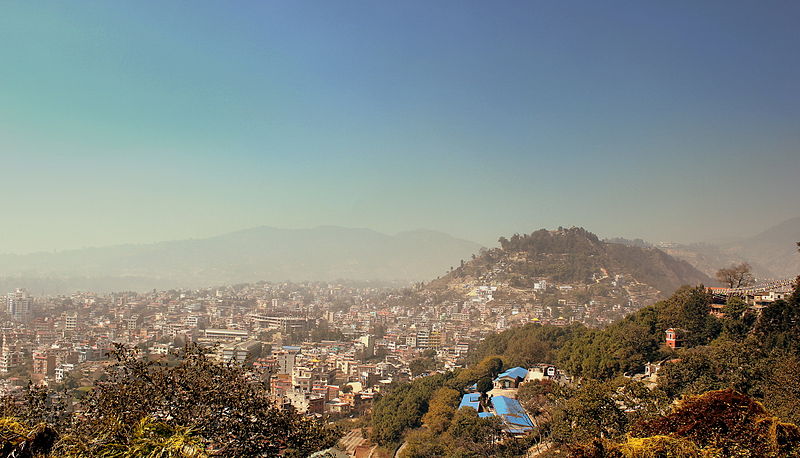
Kathmandu Valley is the busiest and most populated city of Nepal as it is the capital city and every infrastructure and facilities are centered within this city. It has a majority of offices and headquarters making it the center of economy of the whole nation.
But setting aside the busy and crowded part of this city, Kathmandu Valley is actually an interesting ancient city with a long history. Kathmandu is an intriguing city with unique architecture, rich culture that includes highest number of jatras in Nepal. Located at the crossroads of ancient civilization of Indian subcontinent and broader Asian continent, Kathmandu has at least 130 important, including some prominent pilgrimage sites for Hindus and Buddhist and not to mention the seven world heritage sites by UNESCO within the valley.
More to that, the valley harbors two major ancient cities of Nepal, Patan, and Bhaktapur which are very important historical and architectural parts of the country. So, today let us know about the Kathmandu, the capital city which is equally captivating.
Kathmandu wasn’t the first name of the valley. Historically, it used to be known as Nepal Valley of Nepa Valley. And even after all this time, Kathmandu isn’t the native name used by indigenous Newar community of the valley. The term Nepal meant “land of the Newar people” and was traditionally used to refer this valley.
Kathmandu valley is an ancient city which is believed to be inhabited on early 300 BCE, as the oldest known objects in the valley date to a few hundred years BCE. The earliest known inscription is dated 185 CE and the oldest firmly dated building is over 2,000 years old.
There are four stupas around the Patan city, which is believed to be established by a Charumati, a purported daughter of Maurya emperor Ashoka, in third century BCE. The Licchavis were the next rulers of Kathmandu valley whose earliest inscription dates to 464. Mallas ruled the valley and the surrounding area from 12th to 18th century CE, King Prithvi Narayan Shah of Gorkha of Shah dynasty conquered the valley.
Looking at the mythological aspect, Kathmandu Valley was a large lake which was cut at the Chobar hill by Majushree, a holy Buddhist Saint from Tibet letting all the water drain out. When Manjushree saw a beautiful lotus flower floating so mesmerizingly in the center of the lake, his admiration for the flower grew, and he finally made the cut at Chobar hill.
Within the Kathmandu valley itself, there are seven world heritage sites, and three of them are durbar squares located at Kathmandu, Lalitpur, and Bhaktapur.
Kathmandu Durbar Square, also known as Basantapur Durbar Square homes palaces of Malla and Shah kings who ruled over the city. Along with the artistic palaces, the square is surrounded by quadrangles, revealing courtyards and temples. Hanuman Dhoka Durbar Square is another name of this square derived from a statue of Hanuman at the entrance of the palace. The impressive and spectacular architecture showcases the amazing skill of Newar artists and craftsmen over several centuries in a clear way.
Patan Durbar Square is another square of the valley located at the center of Lalitpur. The square has the royal palace where Malla Kings of Lalitpur resided exhibiting the excellent Newar architecture.
Bhaktapur Durbar Square is yet another square of the valley at Bhaktapur. Actually, the whole complex has at least four distinct squares Durbar Square, Taumadhi Square, Dattatreya Sqaure and Pottery Square, but it is rather famous as Bhaktapur Durbar Square. There are several palaces and temples with fine artwork dating back to hundreds of years.
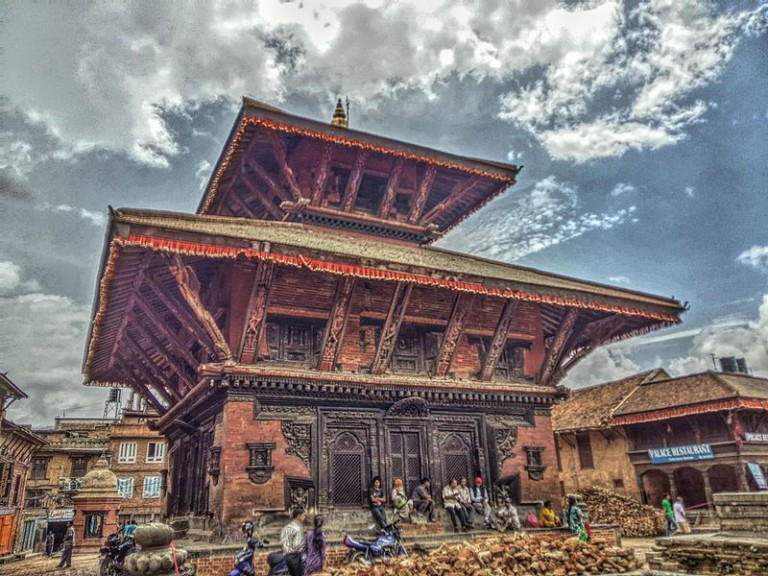
Bhakatapur Durbar Square
Along with the historical and ancient palaces, Kathmandu valley also envelopes some major pilgrims sites. Pashupatinath temple can be entitled as the epicenter of Hindu devotees of Nepal. The whole complex of Pashupatinath is spread in the area of 264 hectares with 518 temples and monuments. There are ashrams, inscriptions, images, and temples which are raised over the centuries along the sacred river of Bagmati.
Swayambhunath and Boudha are some other major pilgrimage site for Buddhists. Swayambhunath is located at a top of a hill which means sublime trees in Tibetan dialect for several varieties of trees around the area. Except the main stupa, the area encompasses shrine, temples, Tibetan monastery, library, museum and several small shops with interesting items and artifacts.
Boudha is the pivotal pilgrimage site for Tibetan Buddhists. Located at the northeastern outskirts of Kathmandu, the stupa of Boudha has a massive mandala making it one of the largest spherical stupa in Nepal. Kathmandu Valley homes innumerable religious sites like temples, monasteries, and stupas throughout the valley.
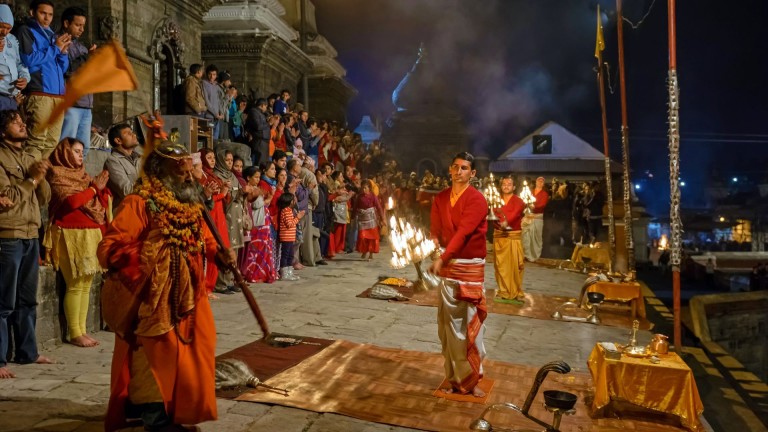
Aarati at Pashupatinath
Well, this ancient and historical city has more to offer than just heritages and monuments. The overpopulation in Kathmandu valley has caused many narrow streets and markets. Wherever you go, you end up yourself in a maze of street.
However, as eerie as it may sound, but the congested streets and busy market have become an attraction of the valley. Asan, Indra Chowk, and Thamel are the exemplary streets which are now the commercial as well tourist hub. Roaming around this marketplace will give you a better overview of Nepali lifestyle and the culture they have been living in.
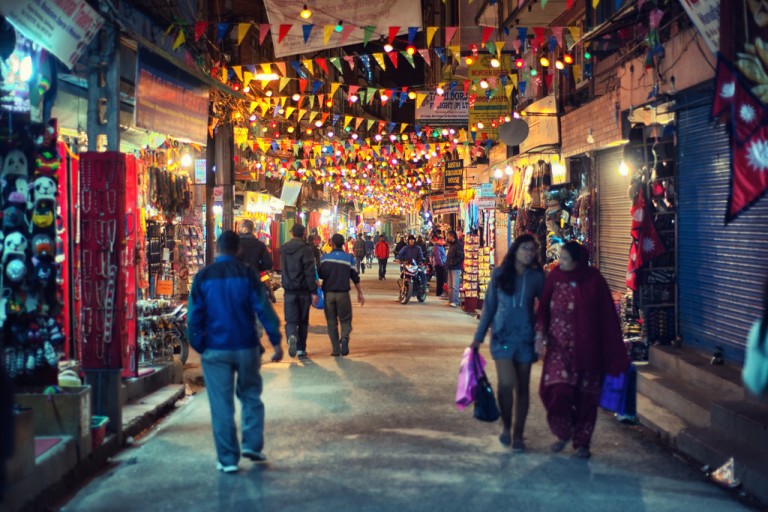
Crowded street of Thamel
Foods are the best way to win anyone’s heart. It relishes our taste buds and delights our mood. And, in Kathmandu Valley, you can find a variety of cuisine which serves your best interest. From authentic Nepali thali to continental cuisine, you will be pleased with every dish. Some of the must-try food in the valley are momo, Newari Khaja set, laphing, yomari, bara, dhindo, and gundruk.
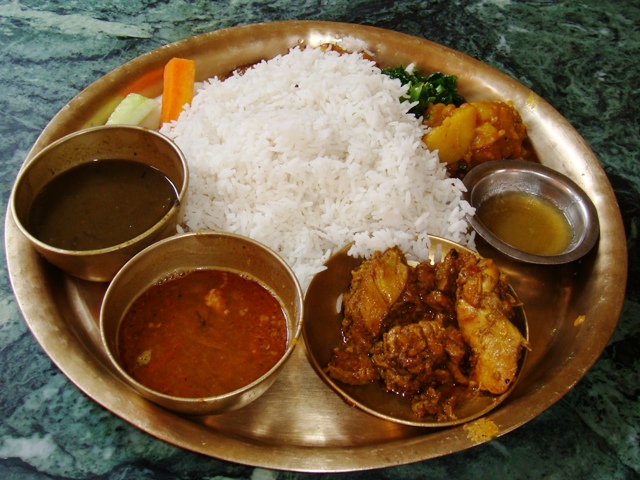
Nepali Thali
Your email address will not be published.Required fields are marked *
You must be logged in to post a comment.



0 Comments on "Kathmandu Valley: The Capital as well Classic city of Nepal"