
 Plan Your Trip
Lapchi Pilgrimage Trek – 15 Days

Trip Overview

Trek Region
Gaurishanker

Difficulty Level
Moderate

Transport
Kathmandu to Lamabagar by private jeep or bus (both ways)

Total Trip Duration
15 Days

Max Elevation
4,600m

Meals
Breakfast, Lunch and Dinner included
Trip Highlights
- Visit Lapchi Kang – one of the three holiest pilgrimage mountains in Tibetan Buddhist and Hindu tradition, ranked alongside Mount Kailash and Mount Tsari as a paramount sacred power place of Jambudvipa (the world)
- Enter the Sephuk Cave (approx. 4,600m) – the highest and most sacred of Milarepa’s meditation hermitages in the Lapchi Valley, known in Tibetan as Ze Phung meaning “crest cave,” sitting above all other caves like a crown over the valley, where the great yogi completed his highest practices
- Stand at the Milarepa Cave within Lapchi Village where a revered bronze statue of the saint, his sacred footprints, and a miraculous water spout believed to have served him during decades of meditation are preserved with extraordinary care
- Explore the Lapchi Kang Monastery (Chora Gephel Ling) – a 400-year-old Tibetan Buddhist sacred site of the Kagyu school, the monastery that Milarepa himself is believed to have established in the valley and that has been a continuous center of pilgrimage and practice ever since
- Visit the Renchen Gompa – another ancient monastery within the Lapchi valley system, decorated with traditional Tibetan Buddhist murals and housing a community of monks who maintain the sacred practices of the valley
- Hike to the sacred alpine lakes (approx. 4,400m) above Lapchi Village – pristine high-altitude glacial lakes in a wild and completely unspoiled setting where Himalayan tahr and blue sheep come down to the water’s edge daily and the views of the Lapchi Kang massif and the surrounding peaks are extraordinary
- Trek to Ramding Namgoma near the Nepal-China border – a sacred hermitage at approximately 4,500m associated with Milarepa’s practice in this region, just 2km beyond the Nepal border on the Tibetan side, visible and spiritually significant from the Nepal approach
- Walk beneath the dramatic unclimbed rock spire of Ama Bamare Himal and the awesome rock face of Kookur Raja Darra (King Dog Ridge) – two of the most visually extraordinary geological features of the Lapchi Valley approach
- Trek under the overwhelming shadow of Gaurishankar (7,134m) – the beautiful twin-peaked mountain whose massive southwest wall dominates the upper Tama Koshi valley and accompanies the approach to Lapchi from its finest angle
- Walk through Lamabagar – the Sherpa gateway town of the Lapchi approach where Buddhism is part of the fabric of daily life and where the combination of the mountain landscape, the prayer flags, the local community, and the remoteness of the Dolakha district creates the first powerful sense of entering genuinely sacred territory
- Trek through pristine bamboo forest and cloud forest on the approach to Lapchi – one of the finest forested approach sections of any Nepal pilgrimage route, rich in bird life and the extraordinary lush density of the Gaurishankar Conservation Area
- Complete a loop circuit through the King Dog Kharka and Samling settlements on the return – seeing the Lapchi Valley from a completely different direction and adding significant ecological and cultural diversity to the return route
- Trek in a region of complete and genuine solitude – the Lapchi Valley receives perhaps 200-300 foreign visitors per year and the trail, the villages, and the sacred sites exist entirely on their own terms without the commercial infrastructure of mass trekking tourism
Trip Summary
Between the famous Rolwaling Himal and the Nepal-Tibet border in the remote Dolakha district of northeastern Nepal, there is a hidden valley that almost no one has heard of and almost no one visits. The Lapchi Kang – known in Tibetan Buddhist tradition as one of the three holiest power places in the entire Himalayan world, alongside Mount Kailash and Mount Tsari – sits tucked between the road to Tibet and the great glacial valley of Rolwaling Himal, accessible only through a long approach along the Tama Koshi River and a sustained climb through bamboo and cloud forest into a world that carries the unmistakable quality of genuinely sacred ground.
The Lapchi Pilgrimage Trek is not simply a trekking route. It is a journey into one of the most spiritually significant and least commercially developed pilgrimage sites in all of Nepal – a place where Jetsun Milarepa, the great 11th-century Tibetan yogi, poet, and Buddhist master, meditated for years in the caves of the valley walls, performed miracles witnessed by the community of the region, and left behind sacred footprints and blessings that pilgrims from Tibet, Nepal, and around the Buddhist world have been making the journey to receive ever since. The Sephuk Cave where Milarepa completed his highest practices, the ancient Lapchi Monastery (Chora Gephel Ling) established over 400 years ago, the sacred Ramding Namgoma hermitage near the Nepal-China border, the Renchen Gompa, the Manjushree Holy Lake above the valley, and the extraordinary mountain world of Gaurishankar (7,134m) and the Lapchi Kang massif surrounding it on every side – all of these make the Lapchi Pilgrimage Trek a journey with a depth and a spiritual dimension that no other standard Nepal trekking route quite matches.
This 15-day itinerary is the most complete version of the Lapchi Pilgrimage – including the Kathmandu heritage sightseeing day, the full approach through Lamabagar and Lumnang, proper time at every sacred site in the upper valley, the optional lake excursion above Lapchi Village, and a complete loop return through the King Dog Ridge (Kookur Raja Darra) and the Samling settlements that makes this a genuine circuit rather than a simple out-and-back. The route is organized as a full camping trek – there are very basic teahouses in the lower sections and a monastery guesthouse at Lapchi, but the majority of the upper circuit relies on camping equipment and a self-supported team.
When To Visit
The Lapchi Pilgrimage Trek has a more extended accessible season than high-pass circuits because its maximum altitude at the Sephuk Cave and alpine lakes is approximately 4,600m rather than the 5,000m-plus of technical pass circuits. The lower approach sections through the Tama Koshi valley and the bamboo forest corridor are accessible through most of the year outside of the heaviest monsoon period.
Spring (March to May) is one of the two finest seasons and the most beautiful for the forest approach sections. The bamboo and rhododendron forest of the lower approach and the cloud forest of the mid-altitude sections are at their most vivid and alive in spring. The rhododendron blooming in March and April adds extraordinary color to the approach through the Gaurishankar Conservation Area forest. The upper valley above Lapchi Village is clear from March onward and the alpine lake area is accessible from April. The monastery at Lapchi hosts its spring ritual calendar during this period and timing a visit during a festival day can add a profoundly moving cultural dimension.
Autumn (late September to November) is the peak pilgrimage season and the finest window for mountain clarity. Post-monsoon atmospheric purity produces the sharpest views of Gaurishankar, the Lapchi Kang massif, and Ama Bamare from every viewpoint on the circuit. October is particularly fine – the festival calendar of Tibetan Buddhism is active, Lapchi receives its highest number of Tibetan and Nepali pilgrims during October, and the quality of the encounter with the sacred sites during this period is enriched by the presence of active pilgrimage community. The Tibetan pilgrim groups who visit Lapchi in autumn – making their circumambulations of the valley’s sacred circuit, prostrating before the cave hermitages, chanting in the monastery compound – provide an incomparable encounter with the living tradition that the trek is organized to serve.
Monsoon (June to August) is partially viable. The Lapchi Valley receives less rainfall than the Khumbu or Langtang due to its position in a partial rain shadow. The lower approach through the Tama Koshi valley can be slippery and leech-affected in heavy monsoon periods. The upper valley is often clear by afternoon. For trekkers who specifically want the deep green, intensely lush forest of the monsoon approach and are comfortable with the additional challenges of wet-season walking, a June or July visit is possible. Not the standard recommendation but entirely feasible.
Winter (December to February) is cold and quiet but not impossible for the lower sections. The Lapchi Valley itself above 3,000m receives significant snowfall from December onward and the Sephuk Cave section above 4,000m can become inaccessible. Lapchi Monastery and the lower sacred sites remain accessible in mild winter conditions and the winter pilgrimage period – when fewer visitors are present and the community is more inward-looking – has its own distinctive quality. Not recommended for the full circuit including the alpine lake and King Dog Ridge sections.
Itinerary
Welcome to Nepal. Our team meets you at Tribhuvan International Airport and transfers you to your hotel in Kathmandu. In the evening, your guide joins you for a thorough pre-trek briefing covering the complete 15-day itinerary, the spiritual and cultural significance of the Lapchi Kang sacred region and the Milarepa tradition, the Gaurishankar Conservation Area permit system and the specific rules that govern behavior within the sacred sites of the valley, altitude awareness for the Sephuk Cave and alpine lake sections above 4,000m, gear checks, the camping requirements for the loop return through the King Dog Ridge, and the logistics of the jeep journey to Lamabagar.
The briefing includes a specific cultural and spiritual orientation that makes the Lapchi Pilgrimage Trek different from standard mountain circuits. Your guide covers the life of Milarepa – the 11th-century yogi whose fierce story of transformation from black magician to enlightened master is one of the most powerful spiritual biographies in the Tibetan Buddhist tradition – the significance of each sacred site you will visit, the proper conduct at cave hermitages and monastery compounds, and the traditions of the small permanent community of thirteen families who live in the Lapchi Valley and who are the guardians of these sacred places.
Understanding who Milarepa was and what Lapchi Kang represents in the Tibetan Buddhist and Hindu pilgrimage world transforms every encounter on the trek from a sightseeing experience into something with a genuine depth of meaning. Overnight in Kathmandu.
A full guided day exploring the cultural and religious heart of Kathmandu – both a genuine cultural experience in its own right and a meaningful preparation for the pilgrimage ahead.
Boudhanath Stupa is the spiritual starting point for any Nepal pilgrimage journey related to Tibetan Buddhism. The great white dome – one of the largest Buddhist stupas in the world – is the heart of Kathmandu’s Tibetan Buddhist community and the place where the same Kagyu tradition that Milarepa founded is practiced daily by monks, nuns, and lay practitioners from across the Himalayan world. The morning kora around the stupa, walking clockwise among pilgrims and monks with prayer beads and butter lamps in hand, gives you a direct and immediate encounter with the living tradition you are heading toward in the mountains.
Pashupatinath Temple on the banks of the Bagmati River is the holiest Hindu site in Nepal and the one that contextualizes Lapchi Kang’s significance for the Hindu pilgrimage tradition – which considers it, alongside Kailash and Tsari, one of the three paramount sacred mountains of the Himalayan world. The temple complex, its cremation ghats, its wandering sadhus, and the concentrated spiritual atmosphere of the riverside site give you a felt sense of what sacred geography means in the South Asian spiritual world before you walk through it.
Swayambhunath (Monkey Temple) on its forested hilltop above the western city provides the finest panoramic view of Kathmandu and a stunning Buddhist stupa complex of considerable antiquity. Patan Durbar Square completes the day with the finest Newari architectural heritage in the Valley. Return to your hotel and finalize preparations for the early morning departure to Lamabagar. Overnight in Kathmandu.
An early morning departure from Kathmandu for the long but genuinely beautiful road journey northeast through the Dolakha district to the Lapchi trailhead at Lamabagar. The road follows the Tama Koshi River valley northward from the Kathmandu Valley – passing through the market town of Charikot (the district headquarters of Dolakha), continuing through the road junction at Singati where the Rolwaling approach branches from the main Tama Koshi road, and eventually reaching Lamabagar (1,987m) near the end of the road system.
The drive through the Tama Koshi valley is one of the most beautiful road journeys in northeastern Nepal – the river cutting through a progressively narrowing gorge of spectacular geological character, the forested hillsides rising steeply on both sides, and the first glimpses of the high snow peaks of the Rolwaling Himal and the Gaurishankar massif appearing above the valley walls as the road gains elevation. The great twin-peaked profile of Gaurishankar (7,134m) – considered one of the most beautiful mountains in Nepal and sacred to both Hindu and Buddhist traditions – appears above the valley at a scale that signals unmistakably that you are entering a genuinely high mountain world.
Lamabagar (1,987m) is a small Sherpa town at the end of the motorable road – the last settlement where fuel, batteries, and basic supplies are available before the trekking trail enters the wilderness of the Lapchi approach. The Sherpa character of the town is immediately apparent in the prayer flags, the mani walls, and the Buddhist community life that permeates every aspect of settlement here. Buddhism is not a formal practice but a complete framework of daily existence. Check into the local lodge, organize any last-minute supplies, and prepare for the first trekking day tomorrow. Drive time: 7-8 hours.
The first walking day enters the Lapchi Valley approach through a forest corridor of extraordinary density and beauty. From Lamabagar the trail follows the Lapchi Khola – the river that drains the sacred Lapchi Valley – northward through a sequence of forest zones that begins in subtropical vegetation and climbs steadily through the most spectacular bamboo forest of any Nepal trekking approach.
The bamboo forest sections of the lower Lapchi approach are genuinely magnificent – stands of bamboo reaching fifteen meters in height, the light filtering through the canopy in long green shafts, the river audible below but sometimes invisible through the dense growth. The trail crosses the stream multiple times on wooden bridges and stepping stones, passing through boulder fields and occasional sections of steep trail cut into the cliff face above the river.
Above the bamboo, the vegetation transitions to denser mixed forest – oak, rhododendron, and the first cloud forest characteristics of the mid-altitude Dolakha hills. This forest section is prime habitat for an extraordinary diversity of birds – the Gaurishankar Conservation Area has been identified as one of the most important bird habitats in the Dolakha-Sindhupalchok corridor and the early morning hours in the mid-altitude forest are particularly productive for birding.
Lumnang Village (2,700m) – also written as Lha Lung or Lower Lumnang – is the winter settlement of the thirteen families who call the Lapchi Valley their permanent home. These thirteen families hold a remarkable legal status – they are officially recognized as border citizens and have the right to trade in China without a passport, a privilege that reflects the deep historical connections between this valley community and the Tibetan world across the border. The stone houses of Lumnang are simple and traditionally built, the prayer flags are everywhere, and the welcome of the community carries the particular warmth of people who know that visitors to their valley are coming specifically to engage with what is most sacred to them. Walking time: 5-6 hours.
The day of arrival at the sacred heart of the entire 15-day journey. From Lumnang the trail continues northward through the upper forest corridor – the cloud forest of the mid-altitude approach giving way to more open mixed forest and then to the sub-alpine scrubland of the upper valley as the trail gains elevation.
The approach to Lapchi Village follows the fast-flowing Lapchi Khola through a sequence of meadow sections, forested gorge passages, mani wall-lined trail segments, and wooden bridge crossings that carry the unmistakable character of a pilgrimage route maintained by a deeply devout community. Every stone wall along the trail is a mani wall – carved with the Buddhist mantra Om Mani Padme Hum with a consistency and a density that reflects generations of devotional labor. Prayer wheels stand at intervals beside the river. Chortens mark the junction points and the high points of the trail. The cultural landscape of the approach is as spiritually powerful as any monastery compound.
The trail passes beneath the shadow of Gaurishankar (7,134m) – the mountain visible above the valley walls at increasingly close and increasingly overwhelming range as the approach climbs. The twin peaks of Gaurishankar are considered the embodiment of Shiva and Parvati in Hindu tradition and are a deeply sacred natural form in the Lapchi pilgrimage landscape.
Lapchi Village (3,379m) sits in a broad confluence where two river valleys meet – the eastern branch flowing from the Nepal-Tibet border direction and the northwestern branch flowing from the Nyalam direction. The village is small – stone houses with tin roofs, the characteristic flat-stone architecture of high-altitude Tibetan influenced settlements, juniper smoke in the air, and the sounds of yaks being brought in from the surrounding pastures in the late afternoon. Above the village, the Lapchi Kang Monastery (Chora Gephel Ling) sits on a natural terrace – more than 400 years old, still actively maintained, and one of the most quietly powerful religious sites in northeastern Nepal. Walking time: 4-5 hours.
The first full day in Lapchi Village and the most culturally layered day of the entire trek. A full exploration day that visits every major sacred site within the village and its immediate surroundings – unhurried, with your guide providing the historical and spiritual context that transforms each site from an interesting place into a deeply meaningful encounter.
The Lapchi Kang Monastery (Chora Gephel Ling) is the centerpiece of the day. Established over four centuries ago and maintained continuously by the monk community of the valley, the monastery belongs to the Karma Kagyu school of Tibetan Buddhism – the same lineage that Milarepa himself founded through his great disciple Gampopa. The prayer hall is decorated with traditional Tibetan Buddhist murals painted in the distinctive flat-perspective style of the Kagyu artistic tradition, depicting the lineage masters of the school including Milarepa himself in his characteristic posture of listening – one hand cupped to his ear. The resident monks conduct their daily prayer schedule regardless of visitors, and being present for a monastery puja – the drums, the chanting, the cymbals, and the smell of butter lamps in the low-ceilinged prayer hall – is one of the most deeply evocative religious experiences available on any Nepal trekking route.
The Milarepa Cave within the village complex is the most visited sacred site of the entire Lapchi region and the one that carries the most concentrated devotional energy. The cave has been maintained as a shrine since Milarepa’s own time in the valley – a bronze statue of the great yogi in his characteristic posture of meditation sits within the cave interior, his sacred footprints preserved in stone on the cave floor, and a miraculous water spout – which tradition holds to have served Milarepa during his decades of practice in the cave – still flows from the rock face above the shrine. Pilgrims touch the footprints with their foreheads. They collect water from the spout as sacred substance. They sit in silence in the cave and allow the atmosphere of concentrated practice accumulated over centuries to settle around them. This is not a museum exhibit. This is a living, active pilgrimage site that has not been modified for tourist convenience and carries exactly the quality of raw and genuine sacred energy that fully intact pilgrimage sites always provide.
The mani wall corridors of Lapchi Village extend through the settlement in both directions – hundreds of carved prayer stones laid in continuous rows that represent the accumulated devotional labor of the valley’s small permanent community over many generations. Walking these mani wall corridors slowly, reading the carvings, understanding that every stone was placed by a specific hand and represents a specific act of spiritual merit-making, gives the village itself a quality of sacred space that extends beyond the formal monastery and cave structures.
The village is also a gateway to the natural world of the upper valley – the juniper trees, the yak pastures, the river confluence, and the distant peaks visible above the valley walls all forming a landscape that the Lapchi tradition holds to be inherently sacred rather than merely beautiful. Exploration time: Full day.
The most demanding and most spiritually significant hiking day of the entire trek. From Lapchi Village the trail climbs steeply northward and upward toward the Sephuk Cave (approximately 4,600m) – the highest, most remote, and most sacred of the cave hermitages in the entire Lapchi valley system.
The Tibetan name Sephuk – or Ze Phung in classical Tibetan – means “crest cave” or “the cave that sits like a crown.” The name reflects the cave’s position above all other hermitages in the valley – it sits on a high ridge above the village in a position that commands a view of the entire Lapchi Valley below and the peaks surrounding it on every side. Milarepa is said to have completed his most advanced tantric practices at Sephuk – it was here, according to the tradition, that the highest states of Tibetan Buddhist realization were reached during his years in the Lapchi region.
The climb from the village to Sephuk takes approximately 4-5 hours on a steep, sustained trail that climbs through juniper scrub and open alpine terrain. The stone stairway that was laid by the pilgrimage community to assist the ascent is one of the most tangible expressions of devotional labor visible anywhere on the trek – thousands of stone steps placed by human hands over centuries specifically to make this sacred site accessible to those who come in faith.
At the cave itself – a natural rock overhang at nearly 4,600m with the valley spreading below and the peaks of the Lapchi Kang massif rising above – the quality of stillness is unlike anything in the lower valley. The air at this altitude carries the specific clarity of the high Himalayan world. The views of the surrounding peaks – the massif of Lapchi Kang itself, the distant profile of Gaurishankar, and the high ridgelines of the Nepal-Tibet border visible to the north – are extraordinary. The cave interior holds sacred objects maintained by the monk community and the particular atmospheric quality of a place where sustained, serious meditative practice has been conducted without interruption for nearly a millennium. Hike time: 4-5 hours return.
A historically and spiritually fascinating excursion from Lapchi Village toward the Nepal-China border and the sacred hermitage of Ramding Namgoma. From the village the trail heads eastward along the branch of the Lapchi Khola that flows from the Nepal-Tibet border direction – climbing through high alpine terrain toward the border zone at approximately 4 kilometers from the village.
Ramding Namgoma is a hermitage associated with Milarepa’s presence in the broader Lapchi region – a sacred site located approximately 2 kilometers beyond the Nepal border on the Tibetan side, visible from the Nepal approach but not accessible to trekkers without Chinese permits. The Nepal side approach to the border zone at approximately 4,500m provides extraordinary views of the Tibetan plateau beyond the frontier ridge and a direct encounter with the geographical reality of the Nepal-Tibet border in the Lapchi area.
The thirteen families of Lapchi Village use the route to Ramding Namgoma regularly – they are among the few people in Nepal who can cross this border freely as recognized border citizens. The yak caravans that still travel between the Lapchi Valley and the Tibetan settlements of Nyalam use this same route, maintaining a trade relationship that has continued for centuries and that gives the Lapchi community its unique dual-currency economic position – the only community in Nepal where Chinese yuan circulates alongside Nepali rupees as everyday currency.
The altitude at the border approach area – approximately 4,500m – provides an excellent acclimatization gain for the alpine lake section of the circuit and delivers panoramic views of the Lapchi Kang massif from the eastern direction that are entirely different from the views available within the village. The return to Lapchi Village in the afternoon completes a genuinely rich and uniquely positioned day. Hike time: 4-5 hours return.
One of the most ecologically and visually extraordinary days of the entire 15-day trek. From Lapchi Village the trail climbs northwestward through the upper valley – above the village, above the last yak pastures, and into the pure high-alpine world of the glacially-influenced upper Lapchi Kang basin.
The route to the sacred alpine lakes (approximately 4,400m) climbs through progressively more open terrain – the juniper scrub of the sub-alpine zone giving way to alpine grass, then to open rock and moraine. At the lake area itself, a sequence of pristine glacial lakes sits in rocky basins above the valley floor – the water a clear, cold blue-green that reflects the surrounding peaks and the enormous sky of altitude. These lakes are considered sacred in the Buddhist tradition of the Lapchi Valley – the same tradition that holds all bodies of water in the valley to be spiritually charged by the practices of the saints who lived and meditated beside them.
Himalayan tahr and blue sheep come to the water’s edge of the alpine lakes daily – the animals entirely unafraid of the very small number of visitors who reach this altitude above the village. The combination of pristine glacial lake setting, daily wildlife presence, and the panoramic view of the Lapchi Kang massif from the lake area makes this excursion one of the finest single natural experiences of the entire 15-day circuit.
The views from the lake area include the full sweep of the Lapchi Kang range above to the north, the distant profile of Gaurishankar (7,134m) to the south, and the unclimbed rock spire of Ama Bamare Himal visible above the valley wall to the west – a combination of mountain profiles that experienced Himalayan photographers consistently describe as one of the most complete and most unusual panoramas available from any standard Nepal trekking destination at this altitude.
The camp at the lake area serves as the overnight for the circuit’s pivot point – beginning the loop return through the King Dog Ridge that makes this itinerary a complete circuit rather than a simple out-and-back. Walking time to lakes: 3-4 hours from village.
The loop return begins. From the alpine lake camp, the trail descends and traverses westward through the upper valley system – heading toward the Yak Kharka (3,424m) meadow on the western side of the Lapchi Valley circuit. This section crosses terrain that is entirely different from the standard approach – the western arm of the Lapchi Valley system carries its own character of rugged, largely trackless alpine landscape where the trail is defined primarily by yak tracks and your guide’s specific knowledge of the route.
The traverse from the alpine lakes to Yak Kharka moves through high alpine meadow, rocky ridgeline, and the occasional stream crossing – a genuinely wild section of the circuit that sees almost no regular trekker traffic and carries the quality of completely unmodified mountain wilderness. The views of the Lapchi Kang massif from the western valley traverse are different again from any of the previous viewpoints – each angle of approach revealing different aspects of the massif’s extraordinary geological character.
Yak Kharka (3,424m) is a broad grassy meadow used by the Lapchi community as a yak grazing area – the stone walls of seasonal herder shelters providing context for the pastoral relationship between the community and the high alpine terrain of the upper valley. The meadow setting at just over 3,400m is open, beautiful, and deeply peaceful in the manner of high-altitude pastoral landscapes throughout the Nepal Himalaya. Walking time: 5-6 hours.
The most distinctive and most scenically dramatic day of the loop return. From Yak Kharka the trail climbs to the King Dog Ridge (Kookur Raja Darra, 3,386m) – the remarkable geological feature that forms the western wall of the Lapchi Valley and whose name, translated from the Nepali and Tibetan, evokes the fierce guardian character of the ridge that separates the inner sacred valley from the outer world.
The King Dog Ridge is one of the most visually extraordinary geological formations in the Dolakha district – a twisted, serrated ridgeline of dark rock rising above the valley floor in shapes that have been compared by the Lapchi community to the fierce protective deities who guard sacred Tibetan Buddhist sites. The approach to the ridge and the crossing itself delivers views of both the inner Lapchi Valley to the east and the outer Dolakha landscape to the west simultaneously – a complete panoramic revelation of the geographical world that the Lapchi Valley inhabits.
The descent from the King Dog Ridge to King Dog Kharka (2,800m) drops steeply through increasingly lush forest – the vegetation recovering rapidly below the ridge line, the bird life thickening, and the sounds of the forest returning after the open alpine world above the ridge. King Dog Kharka is a camping area in the forest below the ridge used by the loop return circuit. The dramatic descent from the ridge to the forested kharka is one of the physical highlights of the entire 15-day circuit and provides a perspective on the Lapchi Valley landscape that the standard out-and-back approach never delivers. Walking time: 5-6 hours.
From King Dog Kharka the trail continues its westward and southward descent through the varied landscape of the outer Dolakha district hills – moving through mixed forest, crossing small streams, and passing through the scattered settlements of the communities that occupy the outer valleys surrounding the Lapchi approach.
Samling Village (2,650m) is a small settlement in the outer valley system – a community of Tamang and Sherpa families whose life on the edge of the Gaurishankar Conservation Area gives them a close relationship with the same forest and wildlife systems that make the Lapchi approach so ecologically rich. The village has the basic character of a remote Dolakha hill settlement – terraced fields, stone and timber houses, prayer flags, and the warm community life of a place that rarely sees foreign visitors.
The cultural encounter at Samling is one of the most genuinely authentic of the entire circuit – the community’s warmth is not the practiced hospitality of a well-developed trekking destination but the natural openness of people who simply welcome those who find their way to their village. Your guide’s local connections and language facilitate encounters that no independent trekker could replicate. The camping area near Samling or the basic teahouse accommodation within the village serves the overnight. Walking time: 5-6 hours.
The final trekking day and the completion of the circuit. From Samling the trail descends and traverses back toward Lamabagar – the Sherpa gateway town where the driving road begins and the circuit properly closes.
The return to Lamabagar through the outer valley system provides a final survey of the geographical and cultural world of the northern Dolakha district – the Tama Koshi River visible below in the main valley, the Rolwaling Himal peaks visible to the northwest, and the profile of Gaurishankar providing a final, magnificent farewell from the great mountain that has accompanied the entire circuit.
Arriving back at Lamabagar completes a genuine loop – you departed from this town 10 trekking days ago heading into a hidden valley that most of Nepal’s trekking visitors will never know. You return having stood at Milarepa’s meditation caves, walked the mani wall corridors of the valley’s thirteen-family community, looked out from the Sephuk Cave at nearly 4,600m across the sacred landscape that one of Tibet’s greatest teachers chose for his most advanced practice, and understood in a direct and physical way what it means for a specific place to be genuinely, deeply sacred – not as a tourist attraction or a cultural exhibit but as a living, continuously practiced, continuously inhabited spiritual reality.
Share a final dinner with your guide and porter team in Lamabagar. The driver is there for the early morning return to Kathmandu. Walking time: 4-5 hours.
The return road journey from Lamabagar to Kathmandu retraces the same beautiful Tama Koshi valley road – the river gorge, the terraced hillsides, the forested ridgelines, the market towns of the Dolakha district – now seen in reverse and with the particular quality of recognition that familiar landscapes carry after a journey into the unknown beyond them.
Gaurishankar accompanies the descent from the northern end of the valley system, visible above the ridgeline in progressively more distant profile as the road descends southward. By the time the road reaches the Kathmandu Valley, the mountain has disappeared behind the outer ranges – but its presence in the experience of the past two weeks remains entirely vivid.
Back in Kathmandu, transfer to your hotel. Hot shower. Proper bed. Restaurant meal. The complete pleasure of a city after 10 days of walking and camping in the most remote pilgrimage landscape in northeastern Nepal. Drive time: 7-8 hours.
A practical buffer day for any road delay events on the Lamabagar to Kathmandu return – the Tama Koshi valley road is subject to the occasional landslide event, particularly after wet weather, and this buffer ensures your international departure is not affected.
If the return went smoothly, the buffer day is a free day in Kathmandu – use it for any final sightseeing not covered on Day 2, for rest and recovery, for shopping in Thamel, or for the extended celebration with your guide that a 10-day pilgrimage trek into one of Nepal’s most sacred and least-visited valleys deserves.
Our team transfers you to Tribhuvan International Airport whenever your departure flight schedule requires.
Trek Difficulty & Physical Demands
The Lapchi Pilgrimage Trek is rated moderate to strenuous – accessible to fit trekkers with prior multi-day hiking experience but with several specific challenges that distinguish it from standard teahouse circuits.
Altitude: The maximum altitude of approximately 4,600m at the Sephuk Cave and alpine lake sections is within the range manageable by most healthy adults with proper acclimatization. The multiple days spent at Lapchi Village (3,379m) before the higher excursions provide natural acclimatization. Mild altitude symptoms are possible above 4,000m and communication with your guide is important.
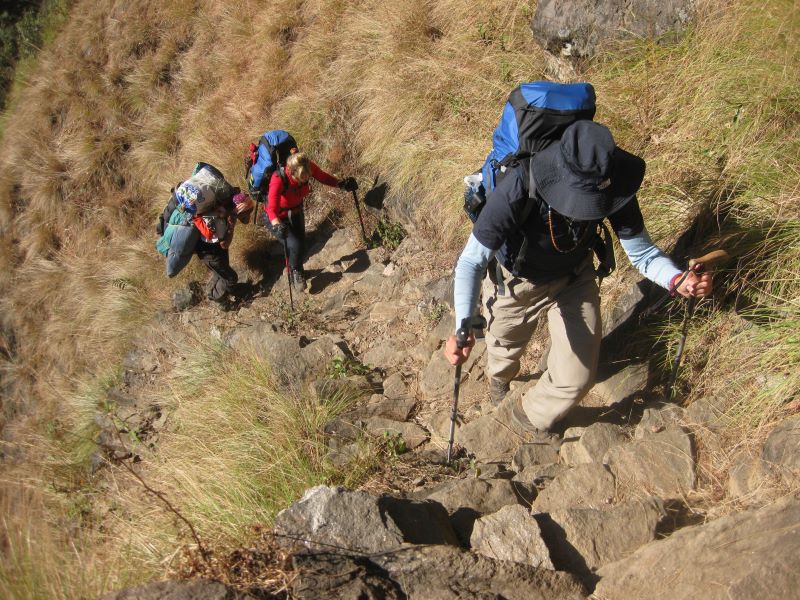
Trail character: The Lapchi Valley approach trail is not a standard well-maintained trekking highway. It is a pilgrimage trail maintained by a community of thirteen families for their own use and for the use of the pilgrims who visit. The trail can be narrow, steep, wet, and poorly defined in sections, particularly above the bamboo forest zone. The loop return through the King Dog Ridge is the most challenging navigation section of the circuit and is where your guide’s specific knowledge of the route is most critical.
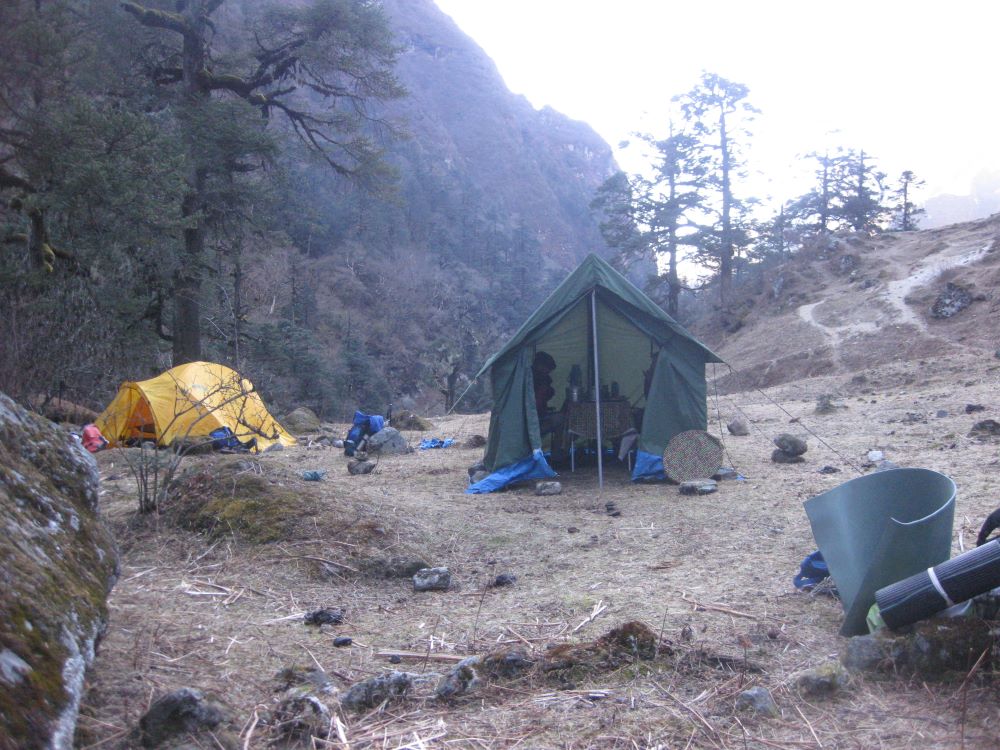
Camping requirements: The loop return section through the alpine lakes, Yak Kharka, King Dog Ridge, King Dog Kharka, and Samling requires full camping – no teahouse facilities exist in this section. Comfort with camping in genuinely remote terrain is important.
Remoteness: The Lapchi Valley above Lamabagar has no road access, very limited communication, and helicopter is the only emergency evacuation option. This remoteness is part of what makes the pilgrimage experience so powerful – but it demands realistic assessment of physical capability and responsible medical preparedness.
Physical fitness: 6-8 weeks of consistent cardiovascular training – hiking with a loaded pack, running, or cycling – before departure is ideal preparation. Prior multi-day trekking experience on uneven terrain is genuinely valuable. The Sephuk Cave hike in particular, gaining over 1,200m from the village in a single day, requires a good aerobic base.
Best Time to Trek: Seasonal Comparison
| Season | Months | Lower Trail | Upper Valley | Sacred Sites | Pilgrimage Activity | Recommended |
| Spring | Mar–May | Spectacular bloom | Clear from March | Accessible | Moderate | Best |
| Monsoon | Jun–Aug | Slippery but viable | Partially clear | Accessible | Low | Possible |
| Autumn | Sep–Nov | Beautiful | Excellent | Excellent | Peak | Best |
| Winter | Dec–Feb | Cold and quiet | Snow above 3,500m | Lower sites only | Very low | Lower sections only |
Pro tip: For the finest combination of vibrant forests on the approach, crystal-clear mountain views around Sephuk Cave and the alpine lakes, and the greatest opportunity to experience an active Tibetan Buddhist pilgrimage community at the sacred sites, plan your trek for late October. This short post-monsoon window offers ideal weather while the Tibetan pilgrimage season is still underway, providing the most complete Lapchi Pilgrimage Trek experience.
Booking Your Lapchi Pilgrimage Trek – 15 Days
Step 1 – Contact us. Reach out via our website, email, or WhatsApp with your preferred travel dates and group size. We respond within 24 hours with the complete 15-day itinerary and full cost breakdown.
Step 2 – Confirm your booking. A 20% deposit secures your dates. We process the Gaurishankar Conservation Area Special Permit and TIMS Card, arrange private jeep ground transport for both the approach and return, and assign your guide with Lapchi Valley specialist expertise.
Step 3 – Prepare. We send a comprehensive pre-departure guide covering the life and significance of Milarepa in the Tibetan Buddhist tradition, cultural and spiritual protocols for visiting cave hermitages and monastery compounds, fitness recommendations for the bamboo forest approach and the Sephuk Cave climb, complete gear list, altitude awareness for the upper sections, camping logistics for the loop return circuit, and day-by-day expectations for all 15 days.
Step 4 – Arrive in Kathmandu. We collect you from the airport, conduct a full pre-trek briefing, arrange the Day 2 guided Kathmandu heritage sightseeing day with specific emphasis on the Boudhanath Stupa and the Kagyu Buddhist tradition, and help with any last-minute gear needs. The private jeep to Lamabagar departs early the following morning.
Step 5 – Trek. Your licensed guide leads the complete circuit from Lamabagar to Lapchi Village and back through the King Dog Ridge loop, managing all permit checkpoints and providing the cultural and spiritual expertise that makes this pilgrimage trek genuinely meaningful.
Step 6 – Pay the balance. The remaining 80% is due on arrival in Kathmandu before departure for Lamabagar.
Cancellation Policy:
- 30 or more days before departure: Full deposit refunded minus bank transfer charges
- 15-29 days before: 50% refund of deposit
- Less than 15 days: Deposit forfeited, no refund
Travel Insurance – Mandatory. Travel insurance with emergency helicopter evacuation coverage is mandatory. The Lapchi Valley above Lamabagar has no road access and helicopter evacuation is the only emergency option. A rescue from the upper valley area costs USD 3,000-5,000 or more.
Cost Details
Cost Includes
- Airport pick-up and drop-off in Kathmandu
- Full-day guided Kathmandu heritage sightseeing tour on Day 2 with private vehicle and cultural guide (Boudhanath Stupa, Pashupatinath Temple, Swayambhunath, Patan Durbar Square)
- Kathmandu to Lamabagar private jeep ground transportation (both ways)
- 2 nights hotel accommodation in Kathmandu (arrival night and buffer night, bed and breakfast, 3-star)
- Local lodge accommodation in Lamabagar (both arrival and return nights)
- Monastery guesthouse accommodation at Lapchi Village where available
- Full camping equipment and support for the trek sections requiring camps:
- Dome sleeping tents (2-person)
- Dining and mess tent
- Kitchen tent and full cook equipment
- Toilet tent
- Foam sleeping mats
- All meals during the trek – breakfast, lunch, and dinner every day including all camping days
- Experienced, English-speaking, government-licensed trekking guide with Lapchi Valley specialist knowledge and Tibetan Buddhist cultural expertise
- One porter for every two trekkers (maximum 15 kg per porter load)
- Cook for camping sections
- All required permits:
- Gaurishankar Conservation Area Permit (GCA Special Permit)
- TIMS Card
- Guide, porter, and cook wages, meals, accommodation, and full insurance
- All government taxes and local charges
- Sleeping bag rated to -15 degrees Celsius rental (if needed)
- Duffel bag for porter
- First Aid Kit including pulse oximeter carried by guide throughout
- Emergency evacuation coordination (cost covered by your travel insurance)
Cost Excludes
- Nepal entry visa fee (approx. USD 50 for 30 days)
- International flights to and from Kathmandu
- Travel insurance with emergency helicopter evacuation coverage (mandatory)
- Kathmandu heritage site entry fees on Day 2 (Pashupatinath approx. USD 15 for foreigners; Patan Museum approx. USD 10)
- Hot showers and device charging where sporadically available
- Personal snacks, bottled water, energy drinks, and alcoholic beverages
- Tips and gratuity for guide, porter, and cook (strongly recommended)
- Personal trekking gear and clothing
- Extra nights in Kathmandu beyond the planned itinerary
- Helicopter rescue costs (covered by personal travel insurance)
- Monastery and sacred site donations at Lapchi (strongly encouraged as direct support for the valley community)
- Personal meditation cushions or spiritual practice materials (if desired for cave visits)
- Personal expenses – laundry, souvenirs, phone calls
Trip Gallery
Trek Essentials
- Thermal base layer top and bottom – 2 sets
- Mid-layer fleece or softshell jacket
- Warm down jacket or insulated puffy – essential at Lapchi Village evenings and critical for the Sephuk Cave and alpine lake sections above 4,000m
- Waterproof windproof hardshell jacket and trousers – important for the King Dog Ridge section and for any rain in the bamboo forest approach
- Lightweight shirts for the warm lower Tama Koshi valley sections around Lamabagar
- Trekking trousers – 2 to 3 pairs
- Trekking socks wool or synthetic – 4 to 5 pairs
- Warm gloves for the Sephuk Cave and alpine lake sections
- Warm beanie or wool hat
- Sun hat with brim for open valley sections
- Neck gaiter or buff
- Waterproof ankle-support trekking boots – broken in thoroughly before the trek. The lower approach through the bamboo forest involves wet conditions, stream crossings, and muddy sections that demand waterproof footwear throughout.
- Lightweight sandals or flip-flops for lodge and monastery guesthouse evenings
- Gaiters – useful for the bamboo forest sections in wet conditions and the King Dog Ridge crossing
- Trekking poles – strongly recommended for the Sephuk Cave climb and the King Dog Ridge descent
- Daypack 20-25 liters for daily trail essentials
- Duffel bag 60 liters for your porter
- Sleeping bag rated to -10 to -15 degrees Celsius – the camping nights above 3,400m including the alpine lake camp at 4,400m require genuine insulation
- Headlamp with spare batteries – the pre-dawn starts for the Sephuk Cave and alpine lake days are easier with good lighting
- Quality sunglasses with UV400 protection – important at the Sephuk Cave and alpine lake altitude sections
- Water bottle 2 liters or hydration bladder – the lower approach is warm and hydration requirements are higher than the cooler upper valley
- Water purification tablets or personal filter – essential throughout the trek, particularly in the bamboo forest sections where water source quality varies
- Insect repellent – the lower bamboo forest sections genuinely require it in the warmer months
- Khata (white ceremonial scarf) – optional but deeply appropriate for offering at the monastery and cave shrines; available to purchase in Kathmandu’s Boudhanath area
- Diamox (acetazolamide) – consult your doctor; recommended for the upper sections above 4,000m, particularly the Sephuk Cave day
- Personal pulse oximeter – monitoring blood oxygen saturation above 4,000m is important in a remote location
- Personal first aid kit – blister pads, ibuprofen, bandages, antiseptic cream
- Sunscreen SPF 50 and SPF lip balm – UV at the Sephuk Cave altitude is significant
- Hand sanitizer and biodegradable wet wipes – important given the limited washing facilities in the remote sections
- Diarrhea medication and oral rehydration salts
- All personal prescription medications for the full 15-day duration
- Valid passport with at least 6 months remaining validity
- Nepal visa (obtainable on arrival at Kathmandu airport)
- Printed travel insurance policy with emergency evacuation details – your guide requires a copy
- 2 passport-sized photos for permit processing
- Emergency contact card on your person throughout
Final Thoughts:
There is a specific quality of experience that fully intact, fully living sacred sites produce in visitors who come to them respectfully and with genuine curiosity – a quality that tourist attractions that have been commercially developed for mass visitation almost never retain. The Lapchi Valley has that quality in full measure. It has it because almost no one comes. It has it because the thirteen families who live there are the genuine guardians of the sacred sites rather than the employees of a tourism enterprise. It has it because the monk community at the monastery still maintains the daily prayer schedule regardless of whether any visitors are present. And it has it because the cave where Milarepa meditated carries the accumulated energy of nine hundred years of continuous religious practice in a form that is not curated or managed or explained but simply present.
Standing in the Sephuk Cave at nearly 4,600m, looking out over the sacred landscape that the greatest yogi of the Tibetan tradition chose for his most advanced practice, understanding that the valley below carries the story of a human being who transformed himself entirely through the discipline of his own mind and the guidance of an uncompromising teacher – this is not a trekking experience in the standard sense. It is something that belongs to a different category altogether. It is an encounter with the reality that the mountains of Nepal are not simply geographical features but are understood by the cultures that have lived among them for millennia as fundamentally sacred places – and that Lapchi Kang, the second holiest mountain in the Tibetan Buddhist and Hindu cosmological system, carries that understanding with a completeness and a purity that no amount of commercialization has yet diminished.
Come with the right intention. Walk slowly through the mani wall corridors. Sit in the cave for a long time. Leave a donation at the monastery. And carry what you find in the Lapchi Valley with you in the way that genuinely sacred experiences always travel – not as a story to tell but as a quality of understanding that quietly changes the way everything else looks afterward.
Your Adventure to Lapchi Pilgrimage Trek – 15 Days Starts Here
Start your journey with trusted local experts and discover the beauty, culture, and adventure waiting in the Himalayas and beyond.
Frequently Asked Questions
Everything you need to know about the AASRA ECO TREK
According to ancient Tibetan Buddhist and Hindu scriptural traditions, the three paramount sacred mountains of Jambudvipa – the world as conceived in these traditions – are Mount Kailash (Tibet), Mount Lapchi Kang (Nepal), and Mount Tsari (Tibet). Each is considered a mandala or sacred power place of one of the great meditational deities of the tradition – Kailash is the mandala of Chakrasamvara (Demchog), Lapchi Kang is associated with the same deity in his wrathful manifestation, and Tsari with a further aspect. The great yogi Milarepa’s connection with Lapchi – where he is said to have spent years in practice, performed miracles, and reached the highest states of realization – further consecrates the site in the Kagyu lineage tradition that he founded. For the Hindu tradition, the identification of Lapchi Kang with the Himalayan sacred geography associated with Shiva is what makes it one of the paramount pilgrimage sites of the region
Jetsun Milarepa (1052-1135) is the most famous yogi in Tibetan Buddhist history and one of the most important figures in the entire Buddhist tradition of Tibet. He began his life practicing black magic – causing the death of many people through sorcery – and then underwent a complete transformation through the teachings of the great master Marpa, who subjected him to years of extreme trials before transmitting the highest tantric teachings. Milarepa then spent years in remote Himalayan caves – at Lapchi, at Milarepa’s White Rock Horse Tooth (Brag-dkar rta-so), and at other hermitages – practicing intensively and achieving the state of enlightenment in a single lifetime. His biography, The Life of Milarepa, is one of the finest and most emotionally powerful spiritual biographies ever written in any tradition. His songs – The Hundred Thousand Songs of Milarepa – are among the greatest works of world spiritual literature. The cave at Lapchi where he meditated is revered because of this specific history – not as a historical monument but as a living transmission point of his blessings and his realization.
The Gaurishankar Conservation Area (GCA) is a protected area established by the Government of Nepal encompassing the Rolwaling Himal and the surrounding valleys including the Lapchi approach corridor. The area is managed with specific conservation goals for the extraordinary biodiversity of the Tama Koshi and Lapchi valley systems – including snow leopard, Himalayan tahr, red panda, and over 200 bird species – and for the cultural heritage of the sacred sites within it. A special GCA permit is required for all foreign visitors trekking within the conservation area and costs approximately USD 30-35 per person. It is separate from the standard Annapurna or Sagarmatha National Park permit systems. All permits are arranged by our team in Kathmandu before departure.
Yes, travel insurance with emergency helicopter evacuation coverage is mandatory and non-negotiable. The Lapchi Valley above Lamabagar has no road access, no medical facilities, and no emergency response infrastructure of any kind. Helicopter evacuation is the only option for any serious medical emergency. A rescue from the Lapchi Village area costs USD 3,000-5,000 or more
The monastery guesthouse at Lapchi Village is the most significant and most atmospheric accommodation option in the valley – simple rooms within the monastery compound itself, maintained by the monk community. The rooms are basic – wooden platforms, thin mattresses, minimal furnishings – but the setting is extraordinary: sleeping within the compound of a 400-year-old monastery in a valley that is one of the three holiest places in the Tibetan Buddhist world. The monastery guesthouse has very limited capacity and availability depends on the current monk community situation and the number of other pilgrims present. Our guide coordinates with the monastery in advance regarding accommodation availability. On nights when the monastery guesthouse is at capacity or unavailable, our camping equipment is used to establish a camp near the village.
The hike from Lapchi Village to the Sephuk Cave (approximately 4,600m) is the most physically demanding excursion of the entire 15-day trek. The trail climbs approximately 1,200 meters in altitude from the village in a sustained, steep ascent on stone stairway and rocky trail. The altitude makes every step above 4,000m more demanding than equivalent effort at lower elevation. Allow 4-5 hours for the ascent and 2-3 hours for the descent. The trail is well-defined and the stone stairway laid by generations of pilgrims provides a reliable footing throughout. This is not technical terrain but it demands genuine cardiovascular fitness and altitude adaptation. The acclimatization gained from several nights at Lapchi Village (3,379m) before the Sephuk Cave day is essential for completing the hike safely and comfortably.
The thirteen families of Lapchi Valley hold a unique legal and cultural status in Nepal. They are officially recognized as border citizens by both the Nepali and Chinese governments and have the right to cross the Nepal-China border freely and to conduct trade in China without a standard passport – a privilege that reflects their historical role as the community of the Lapchi Valley trade corridor between Nepal and Tibet. These families are the custodians of the sacred sites of the valley – maintaining the monastery, the cave shrines, and the mani wall corridors as a community responsibility across generations. They live primarily by yak herding and the modest income from the small number of pilgrims who visit the valley annually. Interacting with these families – through your guide’s translation – provides the most direct and most meaningful cultural encounter of the entire trek.
Yes – the Lapchi Valley is one of the finest settings in all of Nepal for a combined trekking and meditation or yoga retreat experience. The cave hermitages of the valley, the monastery grounds, and the alpine landscape above the village all provide settings of extraordinary stillness and spiritual charge for meditation practice. Several Nepal-based retreat organizations incorporate the Lapchi Pilgrimage Trek specifically as a meditation retreat itinerary – spending additional days at the cave hermitages for sustained practice rather than simple visitation. If you are interested in organizing a Lapchi trek with a meditation or yoga component, contact us and we will design an itinerary that incorporates dedicated practice time at the key sacred sites.
The Gaurishankar Conservation Area is one of Nepal’s most important wildlife corridors. Snow leopard territory extends through the upper rocky terrain above Lapchi Village and the King Dog Ridge area – tracks have been reported in the upper valley zones. Himalayan tahr are seen daily at the alpine lake area above the village, coming to the water’s edge in groups. Blue sheep graze on the open slopes above the tree line throughout the circuit. Red panda are possible in the bamboo forest sections of the lower approach – the lower Lapchi Khola corridor is recognized as a significant red panda habitat. Over 200 bird species have been recorded in the conservation area and the mid-altitude cloud forest of the approach is among the most productive birding environments in the Dolakha district.
The most meaningful ways to support the thirteen families of Lapchi Valley and the monk community of the monastery are: making genuine donations at each sacred site visited (the donation boxes at the monastery, the cave shrines, and the Sephuk Cave all go directly to the maintenance of the sites and the support of the religious community); purchasing any locally available products or handicrafts from valley families; tipping your guide and porter generously if they are from the region; and choosing to stay in the monastery guesthouse rather than camping when availability permits. The Lapchi community is genuinely small and genuinely dependent on the income that pilgrimage visitors provide. Unlike the heavily commercialized trekking corridors of the Khumbu or Annapurna, where trekker spending goes through many intermediaries before reaching local communities, spending at Lapchi goes directly and immediately to the people who maintain the sacred sites you are visiting.

Still have questions?
Can’t find the answer you’re looking for? Please chat to our friendly team.
Get In TouchSimilar Packages
Rolwaling and Tashi Laptsa Pass Trek – 25 Days
Rolwaling and Tashi Laptsa Pass Trek - 25 Days
Distance
5,755m
Max. Elevation
25 Days
Duration
2 to 10 people (minimum 2 required)
Group Size
Hard Level
We are associate with
