 Plan Your Trip
Kathmandu to Lhasa Overland Tour – 12 Days

Trip Overview

Trek Region
Tibet

Difficulty Level
Moderate

Total Trip Duration
12 Days

Max Elevation
5,220m

Meals
B – City / BLD – On Tour
Trip Highlights
- Cross overland from Kathmandu into Tibet at the Rasuwagadhi–Gyirong border, watching the landscape transform from Nepal’s green middle hills into the stark, high-altitude Tibetan plateau within a single day’s drive.
- Drive the full length of the Friendship Highway, one of the great overland routes in Asia, linking two ancient civilizations across some of the most dramatic terrain on the planet.
- Pass in view of Everest’s North Face and Shishapangma, the world’s 14th-highest peak, entirely visible from the Tibetan side of the route without any trekking required.
- Stand before the Potala Palace in Lhasa, the towering former residence of the Dalai Lamas, and walk the ancient Barkhor Circuit around Jokhang Temple, the holiest site in Tibetan Buddhism.
- Visit Tashilhunpo Monastery in Shigatse, seat of the Panchen Lama, and the extraordinary Kumbum Stupa in Gyantse, containing over 100,000 painted and sculpted Buddhist images.
- Cross Gyatso La Pass at 5,220m, the highest point of the entire journey, and drive along the shores of turquoise Yamdrok Lake, one of Tibet’s four sacred lakes.
- Experience two distinct Himalayan cultures in a single trip: Nepal’s Kathmandu Valley and Tibet’s high plateau, connected by a single overland road rather than a flight between them.
- Watch the transition from Kathmandu’s temple courtyards and prayer flags to Tibet’s monastery towns and nomadic grasslands, a shift in scenery and altitude found on almost no other route in the world.
Trip Summary
Most visitors reach Tibet by flying directly into Lhasa. The Kathmandu to Lhasa Overland Tour does it differently and, for many travelers, more memorably. Rather than skipping straight to the Tibetan plateau, this journey begins in Kathmandu and crosses the border by road, following the historic Friendship Highway up through the Himalaya and onto the high plateau beyond. The change in landscape, culture, and altitude happens gradually, in front of you, rather than in the space of a two-hour flight.
The route itself is one of the great overland journeys of Asia. From Kathmandu’s temple squares and narrow lanes, the road climbs into Nepal’s middle hills, crosses into Tibet at the Gyirong border, and continues across a landscape that shifts from forested valleys to bare, wind-scoured plateau within days. Along the way, the route runs close enough to Everest’s North Face and Shishapangma to see both clearly before continuing on to Shigatse, Gyantse, and finally Lhasa itself.
This 12-day itinerary is built to make the most of both sides of the border: enough time in Kathmandu to see its major heritage sites before departure; a properly paced crossing and acclimatization schedule once you enter Tibet; and a full exploration of Lhasa at the journey’s end rather than treating it as an afterthought.
What Makes the Kathmandu to Lhasa Overland Tour Special:
- One continuous overland journey between two Himalayan capitals, rather than a flight in between
- Follows the historic Friendship Highway across the Nepal–Tibet border at Gyirong
- Passes in view of both Everest’s North Face and Shishapangma without any trekking required
- Tibet Group Visa arranged directly in Kathmandu is a distinct process from flying into Lhasa
- Carefully paced acclimatization as the route climbs from Kathmandu’s 1,400m to the plateau above 4,000m
- Combines Kathmandu’s heritage sites with Lhasa’s monasteries and Shigatse and Gyantse en route
- Licensed guides and vehicles on both the Nepal and Tibet sides of the journey
- A genuinely rare way to experience the geographic and cultural transition between Nepal and Tibet
When To Visit
Best Time to visit: April, May, September, October
Good Time to visit: June, July, August
Average Time to visit: March, November
Not Recommended: December, January, February
April, May, September, and October offer the clearest skies, the most reliable road conditions at the Gyirong border, and the best mountain visibility along the route. Summer remains workable, with Nepal’s monsoon bringing rain to the Kathmandu side of the journey and occasional afternoon clouds on the Tibetan plateau, though the border crossing itself stays open. Winter is generally not recommended, as snow can close high passes on the Tibet side and driving conditions on both sides of the border become considerably harder.
Itinerary
Arrive at Tribhuvan International Airport in Kathmandu, where your guide will meet you and transfer you to your hotel. At roughly 1,400m, Kathmandu is a gentle starting point for what will become, over the following days, a steady climb onto the Tibetan plateau. Spend the evening settling in and reviewing the days ahead with your guide.
Elevation: 1,400m | Accommodation: Hotel | Meals: None
A full day exploring the Kathmandu Valley’s UNESCO World Heritage Sites. Visit Pashupatinath Temple, the holiest Hindu temple in Nepal on the banks of the Bagmati River, followed by Boudhanath Stupa, one of the largest Buddhist stupas in the world and a major pilgrimage site for Tibetan Buddhists. In the afternoon, visit Swayambhunath (the Monkey Temple) on its hilltop overlooking the valley and Kathmandu Durbar Square, the historic royal palace complex at the heart of the old city.
This day also serves as a useful cultural bridge; much of what you see in Boudhanath and Swayambhunath previews the Tibetan Buddhist architecture and practice you will encounter in greater depth once you cross the border.
Elevation: 1,400m | Accommodation: Hotel | Meals: B
Leave Kathmandu early for the drive to the Nepal–Tibet border at Rasuwagadhi, roughly 5–6 hours depending on road conditions. Complete Nepal exit formalities, cross the Friendship Bridge, and complete Chinese immigration on the Tibetan side. This is the single longest and most eventful day of the trip; the road climbs steadily out of Nepal’s forested hills into increasingly bare, high-altitude terrain.
Continue on to Gyirong Town, your first overnight stop in Tibet, set in a surprisingly green valley given the stark landscape surrounding it.
Elevation: 2,850m (Gyirong Town) | Accommodation: Guesthouse | Meals: BLD
The road today climbs decisively onto the Tibetan plateau proper. The scenery shifts from Gyirong’s relatively sheltered valley to wide-open grassland and high-desert plain, with nomadic herders and their yak and sheep herds a common sight along the roadside.
Arrive in Saga, a small plateau town that serves as a natural staging point roughly halfway along the overland route to Lhasa.
Elevation: 4,500m (Saga) | Accommodation: Guesthouse | Meals: BLD
Today’s drive brings some of the finest mountain scenery of the entire journey. Depending on route and weather, you may pass close to Peiku Tso, a striking high-altitude lake, with clear views of Shishapangma (8,027m), the world’s 14th-highest peak, rising to the south.
Continue to Old Tingri, a small settlement that has become the traditional base for onward trips into the Everest region. On a clear afternoon, Everest’s North Face is visible from town.
Elevation: 4,390m (Old Tingri) | Accommodation: Guesthouse | Meals: BLD
Leave Old Tingri and continue east, crossing Gyatso La Pass at 5,220 m, the highest point of the entire Kathmandu to Lhasa route. The descent brings you back to gentler terrain as the road approaches Shigatse, Tibet’s second-largest city.
Travelers with additional time can extend this itinerary with a side trip to Everest Base Camp (Tibet side) from Old Tingri before continuing to Shigatse.
Elevation: 5,220m (Gyatso La Pass) | Accommodation: Hotel | Meals: BLD
A full day in Shigatse centred on Tashilhunpo Monastery, seat of the Panchen Lama since 1447. The monastery houses a 26-metre gilded statue of the Future Buddha, among the largest gilded copper statues in the world, along with the tombs of several Panchen Lamas. Spend the afternoon exploring Shigatse’s old town and market streets before continuing toward Lhasa the following day.
Elevation: 3,840m | Accommodation: Hotel | Meals: BLD
Drive to Gyantse, a historic trading town beneath an old hilltop fort (dzong) that once guarded the route between Tibet, Nepal, and India. Visit Pelkor Chode Monastery and its Kumbum Stupa, a nine-tiered “hundred-thousand image” structure containing over 100,000 painted and sculpted Buddhist images across dozens of individual chapels.
Elevation: 3,980m | Accommodation: Hotel | Meals: BLD
The final overland leg. Leaving Gyantse, the road passes Karo La Pass (5,010m), where a glacier descends almost to the roadside, before running alongside the turquoise waters of Yamdrok Lake, one of Tibet’s four sacred lakes stretching 72 kilometers across the high plateau.
Cross Kamba La Pass (4,794m) for a final sweeping view back over the lake before descending into the Yarlung Tsangpo valley and arriving in Lhasa by evening.
Elevation: 3,656m (Lhasa) | Accommodation: Hotel | Meals: BLD
Your first full day in Lhasa focuses on its two defining landmarks. The Potala Palace rises 117 meters above Red Hill, its 13 storeys containing over 1,000 rooms and centuries of Tibetan history. In the afternoon, visit Jokhang Temple, the most sacred shrine in Tibetan Buddhism, and walk the Barkhor Circuit around it, where pilgrims have walked clockwise for over 1,300 years.
Elevation: 3,656m | Accommodation: Hotel | Meals: BLD
Visit Drepung Monastery, once the largest monastery in the world, with over 10,000 monks in residence, spread across a hillside on Lhasa’s western outskirts. In the afternoon, Sera Monastery hosts its well-known monk debates, a lively tradition of clapping, gesturing, and rapid Buddhist philosophical argument conducted in an open courtyard. Spend the evening in the Barkhor area for a final look at Lhasa’s old quarter.
Elevation: 3,700m | Accommodation: Hotel | Meals: BLD
Your guide will accompany you to Lhasa Gonggar Airport for your onward flight home or to your next destination. Looking back over the road that brought you here from Kathmandu’s temple courtyards, across the Gyirong border, and over the high passes of the Tibetan plateau, this overland route will likely stand out as one of the more remarkable journeys you have taken.
Elevation: 3,656m to departure | Meals: B
Trek Difficulty & Physical Demands
The Kathmandu to Lhasa Overland Tour is classified as moderate. There is no trekking involved; the entire route is covered by private vehicle, but the journey climbs steadily from Kathmandu’s 1,400 m to Gyatso La Pass at 5,220 m, with several days spent above 4,000 m along the way. The pace of ascent, rather than physical exertion, is the main consideration.
Elevation Profile
- Kathmandu: 1,400m
- Gyirong Town: 2,850m
- Saga: 4,500m
- Old Tingri: 4,390m
- Gyatso La Pass: 5,220m
- Shigatse: 3,840m
- Gyantse: 3,980m
- Karo La Pass: 5,010m
- Lhasa: 3,656m
Altitude Considerations
- The climb from Kathmandu to Saga (Days 3–4) is the steepest gain in elevation of the whole trip
- Mild headaches, fatigue, and poor sleep are common in the first days on the plateau
- Gyatso La Pass (5,220m) and Karo La Pass (5,010m) both involve brief periods at high altitude while driving
- Stay well hydrated, avoid alcohol in the early days, and eat light, warm meals
- Discuss Diamox (acetazolamide) with your doctor before travel
- Guides carry basic first aid and oxygen for the Tibet sector of the route
Who This Tour Suits
- Travellers who want to experience Nepal and Tibet as one connected journey rather than two separate trips
- Those interested in overland travel and watching landscapes change gradually rather than flying between destinations
- Culture and history enthusiasts drawn to Kathmandu, Shigatse, Gyantse, and Lhasa
- Anyone in good general health, comfortable with several consecutive days at altitude
- Travellers who prefer road journeys with frequent stops over long, unbroken flights
Best Time to Trek: Seasonal Comparison
Spring (April to May) Rating: Excellent Clear skies on both sides of the border, comfortable temperatures in Kathmandu, and good visibility of Shishapangma and Everest along the route. A strong all-round choice.
Summer (June to August) Rating: Good Nepal’s monsoon brings regular rain to the Kathmandu side of the journey, though the Tibetan Plateau stays largely dry. Some afternoon clouds can affect mountain visibility near Old Tingri. The border crossing remains open and reliable.
Autumn (September to October) Rating: Excellent Widely regarded as the best season for this route. Post-monsoon clarity in Nepal combines with dry, crisp conditions on the plateau for the best overall visibility and road conditions of the year.
Winter (November to March) Rating: Not Recommended Snow can close or seriously complicate the high passes on the Tibet side, and cold at altitude becomes a significant factor. This route is not typically recommended during peak winter months.
Recommendation: April, May, September, and October for the most reliable border crossing, road conditions, and mountain visibility.
Booking Your Kathmandu to Lhasa Overland Tour – 12 Days
Step 1: Book Your Flight into Kathmandu Since this tour starts and is arranged from Kathmandu, your first step is simply arriving in Nepal. A standard Nepal tourist visa (available on arrival for most nationalities) covers the Kathmandu portion of your trip.
Step 2: Your Operator Arranges the Tibet Group Visa This is an important difference from tours that fly directly into Lhasa. Travelers entering Tibet overland from Nepal require a Tibet Group Visa, issued in Kathmandu, rather than a standard individual Chinese visa from your home country. Your operator submits your passport to the Chinese Visa Application Service Centre in Kathmandu, a process that typically takes 3–4 working days once you are in Nepal.
Step 3: Your Operator Arranges the Tibet travel permit. Alongside the Group Visa, a Tibet Travel Permit is required for entry, arranged by your licensed operator based on your confirmed itinerary and passport details.
Step 4: Confirm Travel Insurance. Insurance should cover medical treatment and evacuation above 5,000 m, given the route crosses Gyatso La Pass at 5,220 m.
Step 5: Pay Deposit and Confirm Booking A 30–50% deposit is standard, with the balance due before departure from Kathmandu. Confirm cancellation terms in writing, since the Gyirong border can occasionally close at short notice for reasons outside any operator’s control.
Important Notes:
- Because the Tibet Group Visa is processed in Kathmandu, your passport must remain with your operator for several days early in the trip. Plan accordingly if you need it for other purposes
- The Gyirong border can close temporarily due to weather, road conditions, or administrative decisions; build a buffer day into your travel plans either side of the trip where possible
- A licensed guide must accompany you at all times outside your hotel throughout the Tibet portion of the journey
- Always carry physical copies of all permits and visa documents; checkpoints along the route do not always accept digital versions
Cost Details
Cost Includes
- 11 nights accommodation (hotel in Kathmandu/Shigatse/Gyantse/Lhasa, guesthouse in Gyirong/Saga/Old Tingri)
- All meals during the tour (BLD on touring days, B on arrival/departure)
- Private vehicle and driver for the full Nepal and Tibet overland route
- Licensed English-speaking guides on both the Nepal and Tibet sides
- Tibet Group Visa processing and Tibet Travel Permit
- All monastery, palace, and museum entry fees
- Potala Palace timed entry ticket (limited daily quota pre-booked)
- Oxygen supply for high-altitude sections of the route
- Airport pickup in Kathmandu and drop-off in Lhasa
- Guide’s accommodation, meals, and insurance
- Government taxes and service charges
Cost Excludes
- International flights to Kathmandu and onward flights from Lhasa
- Nepal tourist visa (available on arrival for most nationalities)
- Travel insurance (compulsory; must cover altitude above 5,000m and evacuation)
- Personal expenses, alcoholic beverages, and optional activities
- Tips for guides and drivers on both sides of the border
- Meals outside the included package
Trip Gallery
Trek Essentials
- Warm base layers (merino wool or synthetic; avoid cotton)
- Fleece mid-layer and a down jacket for Saga, Old Tingri, and the high passes
- Windproof, waterproof outer shell
- Warm hat, gloves, and buff for Gyatso La and Karo La passes
- Modest clothing for monastery and temple visits
- Personal prescription medications in original packaging
- Diamox (acetazolamide): Consult your doctor before travel
- Sunscreen SPF 50+ and lip balm SPF 30+ UV at altitude is severe
- Quality UV-blocking sunglasses
- Reusable water bottle: Aim for 3–4 litres per day as you climb onto the plateau
- Passport (valid at least 6 months beyond travel, with blank visa pages)
- Passport photos for the Tibet Group Visa application
- Nepal arrival visa (or pre-arranged e-visa)
- Tibet Group Visa and Tibet Travel Permit (arranged by your operator in Kathmandu)
- Travel insurance documents with emergency contact numbers
- Daypack (20–25 litres)
- Camera with spare batteries (cold drains batteries fast at altitude)
- Portable power bank
- Earplugs (useful for both Kathmandu’s old quarter and shared guesthouses en route)
Final Thoughts:
There is something different about arriving in Tibet by road rather than by air. A flight compresses the distance between Kathmandu and Lhasa into two hours; the overland route stretches it back out into what it actually is: a journey between two distinct worlds, separated by some of the highest terrain on Earth and connected by a single winding highway.
The Kathmandu to Lhasa Overland Tour asks more of your travel days than a direct flight would, but it gives back a far richer sense of place. You watch Kathmandu’s temple-filled valley give way to Nepal’s forested hills, then to the stark plateau beyond the Gyirong border, then to Tibet’s monastery towns, and finally to Lhasa itself, each stage a visible, physical transition rather than a jump cut.
Cross the Friendship Bridge slowly. Watch Shishapangma appear on the horizon near Old Tingri. Stand at Karo La Pass and look down at Yamdrok Lake’s impossible turquoise. By the time you reach the Potala Palace at your journey’s end, you will have earned the view in a way that no flight ever allows.
Your Adventure to Kathmandu to Lhasa Overland Tour – 12 Days Starts Here
Start your journey with trusted local experts and discover the beauty, culture, and adventure waiting in the Himalayas and beyond.
Frequently Asked Questions
Everything you need to know about the AASRA ECO TREK
Yes. Travelers entering Tibet overland from Nepal require a Tibet Group Visa, issued through the Chinese Visa Application Service Centre in Kathmandu, rather than an individual Chinese tourist visa obtained in your home country. Your operator arranges this once you arrive in Nepal, typically taking 3–4 working days, and your passport will need to stay with them during this process.
The current standard crossing is Rasuwagadhi on the Nepal side to Gyirong on the Tibet side. The older Kodari–Zhangmu crossing further east was heavily damaged in the 2015 earthquake and is not used for this route.
It is entirely overland by private vehicle on both the Nepal and Tibet sides, with sightseeing done on foot at each stop. There is no multi-day trekking involved, though the route does climb to altitudes above 5,000m at Gyatso La and Karo La passes.
The ascent is more gradual on this route, since you climb steadily from Kathmandu’s 1,400m over several days rather than flying directly into Lhasa’s 3,656m. Many travellers find this a gentler acclimatization profile, though the route still passes above 5,000m at Gyatso La Pass, so appropriate precautions remain essential.
Yes. The road passes close enough to both Old Tingri and Peiku Tso for clear views of Shishapangma (8,027m) and, weather permitting, Everest’s North Face, entirely from the roadside without any trekking required. Travelers wanting to go further and reach Everest Base Camp itself can ask about adding a side trip from Old Tingri.
The border can occasionally close temporarily due to weather, road damage, or administrative decisions on either side. Reputable operators monitor conditions closely and will advise on alternative dates or, where the border is confirmed closed, offer rescheduling or refund options. Building a buffer day into your travel plans is a sensible precaution.
Yes. Most nationalities can obtain a Nepal tourist visa on arrival at Kathmandu airport, which covers the Kathmandu portion of the trip. The separate Tibet Group Visa is arranged afterward, once you are in Kathmandu, specifically for the Tibet portion of the journey.
Yes, this is a common variation. The itinerary, permits, and group visa arrangements work in either direction, though your operator will need to confirm the Tibet group visa is processed appropriately if you are starting from Lhasa rather than Kathmandu.
General good health is more important than trekking fitness, since the entire route is covered by vehicle with short sightseeing walks at each stop. The main demand is tolerating several consecutive days at altitude and long driving days, particularly around the border crossing.
Nepali rupees for the Kathmandu portion and Chinese yuan (RMB) for the Tibet portion. Currency exchange options become limited once you cross the border, so carrying sufficient yuan from Kathmandu or exchanging shortly after crossing is advisable.

Still have questions?
Can’t find the answer you’re looking for? Please chat to our friendly team.
Get In TouchSimilar Packages
Ganden to Samye Trek – 15 Days
5,250 m
Max. Elevation
15 Days
Duration
Hard Level
Mount Kailash Tour – 17 Days
5,630 m
Max. Elevation
17 Days
Duration
Hard Level
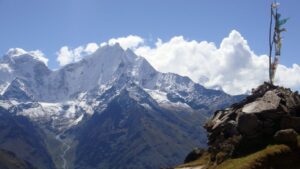
Everest Base Camp Tibet Tour – 13 Days
5,200 m
Max. Elevation
13 Days
Duration
Moderate Level
We are associate with
