- HOME
- Destination
- Adventure Activities
- About Us
- BLOGS
- CONTACT US

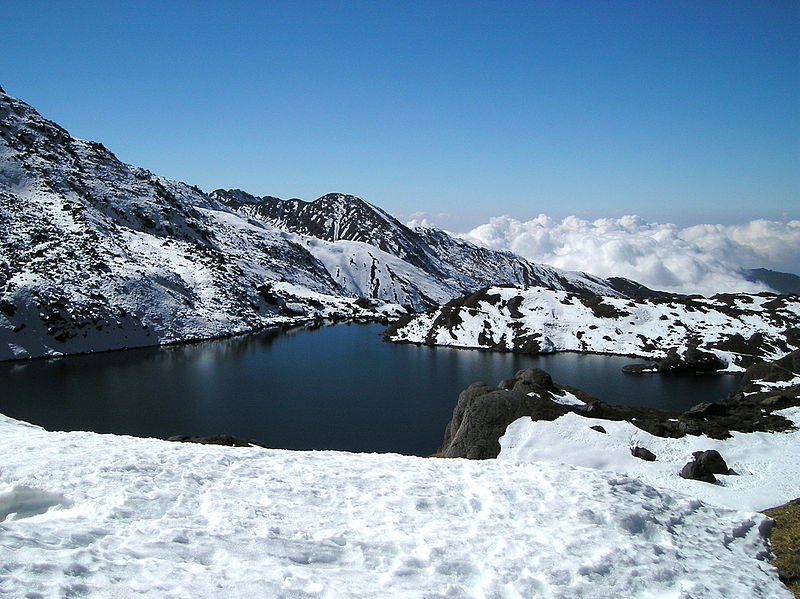
Gosaikunda is one of the beautiful lakes of Nepal, which is visited by many tourists as well people from inside the country. The lake is very popular as trekking destination which is why tourist pay visit to Goasikunda. For the people of Nepal itself, most of them visit this lake for a religious purpose.
Gosaikunda is the frozen lake located in the Langtang National Park in Rasuwa district. The Goasikunda lake is the high altitude sacred lake at an elevation of 4,300 meters of the park and Dorje Lakpa range (6,988 meters) bisects the park from east-west to south-east.
It is an alpine freshwater oligotrophic lake of Nepal at an altitude of 4,380 meters with a surface of 34 acres. There are other lakes in the area of Gosaikunda as well; they are Gosaikunda, Saraswatikunda, Bhairabkunds, and Surajkunda.
With all the associated lakes, the total area of Gosaikunda is 1,030 hectors. The site was declared as a Ramsar site on September 29, 2007. The Ramsar site is an international treaty for sustainable use and conservation of wetlands. The lake of Gosaikunda melts and sips down to form the Trishuli River and remains frozen for the period of six months in winter from October to June.
Altogether there are 108 big and small lakes in this area. The most challenging one Lauribina La is situated at an altitude of 4,610 meters.
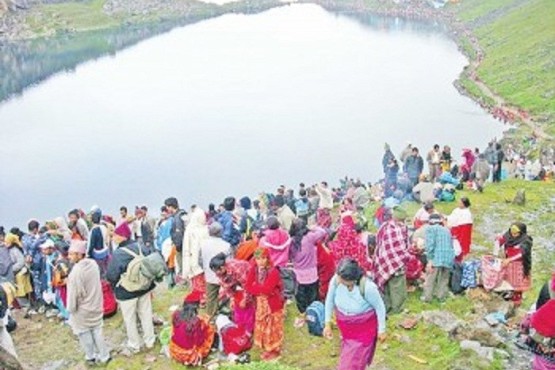
The Gosaikunda area is one of the important religious sites in Nepal. As per the Hindu mythology, Gosaikunda is considered as the abode of Hindu deities Lord Shiva and Gauri. In several Hindu scriptures like Bhagwat Puran, Vishnu Puran and the epics Ramayan and Mahabharat, there is a reference of Samudra Manthan which is directly related to the origin of Gosaikunda.
The water of the lake is believed to be holy and of particular significance during the festival Janai Purnima. During Janai Purnima, thousands of pilgrims pay a visit to the temple from Nepal and from India as well.
There is a belief that Gosaikunda was created by Lord Shiva where he thrust his Trishul (holy Trident) into the mountain to extract the water so he could cool his burning throat after he swallowed poison.
It will be best if you pay a visit to Gosaikunda from April to early June and from August to October. Monsoon and winter won’t be very wise to go to the lake. During the monsoon, there will be heavy rainfall and storm; you will also get leeches sticking on your legs in the trail so the path being whole muddy and slippery because of rain will make trekking very difficult.
Also, in the winter, there will be the chance of heavy snowfall and snow storm in higher altitude region. The temperature gets low, mostly below zero degrees. So, it increases the risk of altitude sickness as well. So, the spring and autumn season is the best time to trek in Gosaikunda.
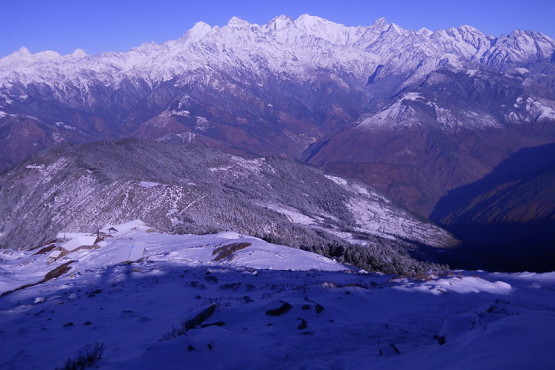
While trekking to Gosaikunda, you will see the view of many snow-capped mountains. You will see the panoramic view of the mountains in the Langtang area, and some of the Annapurna mountains range too.
You will get a view of Langtang Lirung (7,227 meters), Ganesh Himal (7,422 meters), Changbu (6,251 meters), Kinshung (6,781 meters), Yobra (6,264 meters), Yala (5,500 meters), Dorje Lakpa (6,966 meters), Langshisa Ri (6,427 meters), Ganchenpo (6,387 meters), Naya Kanga (5,844 meters) and Paldor Peak (5,903 meters).
The lake of Gosaikunda lies within the Langtang National Park. So, while trekking you might get sight of some endangered and rare wildlife and plants. The region is famous mainly for snow leopard and red panda which falls on the endangered list. Other wildlife including musk deer, leopard, and Himalayan Tahr. You will also pass by the delightful and colorful forest of rhododendron.
There are altogether 14 types of vegetation in 18 ecosystem types that range from upper tropical forest below 1,000 meters/3,300 feet altitude to alpine scrub and perennial ice. There are also oka, chir pine, maple fir, hemlock and so on. In many parts of the park, marijuana can also be found.
The local people of this region use marijuana for medicinal purpose for themselves or livestock. Marijuana is used by locals while in stomach pain, pain in the bone of hands or feet and for acidity as well.
In trek to Gosaikunda, you will encounter several villages with distinctive culture and tradition. There are villages resided by Tamanags and Sherpas, whose culture is influenced by the Tibetan culture. You will get to know the culture of these people who are living this way for generation depriving themselves of the modern means.
There is the various route used by the trekkers to go to the Gosaikunda. Well, here is the trail which is usually followed by the trekkers. The trek is usually started at Chisapani or Dhunche. However, Dunche is the most used trail. You can arrive at Dunche by taking a bus from Kathmandu. Then you might want to rest after a long journey in the bus. Also, do not forget to get the Trekkers Information Management System (TIMS) card. Then, from Dunche you will trek to Cholangpaty.
It may require a whole day to reach there so you can stay in Singompa (Chandanbarri), which is a beautiful village where you can find a lot of accommodations. So, whichever place you choose, the next destination will be Gosaikunda. After exploring the beautiful lake of Gosaikunda, you will move to Sing Gompa.
In this trail, you will enjoy the delightful forest of rhododendron and beautiful views of mountains including Manaslu range, Hiunchuli, Ganesh Himal, Langtang Lirung and other several peaks as well. From Sing Gompa comes Dunche, where ends your treks and you can do a celebration for accomplishing the trek successfully. You can take a bus ride back to Kathmandu.
Your email address will not be published.Required fields are marked *
You must be logged in to post a comment.



0 Comments on "Gosaikunda: The Ravishing religious lake of Nepal"