
 Plan Your Trip
Ganden to Samye Trek – 15 Days

Trip Overview

Trek Region
Tibet

Difficulty Level
Hard

Transport
Private Vehicle + Fully Supported Camping Trek (yak & crew support)

Total Trip Duration
15 Days

Max Elevation
5,250 m

Meals
B – City / BLD – On Tour & Trek
Trip Highlights
- Walk one of Tibet’s oldest and most storied pilgrimage trails, connecting two of the country’s founding monasteries, Ganden, the birthplace of the Gelugpa school, and Samye, the very first monastery ever built in Tibet.
- Cross three high passes above 5,000m: Shuga La (5,250m), Chitu La (5,100m), and Tso Shul La (5,050m) on a genuine wilderness trek through valleys that see only a handful of trekking groups each season.
- Camp beneath open plateau skies for five nights, supported by a full trekking crew, cook staff, and yak herders carrying your gear, in one of Tibet’s few true backcountry trekking routes.
- Descend from Tibet’s high alpine plateau into Samye’s fertile river valley at just 3,570m, a dramatic elevation drop that delivers one of the most rewarding final trekking days anywhere in the region.
- Visit Ani Pagong, a small and rarely visited nunnery along the route, and Yamalung Hermitage, a meditation retreat linked to Guru Rinpoche, founder of Tibetan Buddhism.
- Arrive at Samye Monastery itself, built in the 8th century to a mandala design representing the Buddhist universe, and explore its unique circular layout unlike any other monastery in Tibet.
- Extend the journey with a full loop through Gyantse and Shigatse, taking in the Kumbum Stupa and Tashilhunpo Monastery, before returning to Lhasa for the Potala Palace and Jokhang Temple.
- Trek through a landscape of nomadic herders, remote grazing pastures, and high mountain lakes that remains one of the least-visited corners of the Tibetan Plateau, even by Tibet’s own standards.
Trip Summary
Most visitors to Tibet see its monasteries by road, driving from one to the next along paved highways, in and out within an afternoon. The Ganden to Samye Trek offers something considerably rarer: the chance to walk between two of Tibet’s most historically significant monasteries the way pilgrims once did, across five days of genuine wilderness trekking, three high passes, and a landscape almost entirely free of other travellers.
Ganden Monastery, founded in 1409, was the first monastery of the Gelugpa school, the tradition later led by the Dalai Lamas, and sits on a ridge with sweeping views over the Kyichu Valley. Samye, at the trek’s end, is older still: built in the 8th century under King Trisong Detsen and the guidance of Guru Rinpoche, it was the very first Buddhist monastery established in Tibet, laid out as a physical mandala representing the entire Buddhist cosmos. Between these two sites lie genuine high-altitude wilderness, remote valleys, nomadic grazing grounds, and three passes above 5,000 m, walked with a fully supported camping crew rather than the guesthouse-to-guesthouse comfort of Tibet’s more travelled routes.
This 15-day itinerary gives the trek the time and acclimatisation it demands, framed by proper time in Lhasa beforehand and a rounding-out loop through Gyantse and Shigatse afterward, so the trip becomes both a genuine trekking expedition and a complete tour of central Tibet’s major cultural sites.
What Makes the Ganden to Samye Trek Special:
- A true wilderness camping trek, one of very few such routes accessible in Tibet
- Connects Ganden and Samye, two of the most historically important monasteries in Tibetan Buddhism
- Crosses three passes above 5,000m across five days of genuine backcountry trekking
- Fully supported by cook crew and yak herders; no teahouses or lodges along the route
- Visits rarely-seen sites en route, including Ani Pagong Nunnery and Yamalung Hermitage
- Ends with a dramatic descent into Samye’s fertile valley, one of the trek’s most memorable days
- Extended with a full Gyantse–Shigatse loop and Lhasa’s major monasteries for a complete Tibet experience
- A rare opportunity for experienced trekkers to walk genuine backcountry terrain in a country better known for its road-based touring
When To Visit
Best Time to visit: May, June, September
Good Time to visit: July, August
Average Time to visit: April, October
Not Recommended: November through March
Late spring and early autumn offer the most reliable trekking conditions on the passes, with May, June, and September standing out for clear skies and stable weather. Summer brings warmer temperatures and green pastures across the plateau, though occasional afternoon showers can affect the higher passes. Spring and late autumn remain workable with proper gear but carry a greater chance of early or lingering snow at Shuga La. Winter effectively closes the route; passes can be snowbound, camping conditions become genuinely hazardous, and this trek is not recommended between November and March.
Itinerary
Arrive at Lhasa Gonggar Airport and transfer to your hotel in the city, sitting at 3,656m in the wide Yarlung Tsangpo valley. Spend the day resting and acclimatising, with your guide briefing you fully on the trek ahead. This is a genuine backcountry trekking expedition, and preparation matters more here than on Tibet’s road-based tours.
Elevation: 3,656m | Accommodation: Hotel | Meals: None
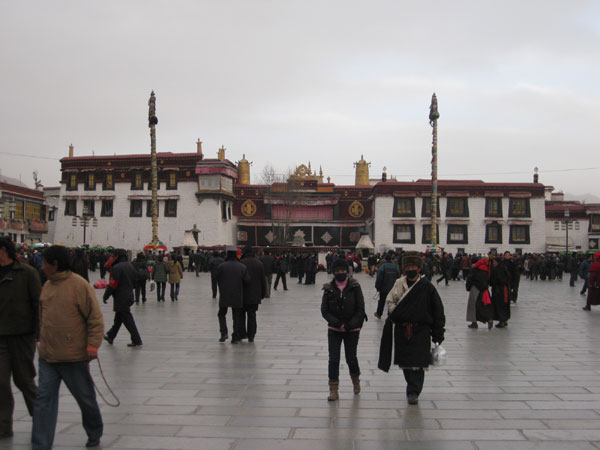
Visit the Potala Palace, the towering former residence of the Dalai Lamas, followed by Jokhang Temple, the holiest shrine in Tibetan Buddhism, and the Barkhor Circuit that surrounds it. A full day of cultural sightseeing that also serves as continued acclimatisation before the trek begins.
Elevation: 3,656m | Accommodation: Hotel | Meals: BLD
Visit Drepung Monastery, once home to over 10,000 monks, and Sera Monastery, known for its lively afternoon monk debates held in an open courtyard. This is your final day of city comforts before heading into the mountains, so use any spare time to rest, hydrate, and check trekking gear with your guide.
Elevation: 3,700m | Accommodation: Hotel | Meals: BLD
Drive roughly 45 kilometres east of Lhasa to Ganden Monastery, perched on a ridge at 4,300 m with sweeping views over the Kyichu Valley below. Explore the monastery itself, the founding seat of the Gelugpa school, before meeting your trekking crew, checking equipment, and camping near the trailhead, ready for an early start the following morning.
Elevation: 4,300m | Accommodation: Camping | Meals: BLD
The trek begins with a climb up and over the ridge behind Ganden Monastery, offering a final look back at the monastery before descending into a quieter, more remote valley. Camp for the night at Yama Do, also known as Hebu, a peaceful pastureland used by local herders.
Elevation: 4,500m | Distance: ~14km | Accommodation: Camping | Meals: BLD
The most demanding day of the entire trek. A long, steady climb leads to Shuga La at 5,250m, the highest point of the journey, with sweeping views across the surrounding ranges on a clear day. The descent brings you to Utse-do, a high valley campsite well below the pass.
Elevation: 5,250m (Shuga La Pass) | Distance: ~18km | Accommodation: Camping | Meals: BLD
Cross Chitu La at 5,100 m, a somewhat gentler climb than the previous day’s Shuga La, before descending into the Tsotup-chu Valley. Along the way, keep an eye out for pika, blue sheep, and, with some luck, the occasional Tibetan gazelle grazing the high pastures.
Elevation: 5,100m (Chitu La Pass) | Distance: ~16km | Accommodation: Camping | Meals: BLD
Cross the third and final high pass, Tso Shul La, at 5,050 m, before descending toward Yamalung Hermitage, a meditation retreat closely associated with Guru Rinpoche, the founder of Tibetan Buddhism. The site’s caves and small shrine are still used by meditators today, and the change in scenery, greener, lower, and more sheltered, signals the approaching end of the high-altitude section of the trek.
Elevation: 5,050m (Tso Shul La Pass) | Distance: ~15km | Accommodation: Camping | Meals: BLD
The final trekking day and one of the most rewarding. A long, steady descent drops you from Yamalung’s high hermitage down into the fertile Samye valley at just 3,570 m, a genuinely dramatic change in landscape, vegetation, and temperature after four days above 4,500 m. Arrive at Samye Monastery itself, built in the 8th century in a mandala design representing the entire Buddhist universe, and explore its unique circular layout, the oldest of its kind in Tibet.
Elevation: 3,570m (Samye) | Distance: ~17km | Accommodation: Hotel | Meals: BLD
A full day exploring Samye in greater depth, including the option of a side visit to Chimpu Hermitage, a cluster of meditation caves in the cliffs above the valley historically used by some of Tibetan Buddhism’s most important early practitioners. In the afternoon, drive back to Lhasa, marking the end of the trekking portion of the trip.
Elevation: 3,656m (Lhasa) | Accommodation: Hotel | Meals: BLD
With the trek behind you, the itinerary shifts into a road-based loop through central Tibet’s other major cultural sites. Drive over Kamba La Pass (4,794m) to Yamdrok Lake, one of Tibet’s four sacred lakes, then continue over Karo La Pass (5,010m), where a glacier descends almost to the roadside, before arriving in Gyantse by evening.
Elevation: 3,980m (Gyantse) | Accommodation: Hotel | Meals: BLD
Visit Pelkor Chode Monastery and its Kumbum Stupa in Gyantse, a nine-tiered structure containing over 100,000 painted and sculpted Buddhist images, before continuing to Shigatse and Tashilhunpo Monastery, seat of the Panchen Lama since 1447.
Elevation: 3,840m (Shigatse) | Accommodation: Hotel | Meals: BLD
A return drive across the plateau back to Lhasa, closing the loop and bringing you back to the city for the final days of the trip.
Elevation: 3,656m | Accommodation: Hotel | Meals: BLD
A day is left open to explore Lhasa at your own pace, the Barkhor market, Norbulingka Palace, or simply resting after a physically demanding two weeks. Optional additions, such as a Tibetan cooking class or a further look at the Tibet Museum can be arranged through your guide.
Elevation: 3,656m | Accommodation: Hotel | Meals: BLD
Your guide will accompany you to Lhasa Gonggar Airport for your onward flight. Between the passes of the Ganden to Samye trek and the monasteries bookending it, this is a trip that combines genuine physical challenge with some of the deepest cultural history Tibet has to offer.
Elevation: 3,656m to departure | Meals: B
Trek Difficulty & Physical Demands
The Ganden to Samye Trek is classified as challenging. This is a genuine multi-day camping trek, not a road-based tour, crossing three passes above 5,000m across five consecutive trekking days, with full camping support rather than guesthouses or lodges along the route. It demands real trekking fitness and prior high-altitude experience.
Elevation Profile
- Lhasa: 3,656m
- Ganden Monastery: 4,300m
- Yama Do (Hebu): 4,500m
- Shuga La Pass: 5,250m (highest point of the trek)
- Utse-do: 4,700m
- Chitu La Pass: 5,100m
- Tsotup-chu: 4,600m
- Tso Shul La Pass: 5,050m
- Yamalung Hermitage: 4,900m
- Samye Monastery: 3,570m
Altitude and Trekking Considerations
- Three full days in Lhasa beforehand are essential acclimatization, not optional sightseeing padding
- Day 6 (Shuga La) is the most demanding day of the trek, a long, sustained climb to the highest point of the route
- This is a fully supported camping trek: expect tents, a dedicated cook crew, and yak herders carrying gear, with no lodges or teahouses along the way
- Nighttime temperatures while camping above 4,500m regularly drop well below freezing, even in the best trekking months
- Discuss Diamox (acetazolamide) with your doctor before travel
- Evacuation from the trek route is slow, given its remoteness; an honest fitness assessment before booking is essential
- Guides and crew carry basic first aid and oxygen throughout the trekking section
Who This Tour Suits
- Experienced trekkers seeking genuine wilderness terrain rather than road-based sightseeing
- Those who have previously trekked multiple days above 4,000–5,000m and know how their body responds
- Travellers drawn to remote monasteries and hermitages well off Tibet’s standard tourist circuit
- Anyone comfortable with camping, basic trail food, and several consecutive nights without hotel-level comfort
- Good cardiovascular health, with no untreated heart, lung, or blood pressure conditions
Who Should Reconsider
- Trekkers with no prior multi-day, high-altitude trekking experience
- Those seeking a comfort-focused Tibet trip: this itinerary is genuinely rustic for five consecutive days
- Anyone with heart, lung, or circulatory conditions not cleared by a physician for sustained time above 5,000m
Best Time to Trek: Seasonal Comparison
Late Spring (May to June) Rating: Excellent. Clear skies, stable conditions on all three passes, and green pastures beginning to appear across the plateau. One of the two best windows for this trek.
Summer (July to August) Rating: Good warm days and lush valleys, though occasional afternoon showers can affect visibility and trail conditions on the higher passes.
Early Autumn (September) Rating: Excellent Post-monsoon clarity and stable weather make this the other standout season, with excellent visibility from Shuga La and Chitu La.
Shoulder Season (April, October) Rating: Average. Workable with proper cold-weather gear but carries a higher chance of early or lingering snow at Shuga La, the trek’s highest point.
Winter (November to March) Rating: Not Recommended. Passes can become snowbound, and camping conditions genuinely hazardous. This trek is not recommended during winter months.
Recommendation: May, June, or September for the most reliable pass conditions and the best overall trekking experience.
Booking Your Ganden to Samye Trek – 15 Days
Step 1: Book Your Flight to Lhasa (or via Kathmandu) This tour can be arranged as a direct fly-in to Lhasa or combined with an overland approach from Kathmandu. Speak with your operator about which suits your wider travel plans.
Step 2: Your Operator Arranges the Tibet Travel Permit and Camping/Trekking Permits Beyond the standard Tibet Travel Permit, this itinerary requires additional camping and trekking permits specific to the Ganden–Samye route, arranged by your licensed operator once your itinerary and passport details are confirmed.
Step 3: Confirm Your Trekking Gear Since this is a fully supported camping trek, confirm with your operator exactly what camping equipment (tents and sleeping mats) is provided versus what you need to bring yourself, particularly your sleeping bag and personal trekking gear.
Step 4: Confirm Travel Insurance. Insurance must explicitly cover medical treatment and evacuation above 5,000 m and should also cover trekking activities specifically, given the route’s remoteness.
Step 5: Pay Deposit and Confirm Booking A 30–50% deposit is standard, with the balance due 4–6 weeks before departure, given the additional lead time required for trekking-specific permits and crew arrangements.
Important Notes:
- This trek requires a dedicated camping crew, cook, and yak support. Book well ahead, particularly in peak May–June and September windows, as crew and yak availability is limited
- A licensed guide must accompany you at all times outside your hotel throughout Tibet
- Always carry physical copies of all permits; checkpoints and monastery entry points do not always accept digital versions
- Evacuation from the trek route between Ganden and Samye is slow; ensure your insurance and fitness level genuinely match the demands of the route before booking
Cost Details
Cost Includes
- 14 nights’ accommodation (hotel in Lhasa/Gyantse/Shigatse/Samye, full camping setup during the 5-day trek)
- All meals during the tour and trek (BLD on touring and trekking days, B on arrival/departure)
- Private vehicle and driver for all road sections of the itinerary
- Full trekking crew: cook staff, yak herders, and camping equipment for the 5-day trek
- Licensed English-speaking guide throughout
- Tibet Travel Permit and trekking/camping permits specific to the Ganden–Samye route
- All monastery, palace, and museum entry fees
- Potala Palace timed entry ticket (limited daily quota pre-booked)
- Oxygen supply and basic first aid kit for the trekking section
- Airport pickup and drop-off in Lhasa
- Guide and crew accommodation, meals, and insurance
- Government taxes and service charges
Cost Excludes
- International or domestic flights to/from Lhasa Gonggar Airport
- China tourist visa (or Tibet Group Visa if arranged via Kathmandu)
- Personal trekking gear: sleeping bag, trekking boots, poles, and personal clothing
- Travel insurance must compulsory( must cover altitude above 5,000m, evacuation, and trekking activities)
- Personal expenses, alcoholic beverages, and optional activities
- Tips for guide, crew, and yak herders
- Meals outside the included package
Trip Gallery
Trek Essentials
- Warm base layers (merino wool or synthetic; avoid cotton)
- Insulated down jacket for camping above 4,500m
- Windproof, waterproof outer shell and waterproof trousers
- Warm hat, insulated gloves, and buff for the three high passes
- Sturdy, well-broken-in trekking boots
- Trekking poles, strongly recommended for the pass descents
- Four-season sleeping bag (rated to at least -15°C), essential for camping above 4,500m
- Sleeping mat, if not provided as part of your package; confirm with your operator
- Headlamp with spare batteries
- Duffel bag for yak-carried gear, plus a separate daypack for daily essentials
- Personal prescription medications in original packaging
- Diamox (acetazolamide): Consult your doctor before travel; treat as essential for this itinerary
- Sunscreen SPF 50+ and lip balm SPF 30+; UV at altitude is severe
- Quality UV-blocking sunglasses
- Reusable water bottle and water purification tablets or a filter
- A basic personal first-aid kit for blisters, minor injuries, and altitude symptoms
- Passport (valid at least 6 months beyond travel)
- China tourist visa or Tibet Group Visa
- Tibet Travel Permit and trekking/camping permits (arranged by your operator)
- Travel insurance documents with emergency contact numbers, including evacuation and trekking coverage
- Camera with spare batteries (cold drains batteries fast at altitude)
- Portable power bank, since charging is unavailable while camping
- Earplugs (useful for shared camping arrangements and hotel stays alike)
Final Thoughts:
Tibet is, for most visitors, a country experienced through a car window, with extraordinary monasteries and landscapes, but seen from the road, in and out within a day. The Ganden to Samye Trek offers the alternative: five days on foot, three passes above 5,000m, nights under canvas beneath some of the clearest skies on the plateau, and a genuine sense of the remoteness that still defines most of rural Tibet.
It asks more of you than any of Tibet’s road-based tours: real trekking fitness, cold-weather camping, and the patience to walk between two monasteries rather than drive. In return, it delivers something road travel simply cannot: the walk itself, between Ganden’s ridge-top halls and Samye’s mandala-shaped monastery in its fertile valley, exactly as pilgrims have made this journey for centuries. For trekkers who want Tibet’s history and landscape at walking pace rather than driving speed, this is the route that delivers it.
Your Adventure to Ganden to Samye Trek – 15 Days Starts Here
Start your journey with trusted local experts and discover the beauty, culture, and adventure waiting in the Himalayas and beyond.
Frequently Asked Questions
Everything you need to know about the AASRA ECO TREK
This is a fully supported camping trek. Between Ganden and Samye, there are no guesthouses or teahouses; you camp for five nights with a dedicated cook crew and yak herders carrying equipment and supplies. This is a genuine difference from Tibet’s more common road-based tours, which use hotels and guesthouses throughout.
It is the most physically demanding of Tibet’s major touring routes on this site, involving five consecutive days of trekking, three passes above 5,000m, and full camping rather than hotel-based travel. Genuine trekking fitness and prior high-altitude experience are strongly recommended.
While not strictly mandatory, prior experience trekking multiple consecutive days above 4,000–5,000m is strongly recommended. This is not a beginner’s introduction to high-altitude trekking; the route is remote, evacuation is slow, and the physical demands are sustained across five full days.
Ganden, founded in 1409, was the first monastery of the Gelugpa school, the tradition later led by the Dalai Lamas. Samye, built in the 8th century under King Trisong Detsen and Guru Rinpoche, was the very first Buddhist monastery established in Tibet, laid out as a mandala representing the Buddhist universe. Walking between the two connects two of the most historically significant sites in Tibetan Buddhism.
The route crosses genuine high-altitude wilderness, with a chance of spotting pika, blue sheep, and occasionally Tibetan gazelle across the higher pastures. Scenery ranges from stark alpine passes above 5,000 m to the lush, fertile valley surrounding Samye at the trek’s end, one of the more dramatic landscape transitions found on any Tibetan trekking route.
Nighttime temperatures while camping above 4,500m regularly drop well below freezing, even during the best trekking months of May, June, and September. A four-season sleeping bag rated to at least -15°C is essential, along with warm layers for camp mornings and evenings.
Yes, most specialist gear, four-season sleeping bags, trekking poles, and some cold-weather clothing can be rented in Lhasa before the trek begins. Confirm specific availability and sizing with your operator ahead of time, particularly during peak trekking season.
Solo travellers are welcome and regularly join this trek, either independently or grouped with other travellers on similar dates. Given the crew, yak support, and permits required, most operators run this as a small-group departure rather than a fully private one-person trek, though private departures can usually be arranged at additional cost.
Given the trek’s remoteness, evacuation is genuinely slow and limited to what can be arranged by vehicle or, in more serious cases, helicopter from the nearest accessible point. This is why honest fitness assessment and appropriate acclimatisation before booking matter significantly for this specific itinerary, more so than for Tibet’s road-based tours.
Yes, in principle, since all these routes operate within the same central Tibet region and permit framework. Combining a road-based overland arrival with the Ganden to Samye trek is a popular extended itinerary for travellers with additional time. Speak with your operator about tailoring a combined journey.

Still have questions?
Can’t find the answer you’re looking for? Please chat to our friendly team.
Get In TouchSimilar Packages
Mount Kailash Tour – 17 Days
5,630 m
Max. Elevation
17 Days
Duration
Hard Level
Kathmandu to Lhasa Overland Tour – 12 Days
5,220m
Max. Elevation
12 Days
Duration
Moderate Level
Everest Base Camp Tibet Tour – 13 Days
5,200 m
Max. Elevation
13 Days
Duration
Moderate Level
We are associate with
