
 Plan Your Trip
Tamang Heritage Trail Trek – 12 Days

Trip Overview

Trek Region
Langtang

Difficulty Level
Moderate

Trek Starts at
Kathmandu

Transport
By Road

Trek Ends at
Kathmandu

Total Trip Duration
12 Days
Trip Highlights
- Walk through the heart of Tamang territory — a culturally rich and historically fascinating community living along the ancient Tibet trade route just north of Kathmandu
- Explore Gatlang village (2,240m) — the largest and most beautifully preserved traditional Tamang settlement in the Rasuwa district, perched on a terraced hillside with sweeping mountain views
- Visit the sacred Parvati Kunda Lake near Gatlang — a small, serene pilgrimage lake revered by the local Tamang community
- Soak in the famous Tatopani natural hot springs — geothermal waters believed to have healing properties, used by locals and trekkers alike for centuries
- Stand at Nagthali Danda (3,165m) — a spectacular panoramic ridgeline viewpoint with sweeping views of Langtang Lirung, Ganesh Himal, Kerung Himal, Sanjen Himal, and the snow-capped peaks of the Tibet border range
- Experience Thuman village — a remote, culturally vibrant Tamang settlement known for its open grasslands, traditional shamanic practices, and extraordinary mountain panoramas
- Walk the ancient Tibet trade route to Briddim (2,230m) — a Tibetan Buddhist village just three hours from the Nepal-Tibet border, home to the revered Dukchu Gompa monastery
- Trek through the primary red panda habitat of the Langtang gorge forest between Briddim and Lama Hotel
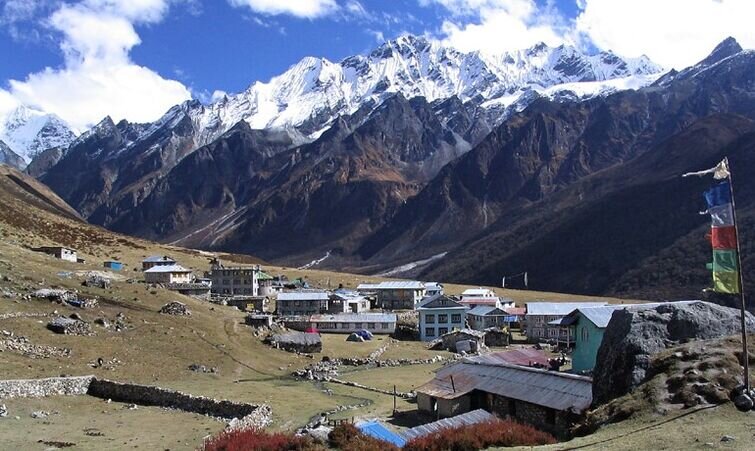
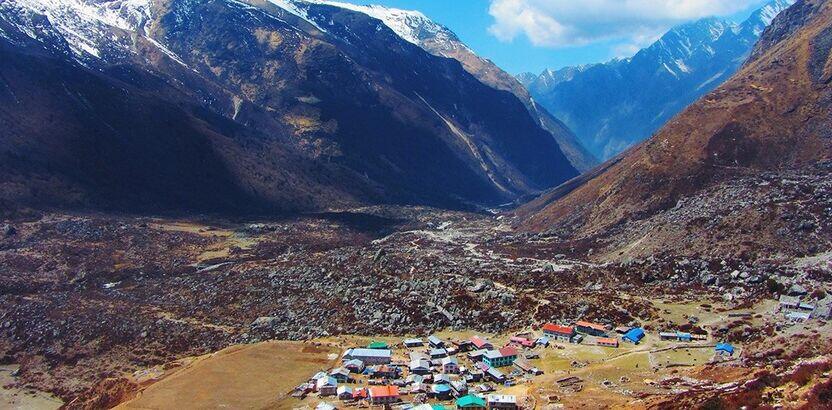
- Walk the classic upper Langtang Valley route to the emotionally significant rebuilt Langtang Village (3,430m)
- Explore Kyanjin Gompa (3,870m) — an ancient monastery in a dramatic high alpine setting — and taste world-famous yak cheese from the Kyanjin Cheese Factory
- Optional hike to Kyanjin Ri (4,773m) for a face-to-face panorama of Langtang Lirung (7,227m) and the Kyanjin Glacier
- Enjoy homestay experiences in Tamang villages that place you inside the actual daily life of mountain communities rather than looking at it from the outside
- Trek through Langtang National Park — Nepal’s first Himalayan national park — rich with rhododendron forest, bamboo groves, wildlife, and birdsong
Trip Summary
Nepal’s most visited trekking routes are famous for their altitude and their mountain drama. The Tamang Heritage Trail Trek is famous for something rarer its people. This 12-day circuit in the Langtang region north of Kathmandu takes you through the ancestral homeland of the Tamang people, one of Nepal’s largest and most culturally distinct ethnic groups, whose villages, monasteries, festivals, food, architecture, and traditions have remained largely unchanged for centuries.
The trail was officially developed by the Nepal government as part of a rural tourism initiative specifically designed to channel trekking income directly into Tamang communities making this one of the most ethically grounded trekking routes in the country. It circles through the western section of Langtang National Park, passing through the beautifully preserved villages of Gatlang, Tatopani, Thuman, and Briddim before joining the classic Langtang Valley trail and continuing to the glacial high alpine settlement of Kyanjin Gompa (3,870m).
What makes the 12-day version particularly rewarding is that it combines the full Tamang Heritage Trail circuit with the extension into the upper Langtang Valley giving you not just the cultural depth of the western Tamang villages but also the glacial mountain scenery, the ancient gompa, and the extraordinary viewpoints of the upper valley. It is, in one well-paced journey, both a cultural trek and a mountain trek and it does both exceptionally well.
Maximum altitude is comfortable enough for most healthy trekkers, the trails are clear and well-supported, and the combination of village homestays, ancient monasteries, natural hot springs, panoramic ridgelines, and Himalayan views makes this one of the most complete and satisfying mid-altitude treks in Nepal.
When To Visit
The Tamang Heritage Trail Trek operates across a wider seasonal window than most high-altitude Nepal treks its maximum altitude of 3,870m at Kyanjin Gompa (with the optional Kyanjin Ri hike reaching 4,773m) makes it accessible for more of the year than routes reaching 5,000m and above.
- Spring (March to May) is one of the most spectacular seasons for this specific circuit. The rhododendron forests on the trail between Tatopani and Nagthali Danda are among the finest blooming corridors in the Langtang region red, pink, and white blooms filling the forest canopy from late March through April. The lower Tamang villages are at their most productive and colorful in spring, with mustard fields glowing yellow and the first warm days bringing community life outdoors. Mountain views from Nagthali Danda and Kyanjin Ri are excellent.
- Autumn (September to November) is the peak trekking season and delivers the clearest mountain visibility of the year. After the monsoon clears, the views from Nagthali Danda of the Ganesh and Langtang ranges, and the panorama from Kyanjin Ri of Langtang Lirung and the glacier, are at their absolute sharpest. October is the gold-standard month stable weather, full teahouse availability throughout the circuit, and the villages at their most welcoming with the harvest season bringing activity and abundance. The hot springs at Tatopani are particularly appreciated in the cooler October air.
- Winter (December to February) is cold but possible for much of the circuit. The Tamang Heritage Trail villages Gatlang, Tatopani, Thuman, and Briddim all sit below 2,700m and remain accessible year-round. Kyanjin Gompa at 3,870m sees cold temperatures and occasional snowfall in winter but teahouses remain open. The optional Kyanjin Ri hike becomes icy in mid-winter. For trekkers who want complete solitude and don’t mind cold nights, winter offers an extraordinary peace on these trails.
- Monsoon (June to August) is manageable on the lower sections of the circuit the Tamang villages benefit partially from the rain shadow effect of the main Langtang ridge. Lower trails are leechy and slippery in heavy rain but the villages remain accessible. The upper Langtang Valley sections become wet and cloud-covered. Not the recommended season but possible for determined trekkers with the right expectations and waterproof gear.
Itinerary
Welcome to Nepal. Our team meets you at Tribhuvan International Airport and transfers you to your hotel in Kathmandu. In the evening your trekking guide joins you for a thorough pre-trek briefing covering the complete 12-day route, the cultural significance of the Tamang villages you will visit, altitude profiles, permit requirements, gear checks, and the logistics of the next day’s combined road drive and first walking stage.
The briefing also covers the particular cultural etiquette important for the Tamang Heritage Trail how to behave respectfully in monastery settings, what to know about homestay customs, the significance of the mani walls and prayer wheels that line every trail, and how to engage with Tamang communities in a way that is genuinely meaningful for both the trekker and the host.
If you arrive early and the city calls, Kathmandu rewards any investment of attention the great Boudhanath Stupa is just a 20-minute taxi ride from Thamel and its evening kora, with butter lamps glowing in every niche and monks chanting in the surrounding monasteries, is one of the finest ways to begin a cultural trekking journey in Nepal. Overnight in Kathmandu.
An early morning departure from Kathmandu for the long drive northwest to Syabrubesi. The road climbs out of the Kathmandu Valley through Balaju and rises into the Nuwakot hills terraced farmland, roadside shrines, pine forest ridgelines. The route joins the Trishuli River valley and follows it northward through Dhunche the district headquarters of Rasuwa before descending into the Bhote Koshi gorge to reach Syabrubesi (1,550m).
Rather than staying overnight in Syabrubesi, this itinerary makes the most of the afternoon by beginning the trek immediately. The Tamang Heritage Trail branches west from Syabrubesi on a trail that climbs steeply through forested hillsides, past scattered homesteads and small waterfalls, ascending the ridge above the valley to reach Gatlang (2,240m) by late afternoon.
Gatlang is the jewel of the entire Tamang Heritage Trail circuit and one of the most beautifully preserved traditional villages in the entire Langtang region. The largest Tamang settlement in the Rasuwa district, Gatlang sits on a broad terraced hillside with sweeping southern views and a character that feels genuinely untouched by the kind of commercialization that has transformed some Himalayan villages closer to the main trekking highways. Traditional stone and timber houses line narrow cobbled lanes. A carved wooden monastery sits at the heart of the village its prayer hall decorated with thangka paintings and centuries of butter lamp smoke. Yaks and dzos share the paths with children returning from school. Spend the evening exploring the village and let the pace of mountain life settle around you. Drive time: 7–8 hours. Walking time: 4–5 hours.
One of the most culturally layered walking days of the entire trek. From Gatlang, the morning begins with a short walk to the sacred Parvati Kunda Lake a small, pristine pilgrimage lake set in a forested hollow above the village, revered by the local Tamang community as a sacred bathing site particularly during auspicious festival days. The lake is quiet, beautiful, and deeply atmospheric in the early morning light.
The trail then descends from Gatlang through terraced farming country and enters a corridor of bamboo and pine forest, passing through the small settlements of Thambuchet and Gang Gong before climbing gradually to Tatopani (2,607m).
Tatopani literally means “hot water” in Nepali and the name tells you exactly what makes this village famous. The natural geothermal hot springs here are the most celebrated on the entire Tamang Heritage Trail. Emerging from the mountainside at a steady pleasant temperature, the spring water pools have been used for centuries by local communities who believe the mineral-rich water has genuine therapeutic properties particularly for skin conditions, joint pain, and general physical recovery.
After a long day of walking through varied terrain, lowering yourself into the hot spring pool as the sun drops behind the ridge and the mountain air cools around you is a genuinely restorative experience. The springs are a short walk below the village and are managed by the local community. Spend the afternoon at the springs, explore the village lanes, and rest well. Walking time: 6–7 hours.
The finest viewpoint day of the entire Tamang Heritage circuit and one of the most underrated panoramic experiences in the entire Langtang region. From Tatopani, the trail climbs northward and eastward through dense alpine forest rhododendron giving way to oak, oak to fir, and fir to open scrubland as altitude is gained passing through the small Tamang settlement of Brimdang before pushing on to the ridge at Nagthali Danda (3,165m).
Nagthali Danda is not a simple viewpoint. It is a former meditation site for Buddhist monks a broad, open ridge where the mountain views are available in an unbroken panorama that has apparently been inspiring contemplation for centuries. From the ridge at 3,165m, the full sweep of the Langtang Himal, Ganesh Himal, Kerung Himal, Sanjen Himal, and the long line of snow-capped peaks along the Tibet border are all visible simultaneously. Langtang Lirung (7,227m) rises directly north, impossibly white against the deep blue sky. The Tibetan plateau shimmers beyond the border ridge in the distance. It is a view that rewards every meter of the morning’s climb.
The descent from Nagthali through open meadows and dense rhododendron forest to Thuman (2,340m) is long and steep in sections but leads to one of the most characterful overnight villages of the circuit. Thuman is known throughout the region for its wide, grassy meadows, its traditional Tamang songs and dances, and its deeply rooted shamanic traditions the local jhankri (shaman) still plays an important role in community healing and spiritual life here in a way that is increasingly rare in more tourism-heavy villages. Spend the evening in Thuman with the village quieting around you and the mountain views still fresh in your mind. Walking time: 6–7 hours.
From Thuman, the trail follows the ancient trade route that has connected Nepal and Tibet for centuries a path worn smooth by generations of traders, pilgrims, and herders moving goods and animals between the two countries. Heading north and then east, the route descends to the Bhote Koshi River the river whose waters come directly from the Tibetan plateau crossing it on a suspension bridge before climbing steadily through forest and past scattered homesteads to reach Briddim (2,230m).
Briddim is one of the most historically significant and culturally fascinating villages on the entire circuit. Sitting just three hours’ walk from the Nepal-Tibet border, Briddim has been shaped over centuries by its position on the Tibet trade route its Tamang community blends Tibetan Buddhist traditions with distinctly Nepali mountain culture in a way that is immediately visible in the architecture, the dress, the language, and the religious practices of the village.
The village monastery Dukchu Gompa is the cultural centerpiece of Briddim and deserves a proper, unhurried visit. Founded centuries ago and still actively maintained by the local community, the gompa is decorated with remarkable thangka paintings, elaborate butter lamp altars, and the particular smoky, incense-rich atmosphere of a place of genuine and continuous devotion. Your guide can introduce you to the gompa’s history and help translate the stories depicted in the murals. The evening in Briddim with the mountains of the Langtang and Kerung ranges visible to the north and the village settling into the quiet rhythms of early night is one of the finest of the entire 12-day circuit. Walking time: 5–6 hours.
From Briddim, the Tamang Heritage Trail joins the classic Langtang Valley trekking route and the character of the trail changes immediately and noticeably. The village trails and open hillside paths of the cultural circuit give way to the deep, forested gorge of the Langtang Khola River, and you enter Langtang National Park proper.
The trail descends from Briddim through rhododendron and mixed oak forest, passing through the small settlement of Khamjim before joining the main Langtang Valley trail and heading eastward along the river. The forest closes overhead dense, green, and very much alive. This is some of the finest wildlife habitat in Nepal and the section between Briddim and Lama Hotel passes through primary red panda territory. Walk slowly in the early morning hours, look carefully into the bamboo understory and the lower tree branches, and your guide will know the most productive spots along the trail.
Lama Hotel (2,380m) is a well-established cluster of teahouses at the forest edge where the valley begins to widen above and the first glimpses of higher peaks appear above the ridgeline. After five days of western cultural circuit walking, arriving at the busy comparative hub of Lama Hotel feels like a significant transition you are now on the main Langtang Valley trail, heading toward the glacial upper valley. Walking time: 6–7 hours.
Today the Himalayas take full, commanding possession of the horizon. From Lama Hotel the trail climbs continuously through thinning forest rhododendron first, then fir and pine, then open alpine scrubland and the Langtang Himalayan range builds above the northern ridge in successive reveals, each one more dramatic than the last.
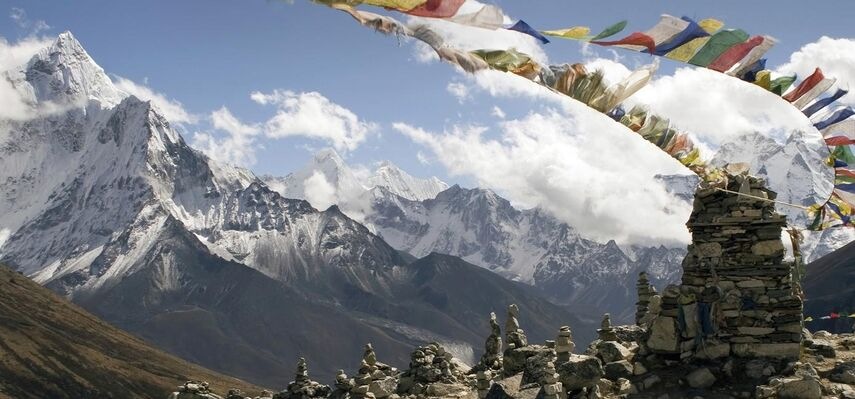
At Ghoda Tabela (3,030m) the wide grassy flat whose name translates as “horse stable” the national park checkpoint marks the entrance to the upper valley and the landscape opens into the broad width of the upper Langtang world. Ancient mani walls begin here and line both sides of the trail without interruption all the way to Kyanjin. Always pass to the left, following the direction of the carved prayers.
Langtang Village (3,430m) carries a story that every trekker on this trail should know before arriving. On April 25, 2015, the earthquake triggered a catastrophic avalanche that buried the original settlement in seconds, killing over 350 residents and visitors. The community rebuilt by hand and by choice every teahouse and home you see in Langtang today was constructed after that day. Walking in slowly and with full awareness of this history is the right way to arrive. The memorial area above the village, where carved chortens honor those who were lost, deserves a quiet visit. Walking time: 6–7 hours.
A shorter, deeply satisfying walking day through the widening upper valley one of the most visually complete walks in the Langtang region. The trail continues east from the village through open alpine meadows where yak herds graze freely and the northern border ridge of the valley rises in an unbroken wall of peaks.
A magnificent water-powered prayer wheel spins ceaselessly beside the trail one of those small, perfect details that the upper Langtang Valley specializes in. Ancient mani walls stretch along both sides of the path. Langtang Lirung (7,227m), Langtang II, Kimshung, Yansa Tsenji all lining up along the Tibetan border ridge with growing immediacy.
Kyanjin Gompa (3,870m) is the maximum altitude point and cultural high point of the entire 12-day trek. An ancient monastery that has stood at this altitude for centuries, a working yak cheese factory producing exceptional cheese since the 1950s with Swiss technical assistance, and a small permanent community who live here year-round in conditions that most visitors find simultaneously humbling and inspiring. Visit the monastery interior the thangka paintings, the chanting hall, the smell of butter lamps and juniper and buy a round of the yak cheese, which is genuinely one of the finest artisanal food products in Nepal. Rest well and sleep early. Tomorrow you have the option to climb. Walking time: 3–4 hours.
A rest and exploration day at Kyanjin Gompa that offers one of the finest optional viewpoint hikes in the entire Langtang region. The hike to Kyanjin Ri (4,773m) is steep, direct, and consistently uphill from the very first step above the village but the view at the summit is one of the most personally powerful mountain encounters on any standard Nepal teahouse circuit.
Standing at 4,773m, you look directly into the enormous southern face of Langtang Lirung (7,227m) a wall of glaciated rock and ice so close and so immense it fills your entire northern field of vision. The Kyanjin Glacier pours from the mountain directly below you. To the south, the entire Langtang Valley stretches westward in a wide panoramic sweep. To the east, the Tibet border peaks form a continuous ridgeline of snow. It is an intimate encounter with a 7,000m peak of a kind that most trekkers in Nepal never experience.
The hike takes approximately 2 to 2.5 hours to reach the top and the descent brings you back to the village by midday. In the afternoon, visit the Kyanjin Monastery properly spend time in the prayer hall, observe the paintings, spin the large exterior prayer wheels and take a walk along the edge of the glacier moraine for a closer look at the ice. The Kyanjin Cheese Factory is also worth a visit to see the production process and pick up more cheese for the trail.
For those who prefer a gentler acclimatization day without the steep hike, walking the upper valley meadows, exploring the lakes above the gompa, and simply sitting with the extraordinary setting of Kyanjin is a fully rewarding way to spend this day. Optional hike time: 4–5 hours return.
The long pivot day retracing the route westward from Kyanjin Gompa through the upper valley and all the way back down to Lama Hotel. At approximately 21 kilometers and nearly 1,500m of altitude loss, this is the longest walking day of the entire 12-day circuit and requires an early start.
The trail covers familiar ground in reverse back through the mani walls and yak pastures, past the rebuilt Langtang Village and its memorial area, through Ghoda Tabela, and then steeply down through the thinning forest into the gorge. The descent through the rhododendron and bamboo forest in the afternoon hours is beautiful in its own right, and the thickening air and increasing warmth as altitude is lost are physically welcome and noticeable.
By Lama Hotel your lungs are easier and your appetite is strong. Eat a full dinner, rest completely, and appreciate the last night in the forest before the return descent to Syabrubesi tomorrow. Walking time: 6–7 hours.
The final trekking day a descent through the lower Langtang gorge back to the road at Syabrubesi. The trail heads westward from Lama Hotel through the now-familiar bamboo and rhododendron forest, past the teahouses at Rimche and Bamboo, and along the Langtang Khola River back toward the valley entrance.
The trail that felt steep and challenging on Day 6 when you first climbed up from Briddim now flows naturally and easily beneath your feet a satisfying reminder of how much stronger and more trail-adapted your body has become over the past 10 days. The birdsong in the lower forest sections is rich and varied, and if you spot a red panda on the descent through the bamboo sections, it is the finest possible ending to the wildlife section of the trek.
Syabrubesi (1,550m) greets you with the noise, warmth, and welcome disorder of a proper mountain town. Check into your teahouse, share a meal with your guide and porter over a warm dinner, and celebrate a circuit well walked. Walking time: 4–5 hours.
An early morning departure from Syabrubesi for the road journey back to Kathmandu. The drive retraces the Bhote Koshi gorge, climbs through the Rasuwa hills past Dhunche, follows the Trishuli River valley southward, and descends into the Kathmandu Valley approximately 7–8 hours depending on road and traffic conditions.
The mountain scenery through the Nuwakot hills on the return drive is pleasant and the transition from the world of the mountains back to the city happens gradually. Back in Kathmandu, our team can transfer you directly to the international airport if your departure flight allows, or to your hotel if you have time before flying. You leave Nepal having walked one of the most culturally authentic circuits in the country — through the ancestral homeland of the Tamang people, past ancient trade routes and sacred hot springs and centuries-old monasteries, and all the way up to the glacial high alpine world of Kyanjin Gompa. Drive time: 7–8 hours.
Trek Difficulty & Physical Demands
The Tamang Heritage Trail Trek is rated easy to moderate one of the most accessible multi-day trekking routes in the Langtang region and an excellent first Himalayan trekking experience for fit beginners.
Altitude: The maximum altitude of the standard circuit is 3,870m at Kyanjin Gompa well within the range manageable by most healthy adults who ascend gradually. The optional Kyanjin Ri hike reaches 4,773m and is steeper and more demanding. Mild altitude symptoms are possible above 3,000m but are far less common here than on higher-altitude Khumbu routes.
Terrain variety: The Tamang Heritage section features a mix of village footpaths, forest trails, river crossings, and open ridgeline walking all well-marked and without technical difficulty. The Nagthali Danda section involves a sustained climb and descent that is the most demanding single stretch of the cultural circuit. The Langtang Valley section above Ghoda Tabela is open, wide, and relatively gentle.
Daily walking: Expect 4–7 hours of walking per day. The longest days are the Gatlang–Tatopani section, the Nagthali Danda crossing, Briddim–Lama Hotel, and the Kyanjin return day — each requiring a good early start and a steady pace.
Physical fitness: A comfortable baseline of fitness walking regularly for 3–4 hours on uneven ground is sufficient preparation for the cultural section of the circuit. The upper Langtang Valley days and especially the optional Kyanjin Ri hike benefit from better cardiovascular fitness. 6–8 weeks of regular hiking or walking before departure is ideal for most trekkers.
First-time trekkers: This is one of the finest first Himalayan trek options in Nepal. The altitude is moderate, the trails are clear and well-supported, the cultural depth is extraordinary, and the upper Langtang section provides genuine mountain drama without requiring the extreme altitude or technical demands of the Khumbu or high-pass routes.
Why this trek works for experienced trekkers too: Experienced Himalayan trekkers who have already done the classic Everest Base Camp or Annapurna Circuit often find the Tamang Heritage Trail deeply refreshing for its quietness, its cultural intimacy, and the particular quality of time it allows in communities that have not yet been changed by heavy tourist traffic.
Best Time to Trek: Seasonal Comparison
| Season | Months | Weather | Trail Conditions | Views | Recommended |
| Spring | Mar–May | Warm & Stable | Excellent | Excellent | Best |
| Monsoon | Jun–Aug | Wet / Partial Rain Shadow | Slippery in parts | Partially good | Possible |
| Autumn | Sep–Nov | Cool & Clear | Excellent | Excellent | Best |
| Winter | Dec–Feb | Cold & Dry | Good on lower circuit | Good | Possible |
Pro tip: For the absolute best combination of blooming rhododendrons on the Nagthali Danda section, warm hot springs at Tatopani, excellent mountain visibility from Kyanjin Ri, and the most active and welcoming village atmosphere throughout the Tamang Heritage section, aim for the first two weeks of April or the first three weeks of October. These two windows represent the finest conditions for every section of this 12-day circuit simultaneously.
Booking Your Tamang Heritage Trail Trek – 12 Days
Booking is simple and our team handles every logistics detail across both the cultural circuit section and the upper Langtang extension.
Step 1 — Contact us. Reach out via our website, email, or WhatsApp with your preferred travel dates and group size. We respond within 24 hours with the complete day-by-day itinerary and full cost breakdown.
Step 2 — Confirm your booking. A 20% deposit secures your dates. We immediately process all three permits — Langtang National Park, Tamang Heritage Trail, and TIMS — arrange ground transport for both directions, and coordinate with community lodge and homestay hosts in the Tamang villages.
Step 3 — Prepare. We send a comprehensive pre-departure guide covering fitness recommendations, detailed gear list, cultural etiquette for Tamang village homestays and monastery visits, altitude awareness for the upper Langtang section, and day-by-day expectations for all 12 days.
Step 4 — Arrive in Kathmandu. We collect you from the airport, brief you fully on both sections of the circuit, and ensure you have everything needed for the combined cultural and mountain experience ahead. The early departure for Syabrubesi begins the following morning.
Step 5 — Trek. Your licensed guide leads you through every village, every monastery, every ridgeline, and every stretch of forest on the circuit — bringing cultural depth to the Tamang heritage section and mountain safety expertise to the upper Langtang section.
Step 6 — Pay the balance. The remaining 80% is due on arrival in Kathmandu before departing for Syabrubesi.
Cancellation Policy:
- 30+ days before departure: Full deposit refunded minus bank transfer charges
- 15–29 days before: 50% refund of deposit
- Less than 15 days: Deposit forfeited, no refund
Important: Travel insurance with emergency helicopter evacuation coverage is mandatory. While the Tamang Heritage Trail itself stays below 3,000m for most of its route, the upper Langtang section reaches 3,870m at Kyanjin Gompa and 4,773m on the optional Kyanjin Ri hike. An emergency helicopter from the upper valley costs USD 3,000–5,000 or more. Ensure your policy covers activities at altitude.
Cost Details
Cost Includes
- Airport pick-up and drop-off in Kathmandu
- Kathmandu–Syabrubesi–Kathmandu ground transportation (private jeep or tourist bus)
- 1 night hotel accommodation in Kathmandu on arrival (bed & breakfast, 3-star)
- All teahouse, community lodge, and homestay accommodation during the trek (10 nights)
- All meals during the trek — breakfast, lunch, and dinner every day on trail
- Experienced, English-speaking, government-licensed trekking guide
- One porter for every two trekkers (maximum 15 kg per porter load)
- All required trekking permits:
- Langtang National Park Entry Permit
- Rasuwa Tamang Heritage Trail Permit
- TIMS Card (Trekkers’ Information Management System)
- Guide and porter wages, meals, accommodation, and full insurance
- All government taxes and local charges
- Sleeping bag and duffel bag rental (if needed)
- First Aid Kit carried by guide throughout the trek
- Emergency evacuation arrangement (evacuation cost covered by your travel insurance)
Cost Excludes
- Nepal entry visa fee (approx. USD 50 for 30 days — obtainable on arrival at Kathmandu airport)
- International flights to and from Kathmandu
- Travel insurance with emergency helicopter evacuation coverage (mandatory)
- Meals in Kathmandu beyond breakfast
- Hot spring entry fee at Tatopani (approximately NPR 200–300 per person — payable locally)
- Hot showers, Wi-Fi, and device charging along the trek (charged at teahouses)
- Personal snacks, bottled water, energy drinks, and alcoholic beverages
- Tips and gratuity for guide and porter (strongly recommended and greatly appreciated)
- Personal trekking gear and clothing
- Extra nights in Kathmandu beyond the planned itinerary
- Helicopter rescue costs (must be covered by personal travel insurance)
- Monastery entry donations at Gatlang, Briddim, and Kyanjin Gompa
- Personal expenses — laundry, souvenirs, phone calls, and incidentals
Trip Gallery
Trek Essentials
- Thermal base layer top and bottom — 2 sets
- Mid-layer fleece or softshell jacket
- Light to medium down jacket or insulated layer — essential at Kyanjin Gompa and useful for early morning starts throughout the circuit
- Waterproof, windproof hardshell jacket and trousers — important for Nagthali Danda and the upper Langtang sections
- Trekking trousers — 2 to 3 pairs
- Trekking socks, wool or synthetic — 4 to 5 pairs
- Light gloves for morning ridge walks and warmer gloves for Kyanjin Gompa and above
- Warm beanie or wool hat
- Sun hat or cap with brim for lower valley and cultural village sections
- Neck gaiter or buff
- Waterproof, ankle-support trekking boots — broken in thoroughly before the trek. The Tamang Heritage Trail village paths are rocky and uneven; the upper Langtang Valley sections require solid grip and ankle support on the return descent.
- Lightweight sandals or flip-flops for teahouse and homestay evenings — and specifically for the Tatopani hot spring pools
- Gaiters (optional but useful if trekking in early spring or winter when Nagthali Danda may have snow)
- Trekking poles — strongly recommended for the Nagthali Danda descent and the long Kyanjin Gompa to Lama Hotel return day
- Daypack (20–25 liters) for daily trail essentials
- Duffel bag (60 liters) for your porter
- Sleeping bag rated to -10°C to -15°C — Kyanjin Gompa nights are cold and some of the teahouses on the cultural section have basic insulation
- Headlamp with extra batteries
- Sunglasses with UV400 protection — important above 3,000m
- Water bottle (1–2 liters) or hydration bladder
- Water purification tablets or personal filter
- Lightweight travel towel — useful for the Tatopani hot springs and for homestay nights
- Personal first aid kit — blister pads, ibuprofen, bandages, antiseptic cream
- Sunscreen SPF 50+ and SPF lip balm — UV radiation increases significantly above 3,000m
- Insect repellent for the lower gorge forest sections
- Hand sanitizer and biodegradable wet wipes
- Diarrhea medication and oral rehydration salts
- Diamox (acetazolamide) — generally not required for this trek given the maximum altitude of 3,870m, but worth consulting your doctor if you have any prior altitude sensitivity history or are planning the optional Kyanjin Ri hike
- All personal prescription medications for the full 12-day duration
- Valid passport with at least 6 months remaining validity
- Nepal visa (obtainable on arrival at Kathmandu airport)
- Printed travel insurance policy with emergency evacuation details
- 2 passport-sized photos for permit processing
- Emergency contact card kept on your person throughout
Final Thoughts:
The Tamang Heritage Trail Trek occupies a unique and important place in Nepal’s trekking landscape. It is not the most dramatic trek in the country. It does not take you to the highest altitude. It does not cross a glaciated pass or put you at the base of the world’s tallest mountain. What it does instead and does better than almost any other standard circuit in Nepal is take you inside a living mountain culture and give you the time and the access and the guidance to genuinely understand what you are seeing.
The Tamang people are one of Nepal’s most ancient and most historically fascinating communities shaped by centuries of Buddhist tradition, Tibetan cultural influence, and the particular character that comes from living at altitude on an ancient trade route between two great civilizations. Their villages are not preserved for tourist consumption. Their monasteries are not museum pieces. Their festivals, their food, their architecture, their hospitality all of it is alive and practiced in the present, in communities that are genuinely glad to share what they have with visitors who come respectfully and with curiosity.
Adding the upper Langtang Valley and Kyanjin Gompa to the end of the cultural circuit gives this 12-day trek a mountain dimension that the shorter cultural-only versions lack. Standing at Kyanjin Ri in the early morning with Langtang Lirung filling the entire northern sky, you understand that this trek has given you two completely different and equally genuine versions of what the Himalayas can be the human world of the mountain communities in the valleys below, and the wild, glacial, high-altitude world of the peaks above.
Between those two worlds, across 12 days, lies one of the most complete and most honest trekking experiences available anywhere in Nepal.

Your Adventure to Tamang Heritage Trail Trek – 12 Days Starts Here
Start your journey with trusted local experts and discover the beauty, culture, and adventure waiting in the Himalayas and beyond.
Frequently Asked Questions
Everything you need to know about the AASRA ECO TREK
The standard Langtang Valley Trek goes directly from Syabrubesi to Kyanjin Gompa along the main valley trail a beautiful but relatively straightforward there-and-back mountain route. The Tamang Heritage Trail Trek takes the western cultural circuit first looping through the preserved Tamang villages of Gatlang, Tatopani, Thuman, and Briddim before joining the Langtang Valley trail at Lama Hotel. This adds 4–5 days of deeply cultural walking through communities that see far fewer trekkers than the main valley trail and gives the upper Langtang Valley section a meaningful context and contrast. The combination of cultural circuit and mountain extension makes this 12-day itinerary the most complete experience of the Langtang region available at this altitude range.
The Tamang are one of Nepal’s largest ethnic groups approximately 1.5 million people, predominantly in the hill districts north and east of Kathmandu. Their culture is deeply rooted in Vajrayana Tibetan Buddhism, and their religious practices, art, architecture, and music reflect centuries of cultural exchange across the Himalayan trade routes with Tibet. The Tamang Heritage Trail specifically passes through communities in the Rasuwa district whose villages sit along what was historically one of the most active Tibet-Nepal trade corridors and whose culture retains a richness and authenticity that is increasingly rare in more tourism-heavy areas of Nepal. The Tamang are known throughout Nepal for their warmth, their directness, and their generous hospitality.
The community lodges and family homestays on the Tamang Heritage Trail section are managed by local households and village cooperatives as part of the government’s rural tourism initiative. They are simple wooden or stone rooms, basic bedding, shared facilities but the food is home-cooked, the hosts are genuinely warm, and the experience of sitting in a family kitchen in a Tamang village eating dal bhat cooked over a wood fire while the family goes about their evening is something no teahouse can replicate. The homestays are the cultural heart of this trek and the reason many trekkers return with the Tamang Heritage section as their single strongest memory of Nepal.
The hot springs at Tatopani are geothermal pools fed by naturally heated mineral water emerging from the mountainside the same geological activity that creates hot springs throughout the Himalayan belt. The pools are managed by the local community, clean, and set in a pleasant riverside location below the village. The water temperature is warm and consistently therapeutic locals believe the mineral content is effective for skin conditions and joint pain, a belief that has been part of the cultural identity of the village for generations. Soaking in the hot springs after five days of walking is one of the most purely enjoyable experiences on the entire circuit.
The hike to Kyanjin Ri (4,773m) is optional and is listed as such in the itinerary. It is recommended for all trekkers who feel well at the altitude of Kyanjin Gompa (3,870m) on arrival meaning no persistent headache, nausea, or significant fatigue. The climb is steep and takes 2 to 2.5 hours, and the view at the top is one of the most extraordinary mountain encounters on any mid-altitude Nepal trek. For trekkers who feel any altitude discomfort after arriving at Kyanjin, resting at the gompa and exploring the valley floor is the right choice there is plenty to see and do at the lower elevation and rest is always the correct response to altitude symptoms.
You need three permits: the Langtang National Park Entry Permit (approx. USD 34), the Tamang Heritage Trail Permit issued by the Rasuwa District Development Committee (a small additional permit that goes directly toward community development), and a TIMS Card. All three are included in the package price and arranged on your behalf before departing Kathmandu.
Yes. Travel insurance with emergency helicopter evacuation coverage is mandatory. While the Tamang Heritage circuit section stays below 2,700m for most of its route, the upper Langtang extension reaches 3,870m at Kyanjin Gompa and the optional Kyanjin Ri hike reaches 4,773m both in remote terrain where road-based emergency access is unavailable. A helicopter rescue from the upper Langtang Valley costs USD 3,000–5,000 or more.
The section between Briddim and Lama Hotel passes through primary red panda habitat bamboo and rhododendron forest in the lower Langtang gorge that is one of the best red panda corridors in Nepal. Sightings are possible but not guaranteed; early morning walking and patience with your guide’s knowledge of productive spots gives you the best chance. Gray langur monkeys are very commonly seen throughout the forest sections. Himalayan black bear, musk deer, wild boar, and over 250 bird species are all recorded within Langtang National Park. The lower Gatlang and Tatopani sections of the trail also support excellent birdlife in the rhododendron forest.
Absolutely. The Tamang Heritage Trail connects naturally with several extensions. The most popular is adding more days in the upper Langtang Valley to include a longer acclimatization hike or the summit of Tserko Ri (5,033m) instead of just Kyanjin Ri. The circuit can also be extended to connect with the Gosainkunda Lake and Helambu section via Thulo Syabru and Sing Gompa creating a comprehensive 18–20 day grand Langtang circuit. Contact us and we will design the right extended version for your available time and fitness level.
The Tamang Heritage Trail village teahouses and homestays offer a combination of standard Nepal teahouse food dal bhat, noodle soups, eggs, porridge, chapati and distinctly Tamang-specific dishes that you will not find on the Khumbu or Annapurna trails. Dhindo (a thick buckwheat or millet porridge), gundruk (fermented leafy greens), simi ko dal (bean lentil soup), potato-based dishes, and locally brewed tongba (a warm fermented millet drink served with hot water through a bamboo straw) are all part of the authentic Tamang culinary tradition. The cheese from both Gatlang and Kyanjin Gompa is outstanding. Three full meals per day are included in the package throughout the trek.

Still have questions?
Can’t find the answer you’re looking for? Please chat to our friendly team.
Get In TouchSimilar Packages
Langtang Ganja La Pass Trek – 15 Days
Approx. 110–125 km
Distance
5,130m
Max. Elevation
15 Days
Duration
2 to 10 people
Group Size
Moderate Level
Langtang Helambu Trek – 20 Days
5,033m
Max. Elevation
20 Days
Duration
1 to 12 people
Group Size
Hard Level
Langtang Gosainkunda Pass Trek – 18 Days
Approx. 140–155 km
Distance
4,773m
Max. Elevation
18 Days
Duration
1 to 12 people
Group Size
Easy Level
We are associate with
