- HOME
- Destination
- Adventure Activities
- About Us
- BLOGS
- CONTACT US

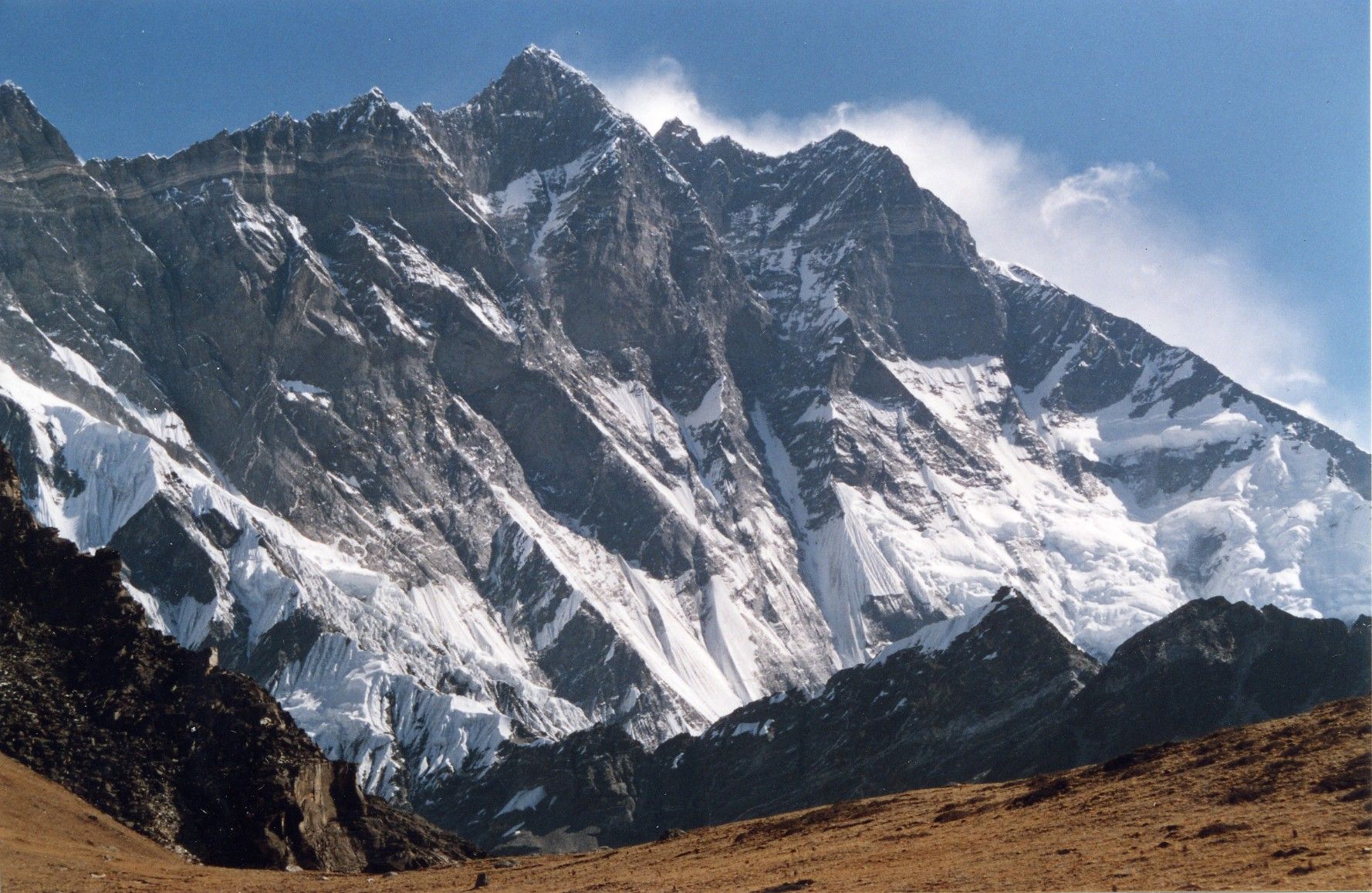
With an elevation of 8,516 meters above sea level, Lhotse is the fourth highest mountain of the world after Mount Everest, K2, and Kanchenjunga. Lhotse lies on the border between Tibet of China and Khumbu region of Nepal. This majestic peak is one of the famous expedition destination to scale up.
Lhotse is located in a very short distance of about three kilometers in the south of Mount Everest, and these two glorious peaks are separated by south col. Except for the main peak of 8,516 meters, Lhotse comprises other two eight-thousandner; Lhotse Middle at 8,414-meter elevation and Lhotse Shar 8,383 meters.
Located between two nations; Nepal and Tibet, Lhotse’s name is derived from Tibetan language meaning “South Peak.” In account of its name, the south face of Lhotse is the most technical face of the mountain. The south face of Lhotse is also one of the largest faces in the world. In Lhotse expedition, there is a section which is declared as the most dangerous part of the climb called the Khumbu Icefall. Lhotse and Everest both peaks share the same base camp, and it is a part of the Everest massif itself.
Lhotse is a beautiful massif with three major mountain peaks. The expedition holds many expectations as it is a little-developed trek and offers interesting opportunities to witness the intact beauty en route. As the Everest and Lhotse shares same base camp, Lhotse can be scaled from Everest Base Camp or nearby Chhukung, however, trekkers usually prefer the base camp route.
Mount Lhotse is after all an eight-thousandner, ascending to its peak involves many hurdles including challenging routes, severe weather conditions, altitude sickness, and extreme tiredness. So, you must plan the expedition with patience and perseverance to conquer successfully.
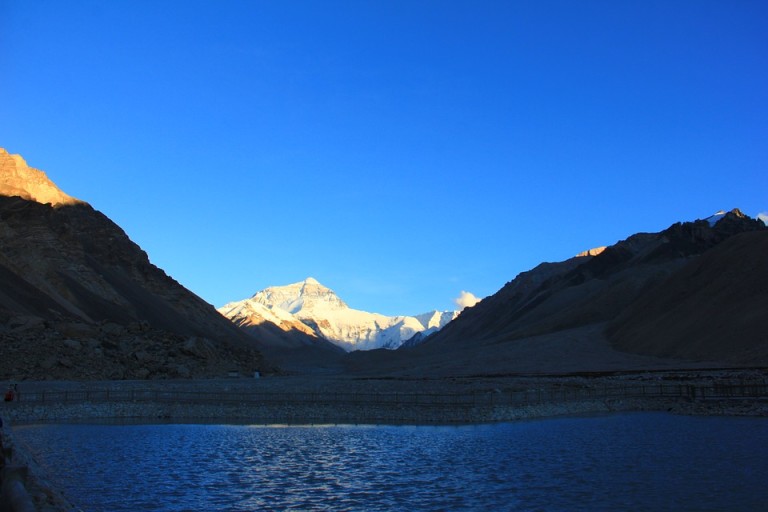
Spring season of March to May is the peak season for trekking and mountaineering in Nepal. During spring, the days are clear and temperature of moderate giving a chance to witness the perfect and splendid view of mountains and hills with verdant forest. Also, spring is the season of flowers. On your way to Lhotse, you will encounter several colors of rhododendron blooming in hills and on your way along with other beautiful wildflowers.
Autumn season is another ideal season for this expedition. September-October is the autumn season in Nepal. However, monsoon of summer season and winter are not suitable period for Lhotse expedition.
Lhotse expedition is a long and challenging journey above an elevation of 8,000 meters so requires previous high altitude climbing experience. You also need to be in complete fitness level to accomplish this expedition successfully. Over 7,000 meters the level of oxygen is only 40%, and you need to pass rock and ice climbing; your experience, health, and patience will be the prime tool of the expedition.
Altitude sickness is another worrying factor while journeying in high altitude region. Usually, the risk of altitude sickness grows once you are over 3,000-meter height. Acclimatization for higher region for a day or few will help your body adjust. Also, don’t let the challenges en route get in your nerve be calm, confident and comfortable on fixed ropes along a steep technical terrain.
Mount Lhotse was attempted in 1955 by International Himalayan Expedition. The expedition included two Austrians, two Swiss and three Americans, making it first expedition in Everest area to include Americans. Accompanied by 200 local porter and several climbing Sherpas, they started the expedition. But, they were successful to climb about 8,100 meters altitude only and got beaten back by unexpected strong wind and low temperature.
Lhotse was first scaled on May 18, 1956, by the Swiss team of Ernst Reiss and Fritz Luchsinger from Swiss Mount Everest/Lhotse Expedition. Lhotse Middle was climbed by Engeny Vinogradsky, Sergei Timofeev, Alexei Bolotov, and Peter Kuznetsov on May 2001. However, Lhotse Shar was climbed way before Lhotse Middle on May 12, 1970, by Sepp Mayerl and Rolf Walter.
Lhotse witnessed 371 climbers by 2008, December and till that time 20 climbers died on their way to the summit. Lhotse wasn’t climbed for three consecutive years of 2014, 2015 and 2016 because of a series of incidents; however, the mountain was scaled again in May 2017.
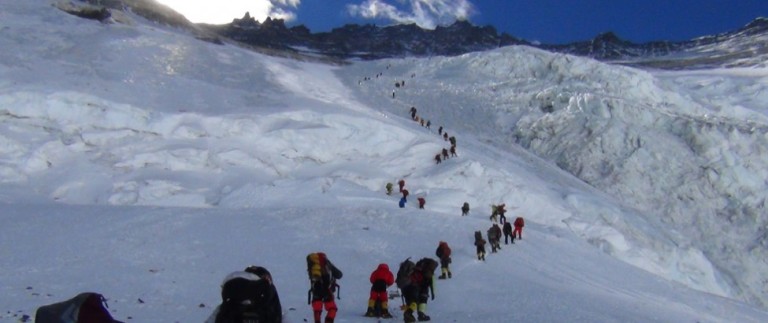
Lhotse expedition is about two-month long journey. As it shares the same base camp as Everest, you will start the same path. Taking a flight to Lukla from Kathmandu is the first step of the expedition. Lukla is a beautiful village surround by hills with verdant forest, and the airport is often cited as the most dangerous airport in the world.
The expedition takes you along the traditional and quaint settlement of Himalayas and the popular culture of Sherpas. Namche Bazaar, Khumjung, Tengboche and other villages you encounter en route are all ceremonial villages whose culture is similar to Tibetan Buddhism. In Tengboche lies the largest monastery of Khumbu which celebrates the important Sherpa festival, Mani Rimdu.
From the base camp of Lhotse, it takes more than a month to ascend the summit and be back at the camp. It is the toughest part of the expedition where you will spend months in higher altitude region. After the successful expedition of Lhotse, you will trek back to Namche Bazaar via Tengboche and to Lukla. Lukla will be the departure point of this expedition from where you will be back to Kathmandu.
Your email address will not be published.Required fields are marked *
You must be logged in to post a comment.



0 Comments on "Lhotse: The Fourth tallest mountain in the world"