- HOME
- Destination
- Adventure Activities
- About Us
- BLOGS
- CONTACT US

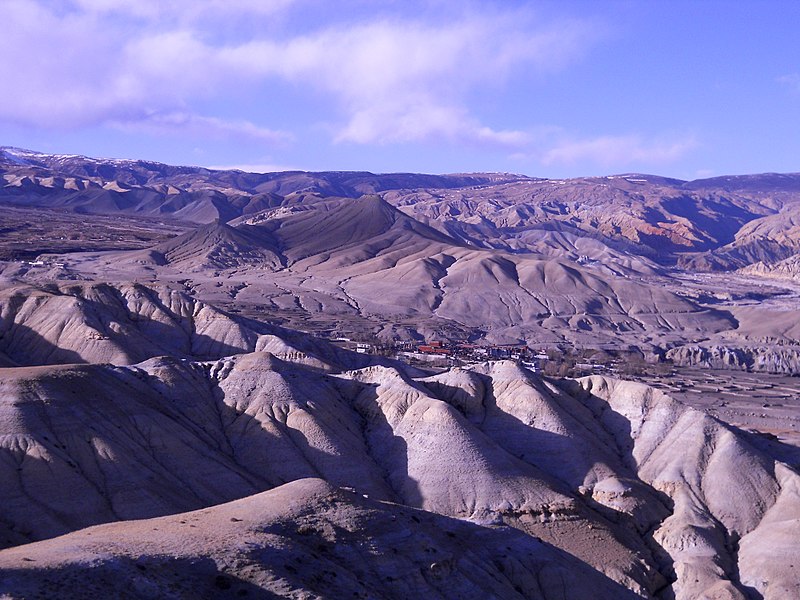
Mustang has been developed as one of the major tourist attraction in recent years. Mustang is a naturally gifted place with rich in the culture of Tibetan Buddhist. Among several such attractions in Mustang, Lo Manthang is also one of the beautiful places.
Lo Manthang is rich in culture and tradition most of them are similar to that of Tibetans. Lo Manthang covers the northern two-thirds of Mustang district, while the southern third is called Thak. Thak is the homeland of Thakali people whose language are very different and have a synthesis of Tibetan and Nepali culture.
Lo Manthang is located in the northern end of Mustang district. It is in between the Tibet Autonomous Region of China in the north and Dalome, a rural municipality of Mustang district in the South.
The district of Mustang is an ancient forbidden kingdom. It is bordered by the Tibetan plateau and is home to some of the tallest peaks in the world which includes Annapurna and Dhaulagiri, both above the height of 8,000 meters. There are very strict rules and regulations for tourist to maintain the Tibetan culture and tradition. Upper Mustang was restricted till 1992 to the foreigners making it one of the most preserved regions in the world because of its relative isolation from the outside world with most of the people still speaking the traditional Tibetan language. But even though foreigners have been allowed since the year 1992, tourism to Upper Mustang remains limited with just over 2,000 foreign tourists in 2008. You will need to a special permit from Nepalese Department of Immigration by paying US$500 for 10 days and a guide to protect the local traditions from the influence of outside world and to protect the environment as well.
Lo Manthang was a walled capital of the Kingdom of Lo since its founding by Ame Pal in 1380. Ame Pal constructed the wall of the city including many of the still-standing structure. When the Shahs of Gorkha unified Nepal from the small kingdoms which they conquered during the 18th century, Lo Manthang became a dependency, but it kept its hereditary rulers. This arrangement continued as long as Nepal remained as a kingdom until 2008 when the republican government began in Nepal, and Jigme Dorje Palbar Bista, who was the king then lost his title. And, Lo Manthang became a Village Development Committee of Mustang.
The village of Lo Manthang is known for its tall whitewashed mud-brick walls, gompas and the Royal Palace, which was built about 600 years before. There are gompas in Lo Manthang, they are Jampa Lhakhang or Jampa Gompa, and also known as “God House” was built in the early 15th century and is the oldest one. The next one is Thubchen Gompa which was built in a late 15th century and is located in the southwest from Jampa Gompa. Chodey Gompa is now the main gompa, and the Choprang Gompa is known as the “New Gompa.”
In Lo Manthang, a series of at least twelve cave has been discovered in a few years back in the north of Annapurna and near the village, decorated with ancient Buddhist paintings and set in sheer cliffs at 14,000 feet. Those paintings show the influence of Newari culture on them, and they date backs to approximately 13th century. Those painting also contain Tibetan scripts executed in ink, silver and gold and pre-Christian era pottery shards. Also, explorers who have been researching in that area for a long time found stupas, decorative art, and paints which depicts the various forms of Lord Buddha, often with disciples, supplicants, and attendants, with some mural paintings showing sub-tropical themes containing palm trees, billowing Indian textiles, and birds.
Nepal suffered a major loss during the devastating earthquake in April 2015. In that earthquake, Lo Manthang didn’t quite suffer any loss compared to that of other regions. However, the royal palace of Lo Manthang suffered multiple cracks. The palace was built in 1400.
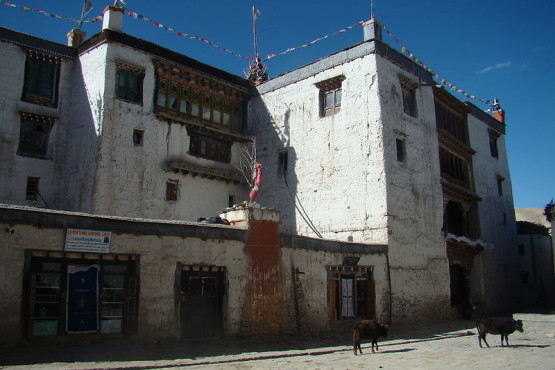
Lo Manthang Royal Palace
Your journey starts from Kathmandu itself, from where you will drive to catch a domestic flight to Pokhara. From Pokhara, you will fly to Jomsom and trek towards Kagbeni. From Kagbeni, you will move towards Chele. This trekking to Chele follows the prehistoric salt trading route and mostly passes through sandy and windy environment. You will encounter villages and pass through the beautiful Apple orchard. Then after this delightful trekking, you will arrive at Chele
After Chele, you will trek to Syangboche. In this trek, you will come across Taklam La pass, which lies at an elevation of 3,624 meters from the sea level, which offers a splendid view of the Mount Tilicho and Damodar Danda. You will also pass the delightful forests and finally reach Syangboche.
Moving forward from Syangboche, Ghaymi is your next stop. While trekking to Ghaymi, you will pass Yamda La (3,850 meters), villages, lodges, and choten which will fill you with delight. You will also pass the Nyi La Pass, which is at an elevation of 1,010 meters and from there you will descend to Ghaymi.
From Ghaymi comes Charang. You will pass rivers and walls, which are stone carved with Tibetan prayers on them. You will also pass through villages and gompa and then arrive at Charang. After Charang comes Lo Manthang. While moving to Lo Manthang you will go through some of the most beautiful views ever. You will see the glorious mountain views including Tilicho, Nilgiri and Annapurna I. Then after moving downhill and crossing the river you will arrive at Lo Manthang.
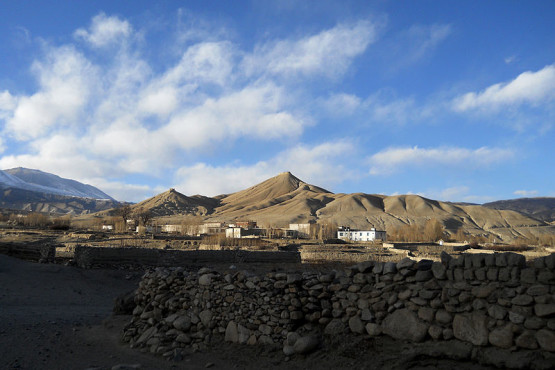
In Lo Manthang, you can go to several places to explore its ancient history. The royal palace, monasteries, and gompas are some of the places you can visit. Now, from Lo Manthang, you will descend back down to Jomsom. You can choose to descend the same trail you have come from, or you can choose the alternative trail. In an alternative trail, you will not move to Charang, but to Drakmar. While moving to Drakmar, you will encounter some ancient temples and rock paintings.
After Drakmar, Ghiling is the next stop. While moving down to Ghiling, you will not see any views as there is nothing to see on the trail. Arriving at Ghiling, you will move to Chuksang. You will get to see the deserted landscape view of the High Himalayas. Then from Chuksang come Jomsom from where you will fly to Pokhara and, then to Kathmandu.
Your email address will not be published.Required fields are marked *
You must be logged in to post a comment.



0 Comments on "Lo Manthang: The Walled Capital of Kingdom of Lo"